For years, BIM has helped people coordinate design, detect clashes, estimate quantities and understand how an asset should be built.
Now a harder question is emerging:
Can a machine use the same model to perform physical work safely and accurately?
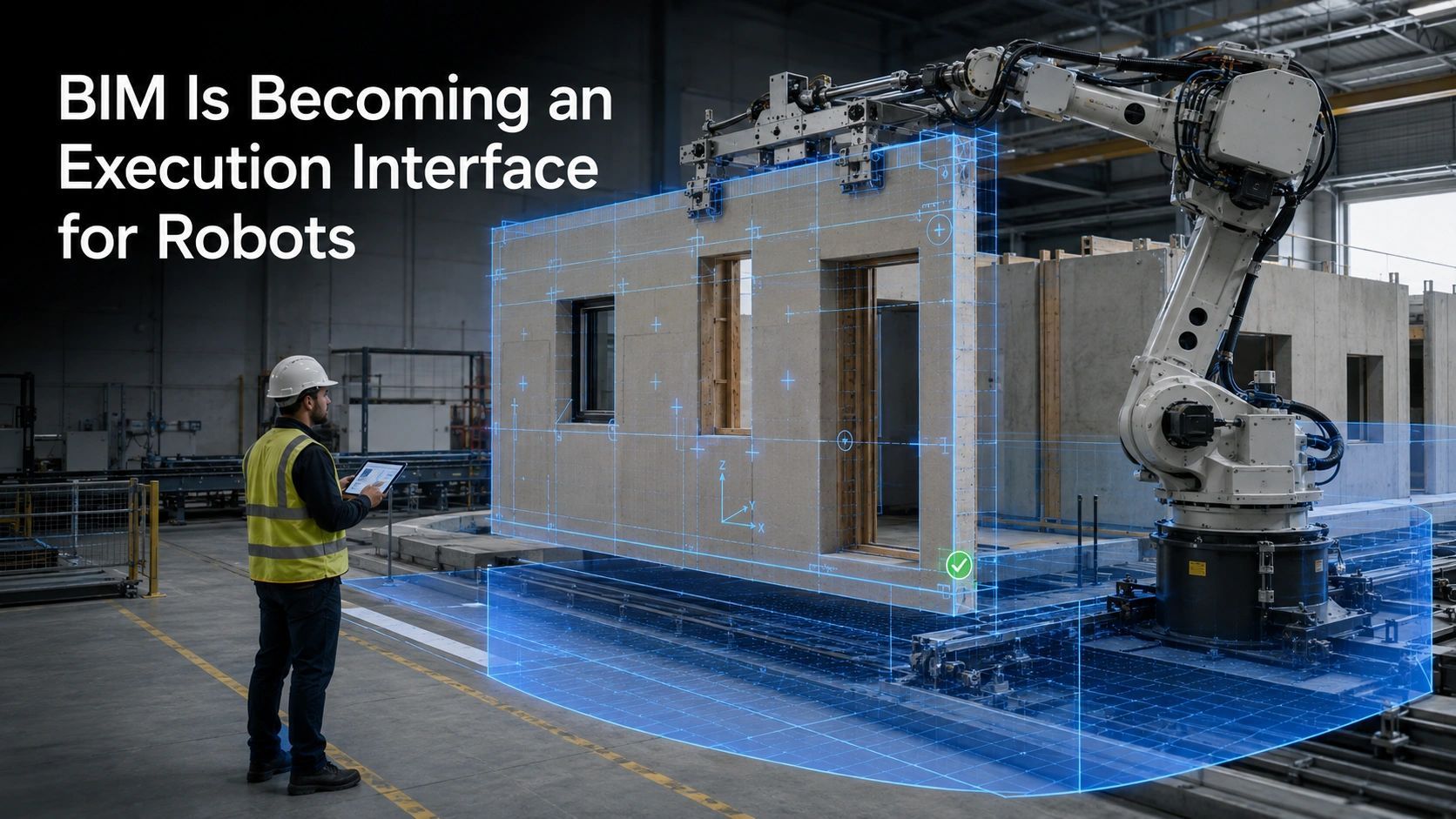
Construction robots, autonomous inspection systems and AI-assisted equipment need more than visual geometry. They need dependable instructions about what an object is, where it belongs, what may be done to it and under which conditions an action must stop.
This changes the role of BIM.
It is no longer only a representation of design intent. It is becoming part of the execution context through which machines interpret a construction site.
A model that informs people may still fail machines
An experienced engineer can interpret incomplete information.
If a model contains an outdated wall location, an unclear object label or a missing access restriction, the engineer may notice the inconsistency, consult the latest drawing or speak to the site team.
A machine cannot safely fill those gaps through professional intuition.
Consider a robotic bricklaying system. Geometry may show the planned wall, but the machine also needs to know:
- Which model revision is authoritative?
- Where is the wall in site coordinates?
- What construction sequence applies?
- What tolerances are permitted?
- Is the working area accessible?
- Are people or equipment inside the exclusion zone?
- Does the current site condition match the model?
- Who has authorized execution?
A detailed 3D model may look complete while remaining operationally ambiguous.
The question is therefore not whether the BIM model contains more information. It is whether the information is reliable enough to guide a physical action.
Geometry is only one part of machine readiness
Machines need geometry, but geometry alone does not create execution context.
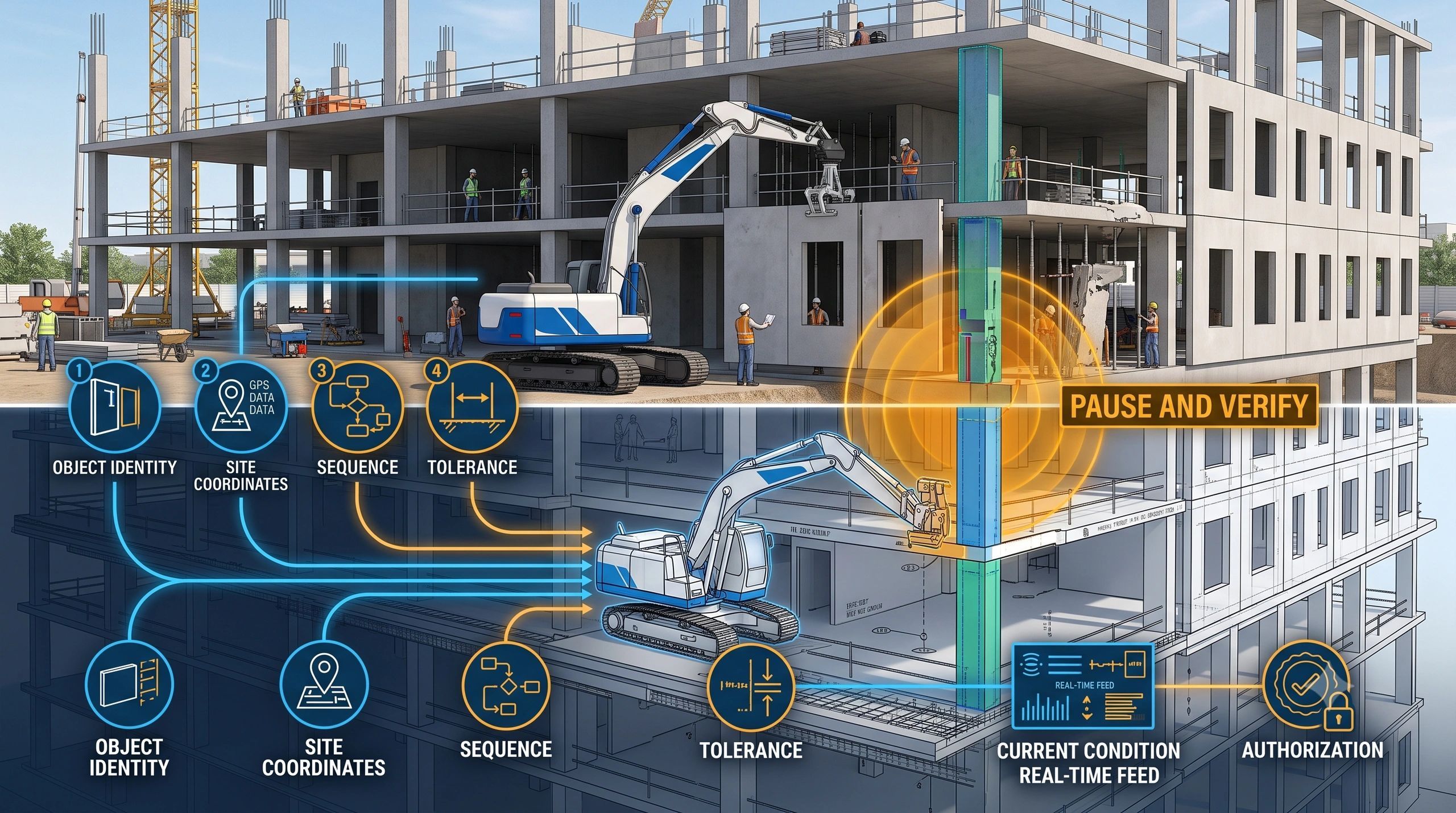
A machine-ready information environment requires at least six connected elements.
1. Stable identity
Every actionable object needs an identity that remains consistent across design, scheduling, procurement, site execution and inspection.
If a wall, pipe or structural component receives different identifiers across systems, the machine cannot reliably connect the planned object to its current condition or approved work instruction.
2. Authoritative position
Design coordinates must align with survey control and the physical site.
Even a geometrically accurate object becomes unusable when it is referenced to the wrong coordinate system, transformation or site datum. For automated equipment, a small alignment error can become a physical defect or a safety risk.
This is where BIM and geospatial control must work together.
3. Sequence and dependencies
A machine must understand not only what to construct, but what must happen first.
An activity may depend on survey approval, material availability, completion of another trade, temporary support or clearance of a work zone. These dependencies may sit in separate planning and field-management systems rather than in the BIM model itself.
Execution context must connect them.
4. Tolerances and acceptance rules
A machine needs explicit boundaries.
How much positional deviation is acceptable? Which surface condition permits installation? What level of confidence is required before work can proceed? When should the system pause and request human review?
Without machine-readable tolerance and acceptance rules, automation may perform an action without knowing whether the result is acceptable.
5. Current physical condition
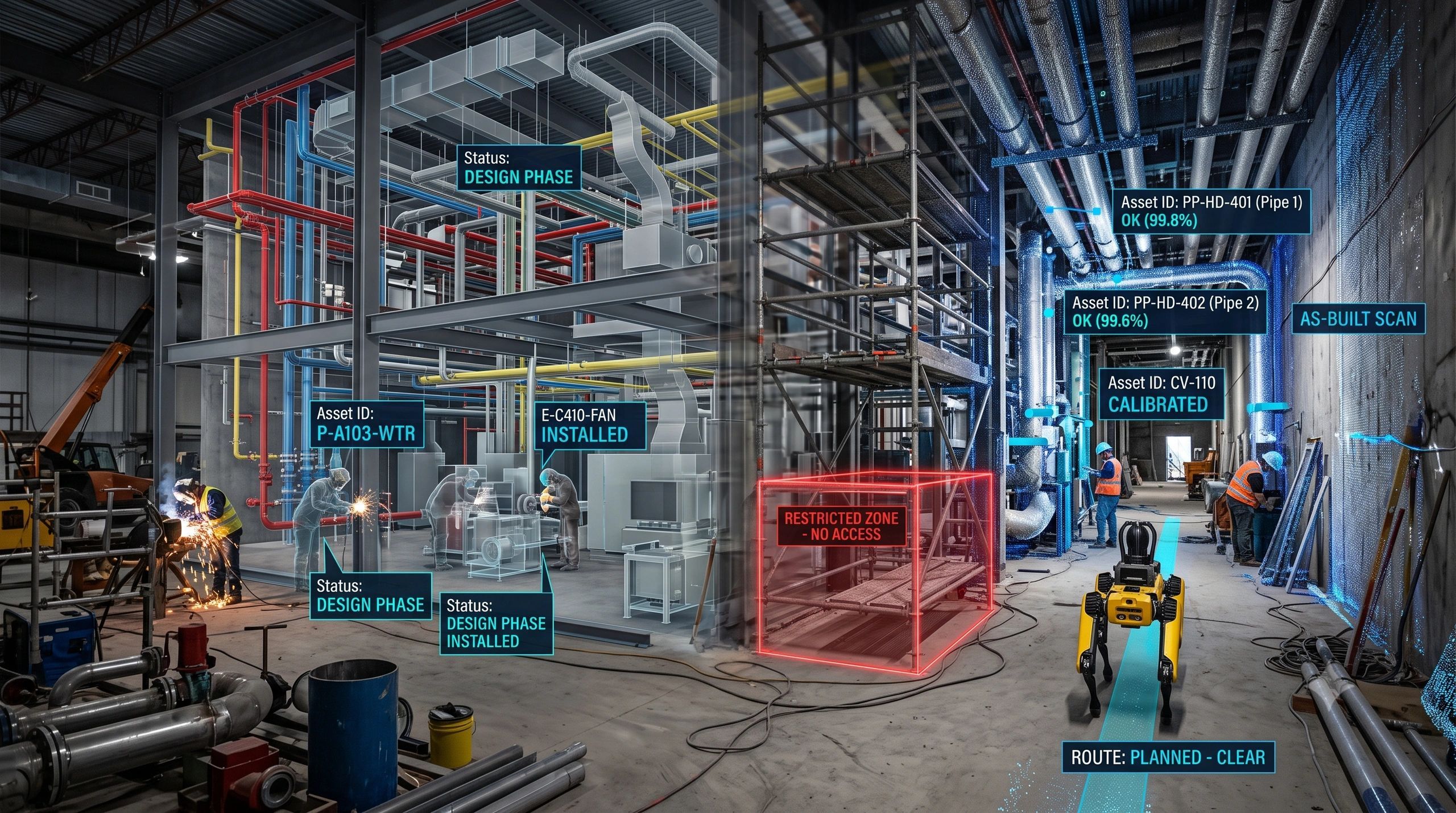
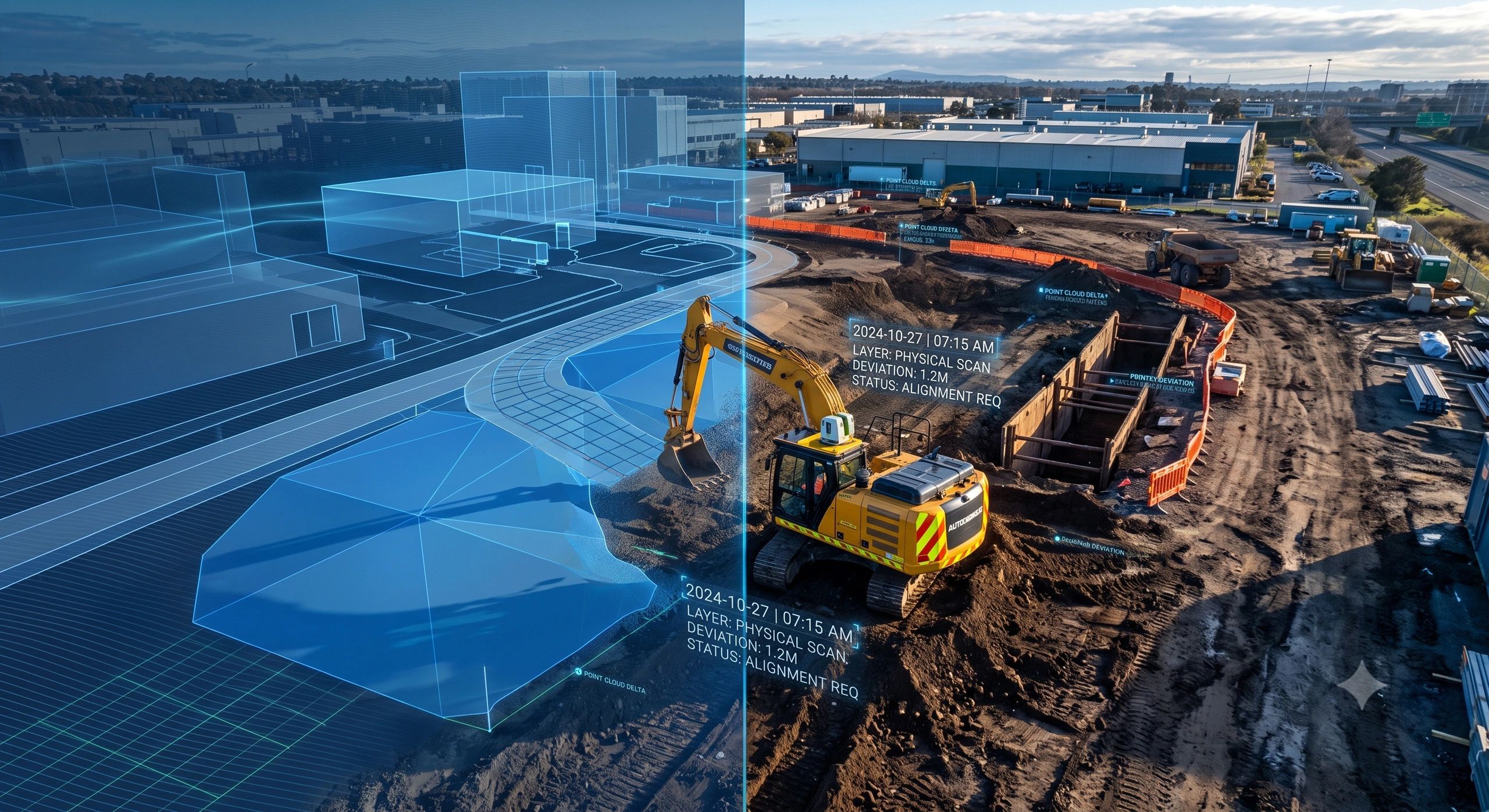
BIM commonly describes intended or recorded state. Machines operate against present reality.
Materials may have moved. Temporary structures may have appeared. Previous work may differ from the model. Access routes may be obstructed. People and equipment may enter the operating area.
Reality capture from laser scanning, photogrammetry, cameras or site sensors must therefore update or verify the conditions around the planned task.
The machine does not merely need the design. It needs the difference between design and current reality.
6. Authority and safety constraints
Technical feasibility does not equal permission to act.
The execution environment must establish which model revision, work package and instruction are approved; who approved them; where automation is permitted; and which conditions require an immediate stop.
That authority must remain traceable after execution.
BIM will sit inside a wider execution loop
Research and early construction-robotics development are already connecting BIM-based simulation with automated physical work. One example highlighted in the source briefing is Buildroid AI, which uses BIM-based simulation to coordinate robotic bricklaying workflows before equipment reaches the site.
The important lesson is not limited to bricklaying.
The same pattern applies to automated layout, excavation, drilling, inspection, progress verification and material movement:
Approved intent → machine-readable task → site localization → condition verification → authorized action → measured result → updated record
BIM provides essential design and object context, but it must operate with survey control, scheduling, safety systems, reality capture and field authorization.
This is why calling the model itself “machine-executable” can be misleading. BIM is becoming a core part of machine execution, but safe action depends on the wider information and control environment.
A practical readiness test
Before using a BIM environment for machine guidance or automated verification, project teams should test five areas.
Semantic readiness: Can an independent system identify each relevant object, its type, properties and relationships?
Spatial readiness: Are coordinates, reference systems, survey control and allowable deviations explicit and verified?
Operational readiness: Are work sequences, access conditions, dependencies and exclusion zones available in a usable form?
Reality readiness: Is there a defined process for checking that current site conditions still match the approved task context?
Governance readiness: Can the system establish which instruction is authoritative, who permitted the action and why the machine proceeded, paused or refused?
A project may have high-quality BIM and still fail this assessment. That is not necessarily a modelling failure. It indicates that the links between design information and site execution have not yet been established.
The commercial opportunity is readiness, not robotics
Most construction organizations will not become robotics developers.
Their immediate challenge is preparing project information so that robotic systems, machine-control platforms and AI-assisted workflows can use it without creating unmanaged risk.
This creates a natural service opportunity around machine-executable BIM readiness:
- assessing model suitability for automated work;
- aligning BIM geometry with geospatial control;
- establishing stable object identities;
- defining tolerances and execution constraints;
- connecting reality capture with work verification;
- identifying missing authority and evidence records.
For BSMA Enterprises, this sits naturally at the intersection of BIM, geospatial intelligence and reality capture. The value is not in claiming to build the robot. It is in making design and site information reliable enough for automated execution.
BIM must explain when a machine should not act
The success of construction automation will not be measured only by how many tasks machines can perform.
It will also depend on whether they can recognize when their context is incomplete, stale or unsafe.
A trustworthy system should be able to say:
- the model and site condition do not agree;
- the coordinate reference has not been verified;
- the tolerance has been exceeded;
- the approved sequence has changed;
- the work zone is no longer clear;
- the instruction lacks valid authorization.
That refusal is not a failure of automation. It is evidence that the execution system understands its operating boundaries.
BIM is becoming an execution context for machines, but the transition requires more than richer models. It requires design intent, spatial truth, current site evidence and authority to remain connected.
The next BIM maturity milestone may therefore be neither better visualization nor more automated model creation.
It may be the ability to support a physical action and preserve enough evidence to explain why that action was allowed.