An AI system can help produce an electrical layout in minutes. The equipment still has to fit in a real room, connect to available power, meet project requirements and work after installation.
That gap between a generated design and a working asset is where the next engineering challenge sits.
AI-assisted tools are moving further into design and documentation. Autodesk, for example, describes automation across building engineering workflows and a feedback loop between design and operational data. Faster design work is useful. It also means teams need a dependable way to check each decision against the site, the approved revision and the finished installation.
I call that AI-to-Reality Assurance: a chain of checks and evidence connecting a design decision to what was authorized, built, tested and handed over.
A plausible design can still fail on site
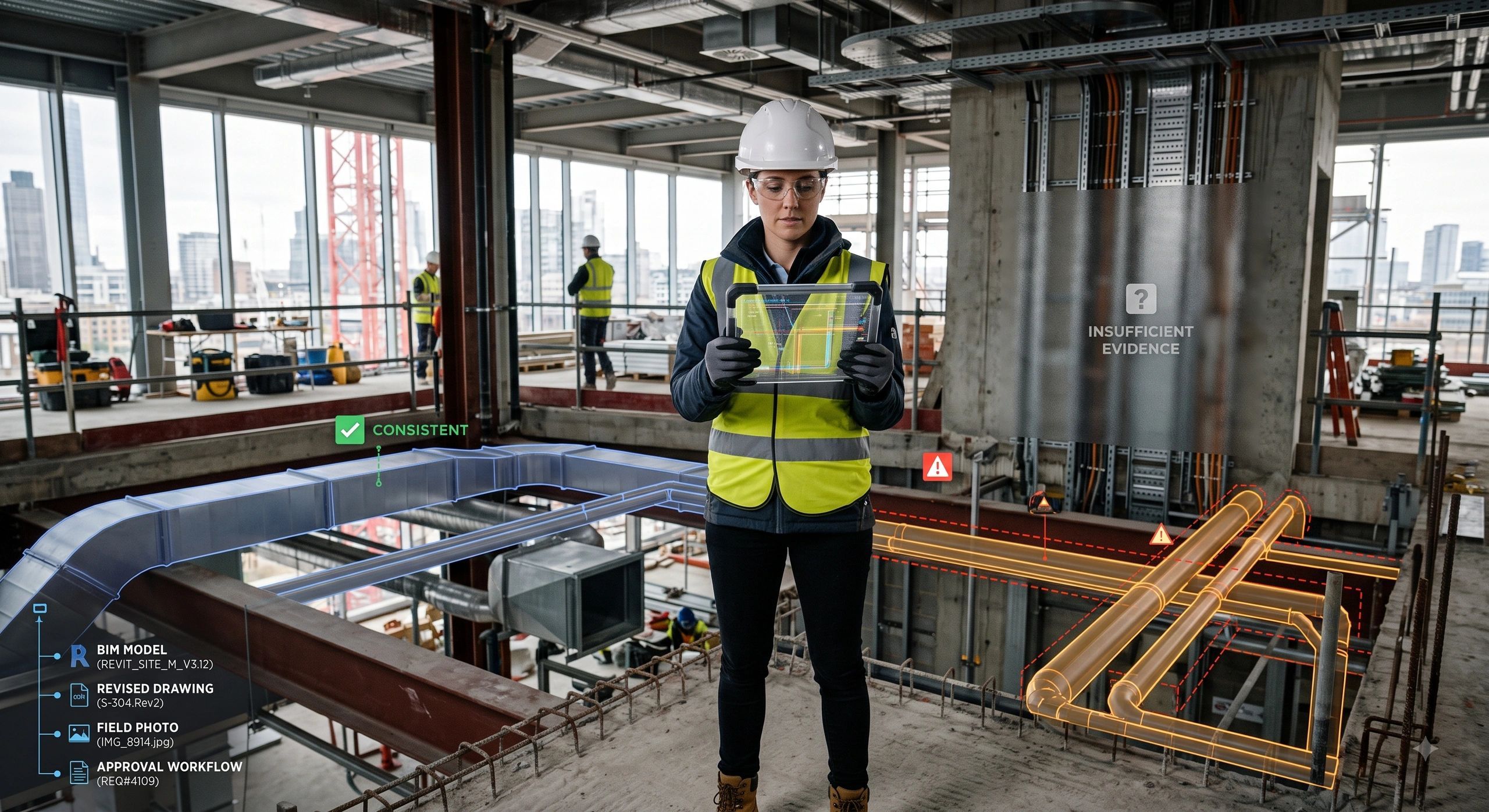
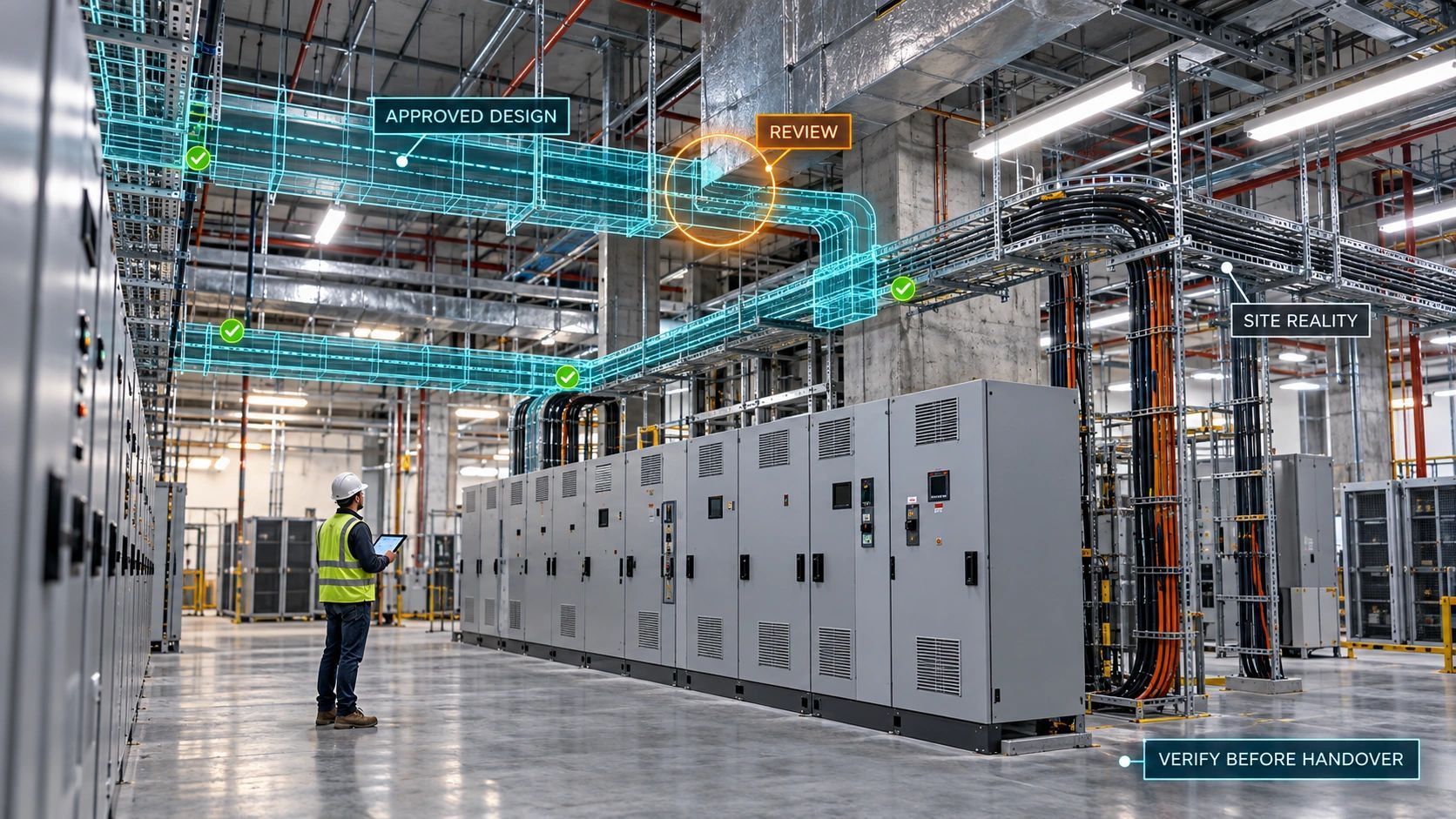
Consider an AI-assisted electrical design for a data center. The proposed equipment placement may satisfy the information in the model. But the actual room may contain an undocumented obstruction. A cable route may cross a reserved maintenance zone. Equipment may have been installed to an earlier revision.
These are familiar project problems. AI raises their importance because it can generate and revise proposals faster than teams can inspect the assumptions behind them.
The question is no longer only, “Is this design technically sound?” It is also:
- Which site conditions did the system use?
- Were those conditions current and measured accurately enough?
- Which revision was approved for construction?
- What was installed, and where?
- What tests show that the finished system performs as intended?
A polished model cannot answer those questions on appearance alone.
The handoff is the hard part
Engineering work moves through several states: design intent, approved design, construction, commissioning and operation. Information can change or lose meaning at every handoff.
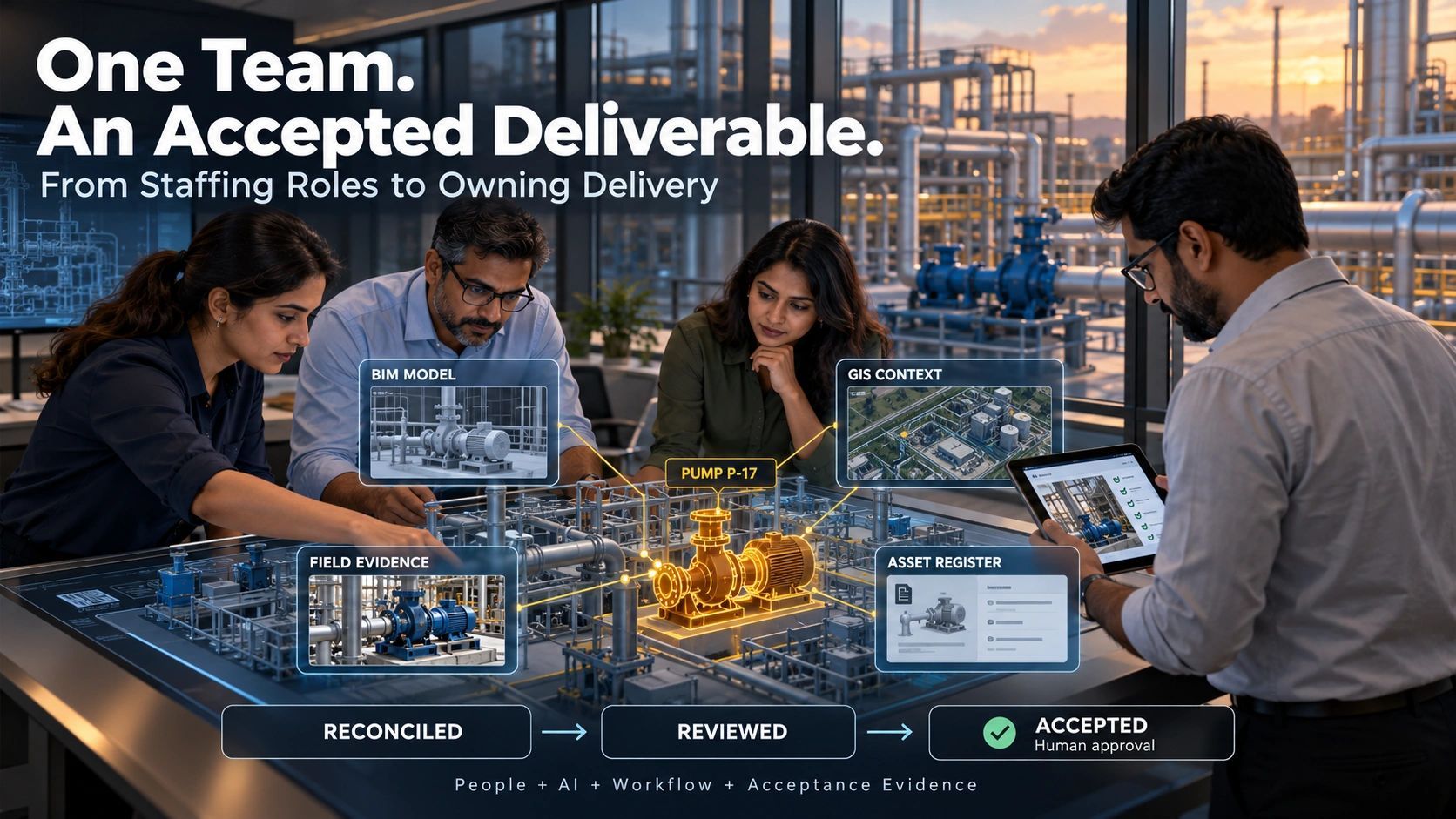
An asset might have one identifier in the design model, another in a contractor’s schedule and a third in the operations system. A field change might be recorded in a drawing but never reach the asset register. A scan can show where equipment sits without proving that it passed a functional test.
BIM standards help teams exchange structured building information across construction and facility management. That exchange is valuable, but each project still has to maintain the link between an asset, its approved requirements and the evidence collected in the field.
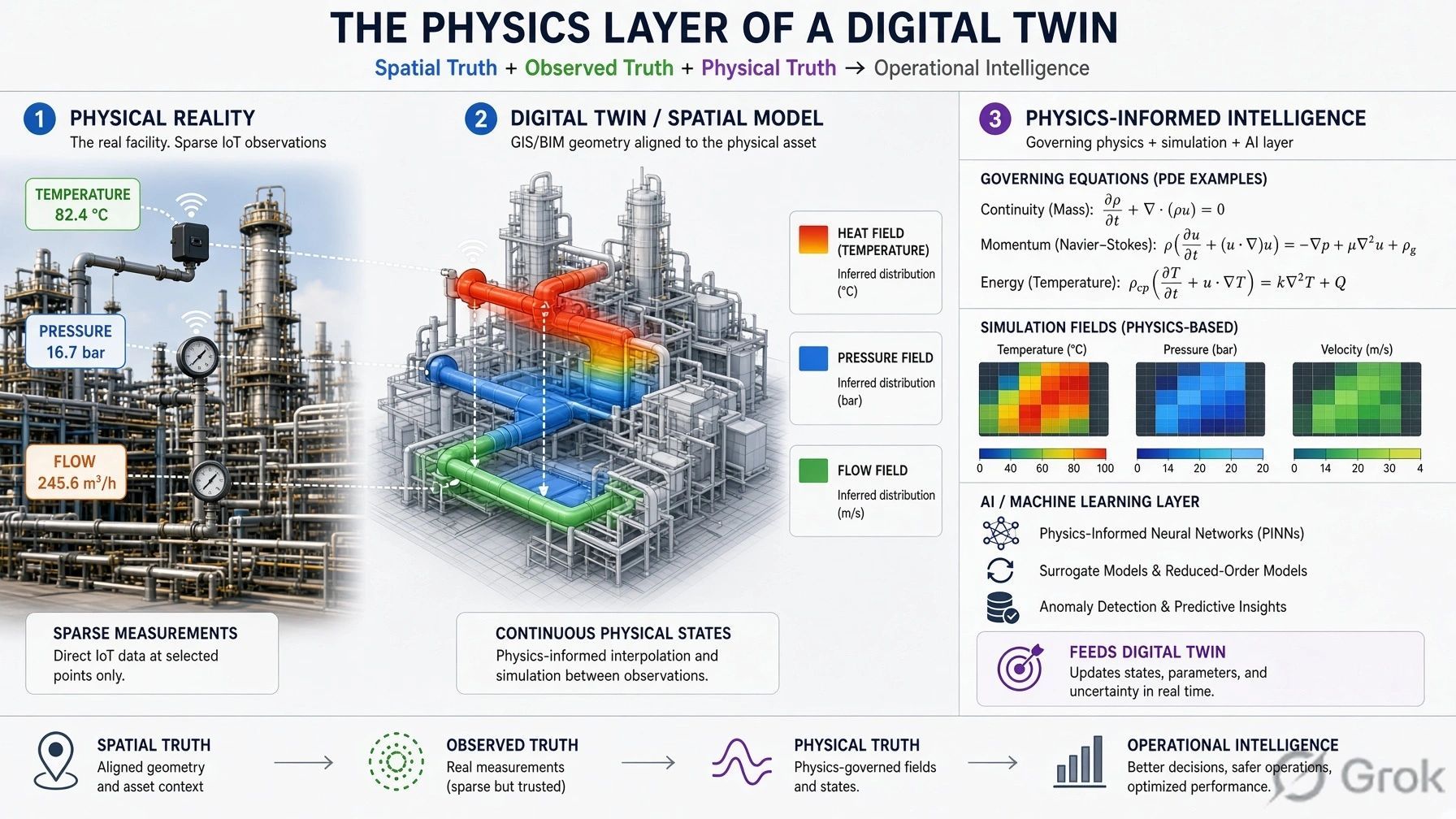
This is where geospatial work, BIM and reality capture become central to AI-enabled engineering. Survey control locates the work. BIM describes the intended asset and its relationships. Field observations establish the current condition. Commissioning records show whether the installed system works.
Together, they can answer a more useful question than “Does the digital model look right?”: What evidence supports accepting this physical outcome?
A practical assurance chain
For each consequential AI-assisted design decision, I would want a traceable chain with five links.
1. The decision and its inputs. Record the proposed change, the model or software version, the design revision, the constraints supplied and the site evidence used. A result cannot be checked properly if its starting conditions are unclear.
2. Engineering approval. Identify who reviewed the proposal and what was authorized. Approval should refer to a specific revision, location, asset and scope of work.
3. Physical execution. Connect construction tasks and field changes to that approved decision. If the team encounters a condition the design did not account for, the exception needs a recorded resolution.
4. Measured verification. Compare the installed condition with the relevant requirements. Depending on the task, evidence may include a controlled survey, scan, inspection, instrument reading or commissioning test. A geometric match is only one kind of proof.
5. Operational handover. Preserve the asset identity, final configuration, test result and outstanding exceptions for the people who will operate and maintain it.
The strength of this chain should match the consequence of failure. A routine documentation change does not need the same scrutiny as a change to a critical power or cooling path.
Assurance must include the AI system’s limits
AI outputs can be useful and still require validation in their intended setting. NIST’s AI Risk Management Framework treats testing, evaluation, verification and validation as activities across the AI lifecycle; its guidance also discusses monitoring deployed systems to check whether they continue to perform as intended.
In engineering, this means an assurance process must examine both sides of the decision: whether the generated proposal is suitable for the project, and whether the physical work delivered the approved result.
It also means being clear about responsibility. Software can flag a clash, compare a scan with a model or organize evidence. Qualified people still need to decide whether the evidence is sufficient, especially when safety, compliance or essential services are involved.
Where the business value appears
The immediate value is fewer unresolved surprises: a constraint found before installation, a revision mismatch caught before commissioning, or an incomplete asset record fixed before handover.
The larger value is decision confidence. An owner should be able to ask why a facility cannot deliver its planned capacity and trace the answer through design, construction, testing and live asset status. A project leader should be able to see which work is verified and which remains an assumption.
For BSMA Enterprises, this points to a focused role at the handoff between digital engineering and the site: spatial readiness, BIM and asset identity, current-condition capture, and evidence workflows that support verification. It is a practical way to help teams adopt AI-assisted engineering while keeping decisions grounded in the facility they are building.
AI will reduce the effort needed to produce design options. That makes a reliable record of what was approved, installed and tested more valuable.
As design decisions arrive faster, the ability to prove their physical outcome becomes part of engineering quality.
If your team is introducing AI-assisted design into an infrastructure or industrial project, BSMA can help assess where site evidence, BIM information and verification records need to connect before those decisions reach construction.