A transmission tower is inspected on Monday.
The photographs are clear. The inspection is approved. The digital twin shows the tower as being in acceptable condition.
On Tuesday, a severe storm crosses the corridor.
On Wednesday morning, an operations manager opens the digital twin to decide whether the line can be returned to service.
The inspection is only two days old. The dashboard still shows a green status.
Should the manager trust it?
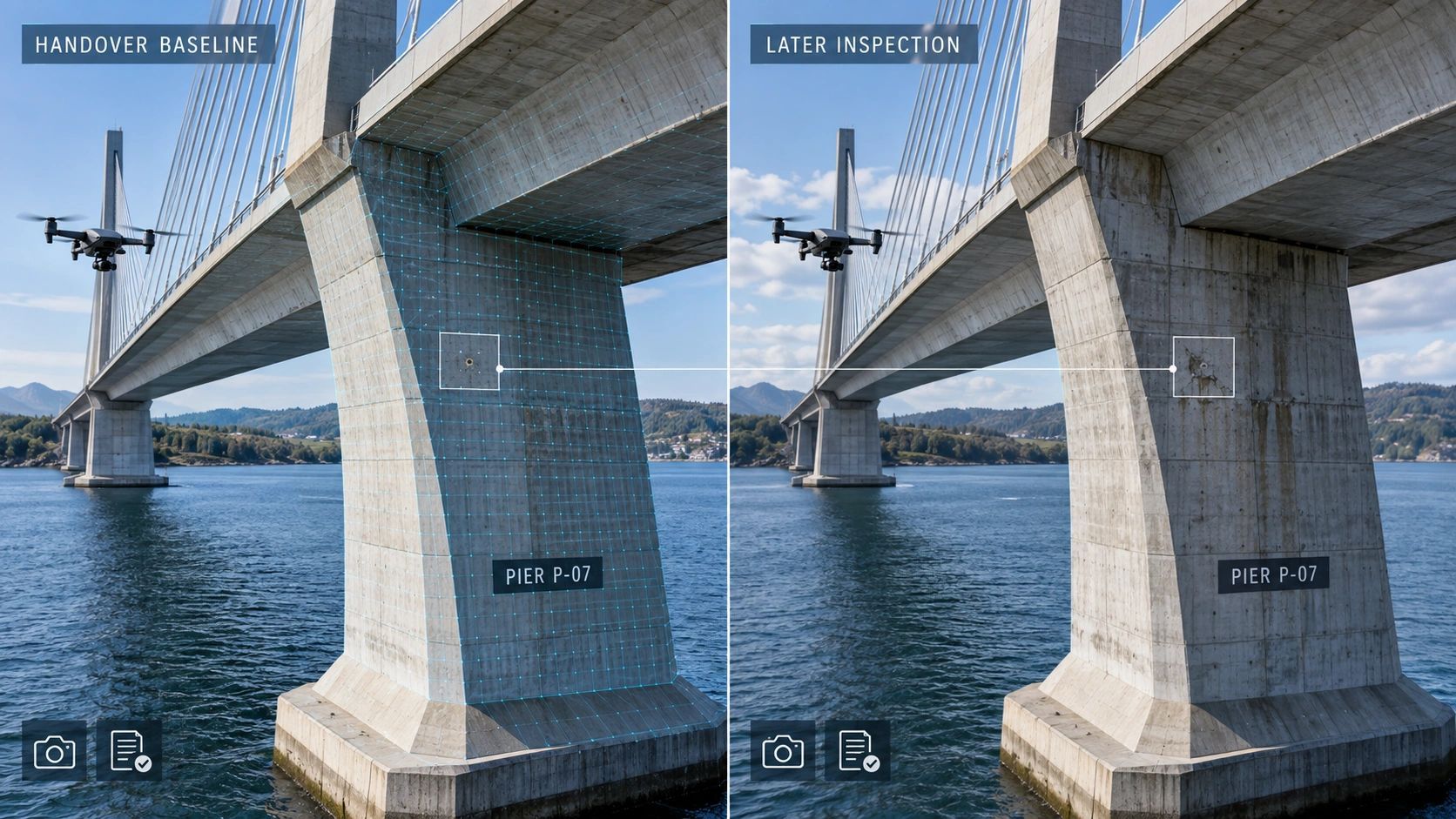
The inspection was valid when it was completed. But it tells us what was observed before the storm. It does not establish what happened to the tower during the storm.
This is an illustrative scenario, but the problem is familiar. Digital twins often show when data was collected. They are less consistent at showing whether an event has changed what that data can still support.
A recent observation is not always a current answer
Many organizations use time-based rules to decide when information needs to be refreshed.
A critical asset might require an inspection every 30 days. A construction site might be captured weekly. A facility model might be checked after each maintenance cycle.
These rules are useful. They establish a minimum rhythm for collecting evidence.
But physical conditions do not wait for the next scheduled inspection.
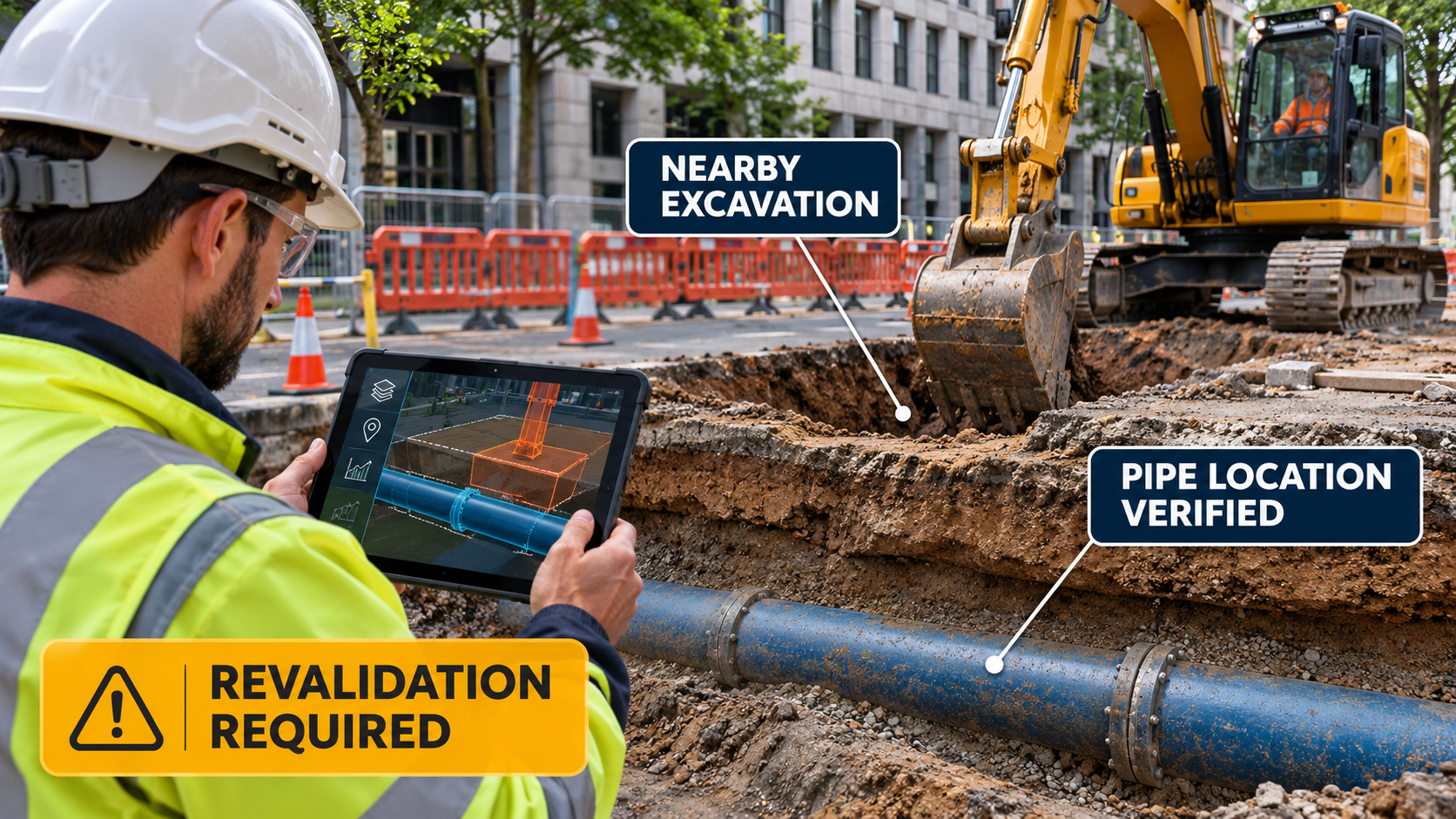
A flood can affect a road the day after it was surveyed. A contractor can excavate beside a buried pipe hours after its location was verified. A pallet can block a robot’s route minutes after the route was checked.
In each case, the previous observation remains part of the historical record. What changes is whether that observation is sufficient for the next decision.
That distinction matters because a digital twin can appear current while its most recent evidence predates a significant event.
The digital twin needs two checks
I believe every important asset-state claim should be assessed against two questions:
1. How old is the evidence?
This is the familiar freshness check. When was the asset inspected, measured or observed? Has the normal validity period elapsed?
2. What has happened since the evidence was collected?
This is the event check. Has anything occurred that could affect the condition or relationship the evidence was used to establish?
The two checks work together.
A 30-day inspection rule might still be appropriate for routine operations. But a storm, collision or nearby excavation may create a need to reassess an asset before those 30 days are over.
The event does not prove that the asset is damaged. It means the organization may no longer have enough evidence to claim that the asset remains in its previously verified condition.
That is a different and more useful status than either “healthy” or “failed.”
From a green status to a decision-ready status
Consider an illustrative tower, T17, with the following record:
- Last inspection: 28 October
- Routine inspection interval: 30 days
- Condition at inspection: No visible issue identified
- Subsequent event: A severe storm affects the surrounding corridor
Before the storm, the inspection may support a routine condition assessment.
After the storm, the system could flag:
Revalidation required: T17 may have been exposed to a significant weather event after its last inspection.
The language matters. The system is not declaring damage. It is identifying a gap between the evidence available and the claim someone wants to make.
An operator can then ask:
- Was the tower actually within the affected area?
- How severe was the event at that location?
- Which components or functions might have been affected?
- What observation would be sufficient for the intended decision?
A broad satellite image may help identify the affected corridor. It may not show a loose connection or damage to a small component. A UAV inspection, field visit or sensor reading may be needed, depending on the asset and the decision.
The right next observation is the one that can answer the question at hand with sufficient confidence.
A practical way to manage event-driven evidence
For a digital twin to support this process, an organization needs to connect five things.
1. The claim
Start with the statement someone wants to rely on.
For example:
- “Tower T17 is fit for return to service.”
- “This road is accessible to emergency vehicles.”
- “The robot’s route is clear.”
- “The installed pipe matches the approved configuration.”
A general label such as “asset status: green” is rarely specific enough. The evidence needed depends on the claim and the decision it supports.
2. The evidence
Link the claim to its supporting observations: inspection reports, photographs, survey results, sensor readings, maintenance records or other relevant material.
Each item should retain its source, collection time, location, coverage and known limitations.
This allows someone to see what was actually verified and what was outside the observation.
3. The event
Identify events that could change the claim’s validity.
Some are external, such as storms, flooding or earthquakes. Others are part of normal operations: excavation, maintenance, replacement, construction activity, a change in configuration or movement of an asset.
The trigger does not have to be a confirmed event. A credible warning or uncertain exposure may be enough to request review for a high-consequence decision.
4. The relationship
An event matters only in relation to a particular asset, claim and decision.
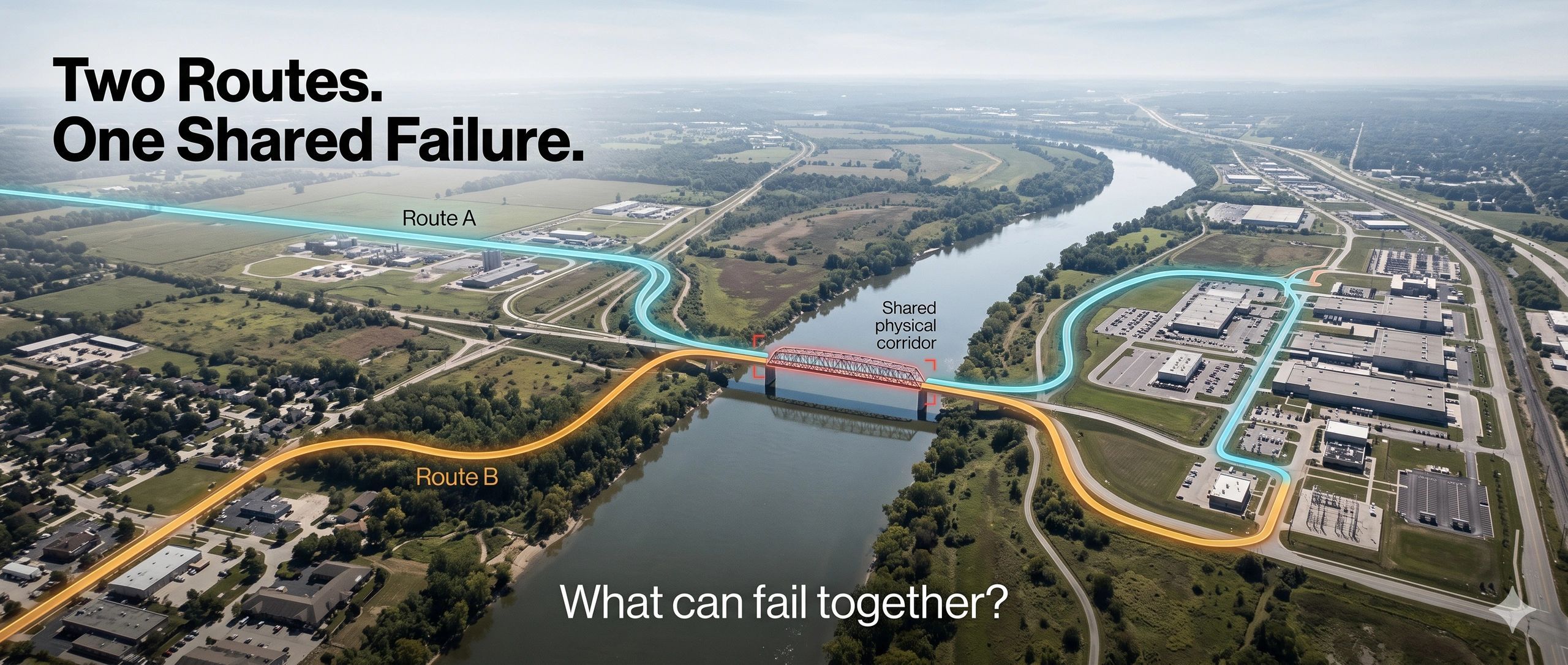
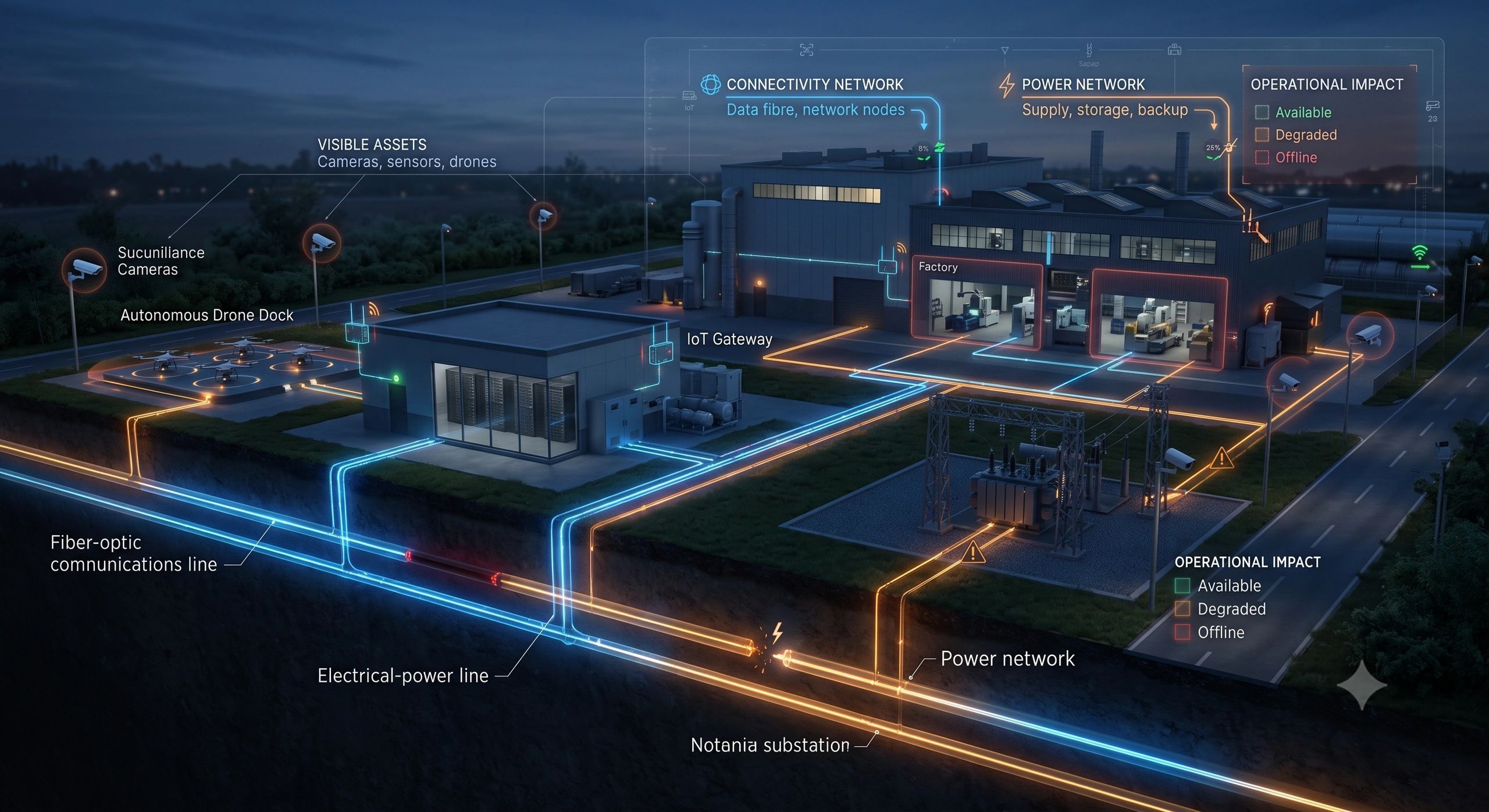
A storm affecting one end of a transmission corridor should not automatically invalidate every inspection across the network. Equally, an event does not need to strike an asset directly to matter: flooding on an access road may prevent a maintenance team from reaching it.
Geospatial context helps determine exposure. Asset relationships help reveal other dependencies. Together, they narrow the review to the claims that may need attention.
5. The next action
Once a claim is flagged, the workflow should identify who reviews it and what happens next.
Possible outcomes include:
- Continue using the existing evidence, with a recorded reason.
- Request an additional observation.
- Restrict the decision until a review is complete.
- Escalate to an engineer or asset owner.
- Record that the current state remains unknown.
The process should also record who accepted the new evidence and when the claim was revalidated.
Not every event requires a field visit
This is where implementation becomes a business decision.
If every weather alert sends every asset for inspection, costs will rise quickly and teams may stop trusting the alerts. If event rules are too narrow, the system may miss changes that matter.
The approach should consider:
Exposure: Could the event reasonably have affected the asset or its dependencies?
Consequence: What could happen if the existing claim is wrong?
Uncertainty: How much is known about the event and its effect?
Decision urgency: Does someone need to act now, or can the question wait?
Observation options: Which available source can provide sufficient evidence at an acceptable cost and speed?
For a low-consequence decision, a remote observation may be enough to support a review. For a high-consequence return-to-service decision, the asset owner may require a qualified inspection and formal approval.
Thresholds should be set with the people responsible for the asset and adjusted as the organization learns. Event data can also be delayed or incomplete, so the absence of an alert should not automatically be treated as proof that nothing happened.
The value is knowing when to look again
A digital twin will never observe every change in the physical world at the exact moment it happens.
Its value can come from making uncertainty visible: showing which claims were supported before an event, which ones now need review, and what evidence is required to make the next decision.
For owners and operators, that can mean more targeted inspections, faster prioritization after disruption and a clearer record of why an asset was cleared, restricted or left under review.
The question for a digital twin is no longer only, “When was this information last updated?”
It is also:
“What has happened since and does this evidence still support the decision we are about to make?”