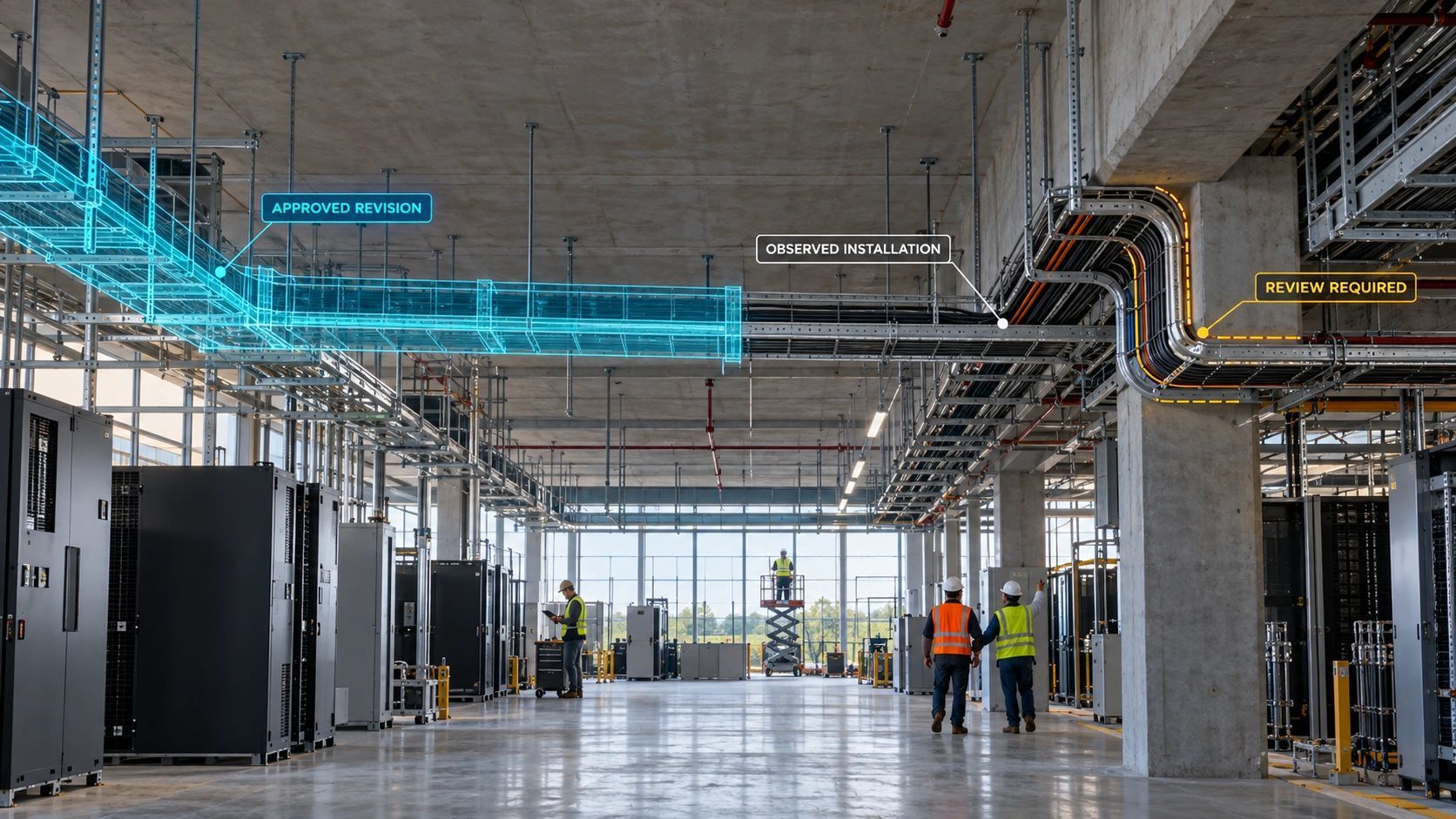
An AI assistant can identify a drawing change in seconds. A project team can review the impact, update a work package and issue instructions faster than before.
Then construction begins.
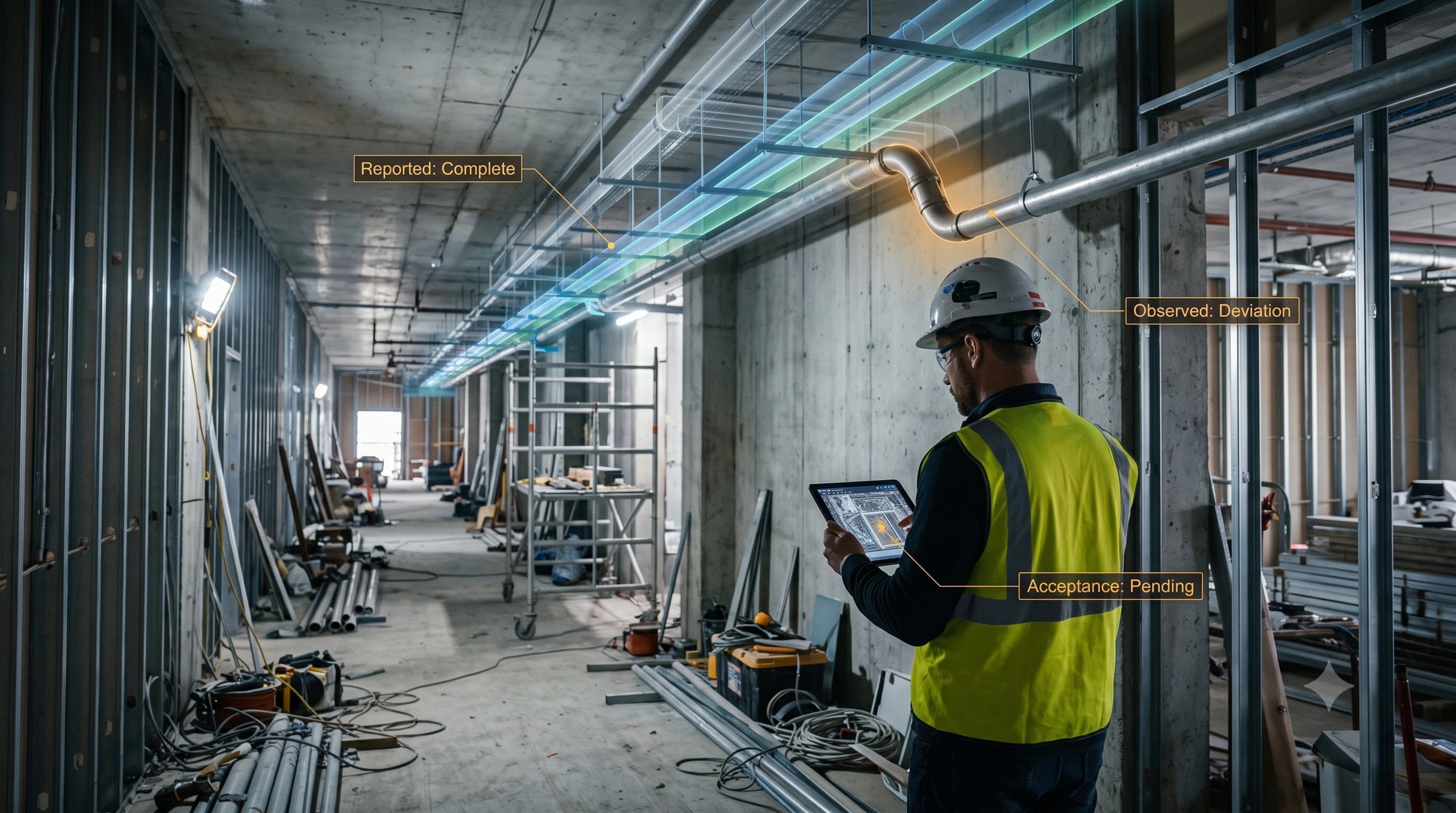
Did the team build to the approved revision? Was the affected asset installed in the correct location? Did a site constraint force another change that never made it back into the project record?
These questions are familiar to anyone who has delivered a building or infrastructure project. Agentic AI makes them more consequential because decisions and instructions may move through the project faster.
The project record and the site move at different speeds
At Autodesk University 2026, Autodesk previewed agentic AI across its industry platforms. Its AEC announcements included drawing search, change analysis, compliance review and specialized construction agents. The next generation of Autodesk Assistant is intended to work across products, projects and teams using connected project context. Several of these capabilities are previews or in beta; they should be understood as a direction of travel, not a fully autonomous construction workflow. Autodesk News
The value is clear. Searching hundreds of drawings, finding changes between revisions and preparing a first review can consume valuable professional time. AI can help teams focus their attention where it matters.
But a drawing is a statement of intent. The site is the result of work carried out under changing conditions.
A system may correctly identify that a service route changed between two approved drawings. That does not establish whether the new route was installed, whether it clears nearby equipment, or whether the as-built record reflects a field adjustment.
That gap is where reality verification becomes more valuable.
Faster decisions create a larger verification task
Consider a data center project. An AI-supported review flags a revised electrical route and identifies the drawings and work packages that may be affected. The project team approves the change and construction proceeds.
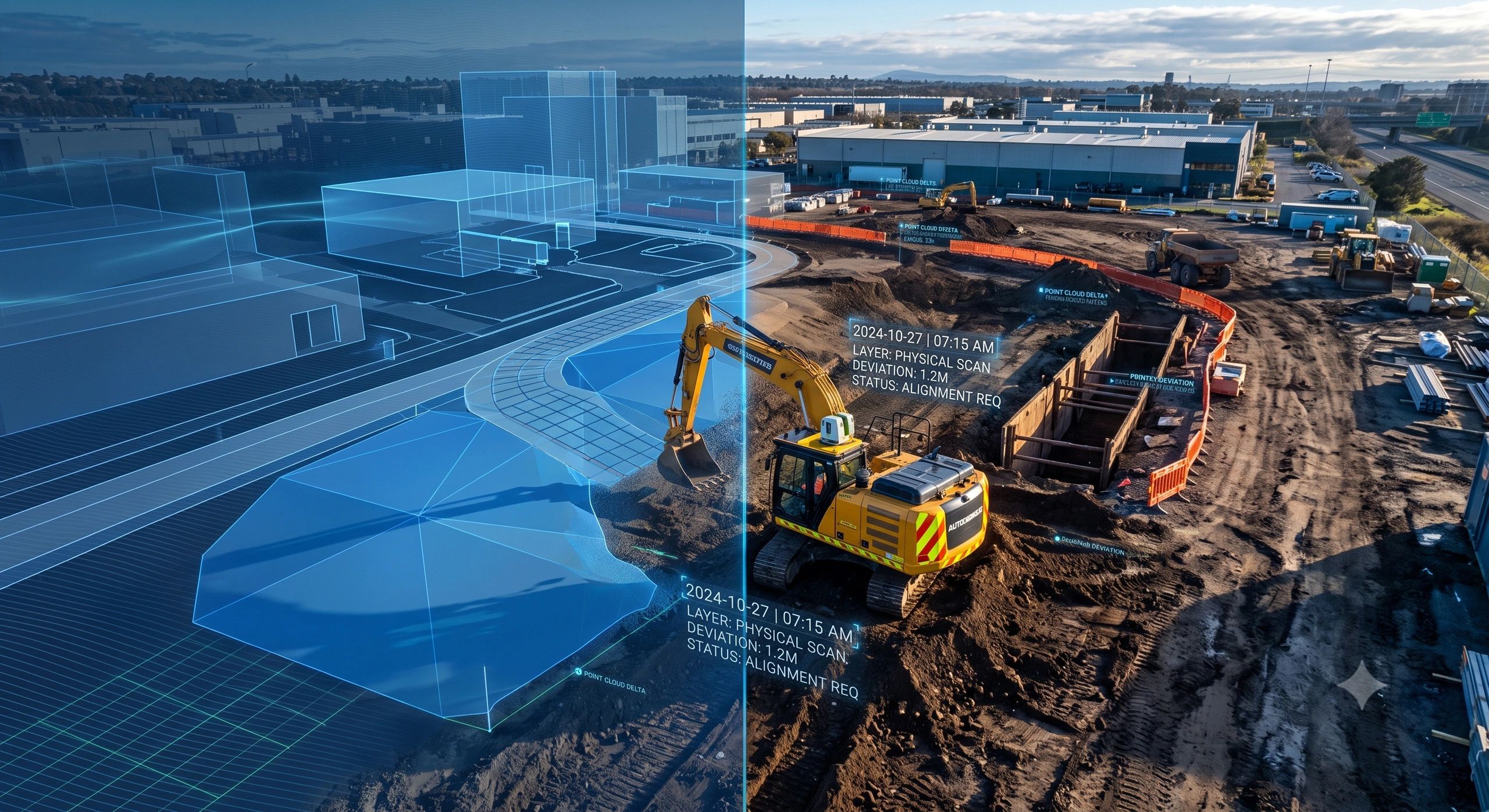
Weeks later, a scan shows that a section was installed differently because of an unexpected obstruction.
What should the owner trust now: the approved drawing, the installation record, or the latest scan?
The answer depends on what each record can prove. The drawing shows what was authorized. The installation record shows what the team reported. The scan provides evidence of visible physical conditions at a particular time, subject to coverage and measurement limits. None should silently replace the others.
The same problem appears in a hospital refurbishment, a highway project or an industrial plant. A design change may be valid, yet the physical asset may be incomplete, inaccessible, misplaced or undocumented. The owner eventually inherits the difference.
This is my central concern as AEC software takes on more project tasks: the speed of an instruction should never be mistaken for proof of its physical outcome.
What an assurance record needs to connect
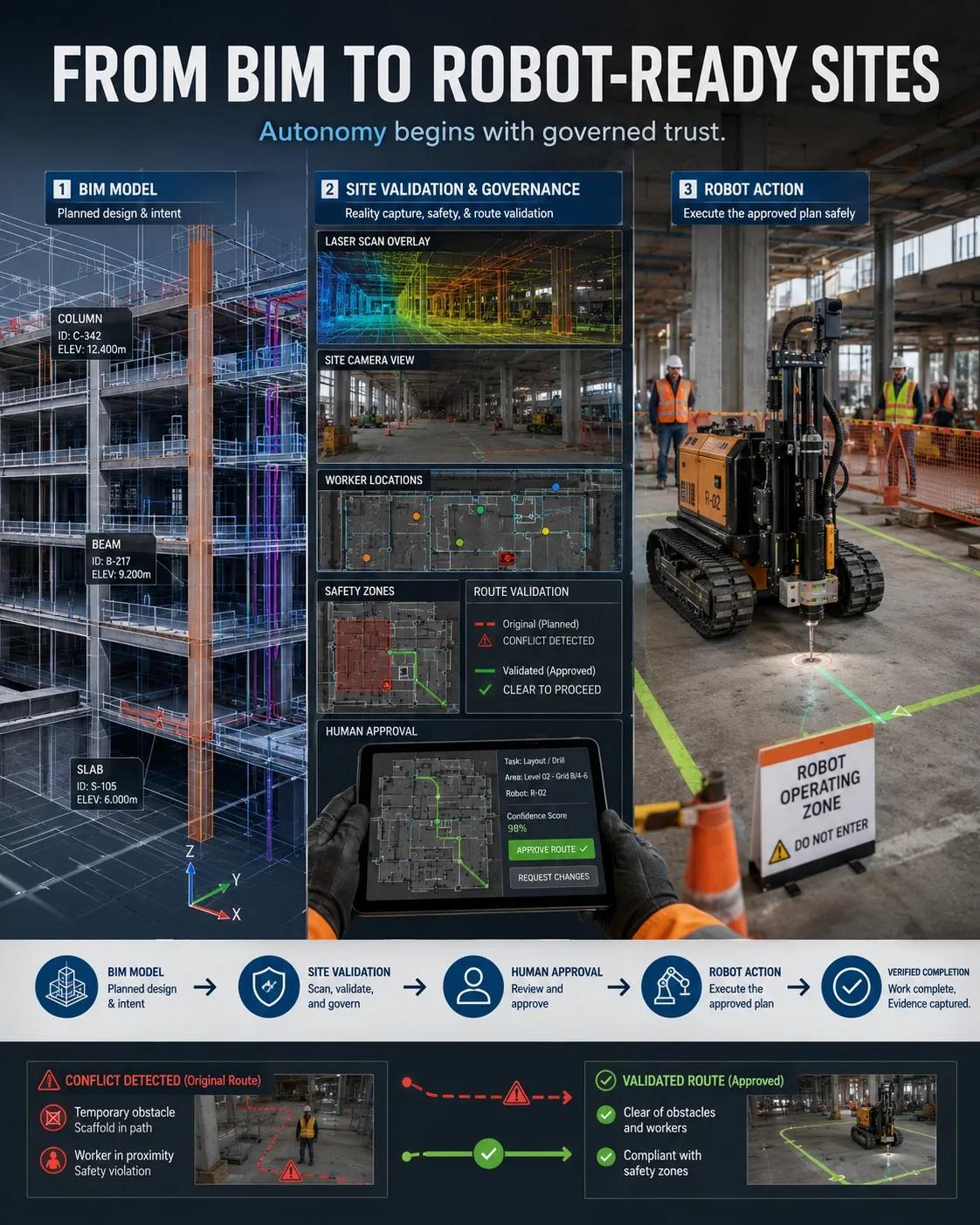
Reality verification is more than placing a point cloud beside a BIM model and looking for differences. A useful result must connect five things:
- The approved intent. Which drawing, model element, specification and revision governed the work?
- The physical observation. What was captured, when, where and by which method?
- The asset identity. Which real component or work package does the observation concern?
- The decision and authority. Who accepted a deviation, ordered a correction or approved a change?
- The verified outcome. What later evidence shows that the accepted work or correction was completed?
Without those links, a detected mismatch can become another item in a dashboard with no clear owner or resolution.
Even the comparison itself needs care. A scan may miss the area behind a finished wall. A model may contain design-level geometry that was never intended to specify installation tolerance. A difference may reflect a survey alignment problem rather than a construction error. Verification must state its confidence and limits.
The practical question is therefore not simply, “Does reality match the model?”
It is: “Do we have enough reliable evidence to accept this specific asset or work package against the correct approved requirement?”
Make verification part of the work, not an end-of-project exercise
The familiar approach is to assemble as-built information late in the project, often after decisions have already become expensive to revisit. AI-supported delivery strengthens the case for checking critical work at defined points during construction.
A project could start with a few high-consequence decisions: a buried utility before backfill, a structural connection before enclosure, a plant-room installation before commissioning, or an equipment change that affects future maintenance access.
For each, the team defines the requirement, the evidence needed, the person authorized to accept it and the next action if the evidence is insufficient. Depending on the task, that evidence may come from a survey, UAV imagery, mobile mapping, photographs, inspection records or a combination of sources.
The result should allow three honest states:
- Verified: the available evidence supports acceptance against the stated requirement.
- Needs review: a possible difference or data limitation requires professional judgement.
- Not yet observable: the necessary evidence has not been collected or the condition cannot currently be seen.
Those states are more useful than an AI-generated pass or fail that conceals uncertainty.
Where the commercial value sits
Owners do not gain much from detecting a difference that nobody resolves. They gain value when a material issue is found while it can still be addressed, with a record that supports acceptance, payment, commissioning and future operation.
For contractors, this can mean fewer disputes over which revision applied and what was actually completed. For operators, it means receiving asset information they can relate to the equipment in front of them. For project leaders, it means knowing which work is ready to proceed and which work still lacks evidence.
This is also where geospatial practice has a larger role in AEC AI. Coordinates, control, capture dates, coverage, accuracy and asset identity determine whether a physical observation can support a decision. These details may sit outside the most impressive AI demonstration, but they govern whether its conclusions survive contact with the site.
Autodesk’s recent announcements show how quickly software can become more capable of finding, comparing and coordinating project information. Autodesk News My inference is that this will increase demand for a complementary discipline: connecting AI-supported decisions to trustworthy observations of the built world.
The test for an agentic AEC workflow should be straightforward. After it recommends or coordinates a change, can the project show which requirement was approved, what was built, who accepted it and what evidence supports that acceptance?
When AI helps projects move faster, that record becomes more valuable not less.