For most of their evolution, digital twins have been built around one assumption:
Humans will observe the physical world through a screen.
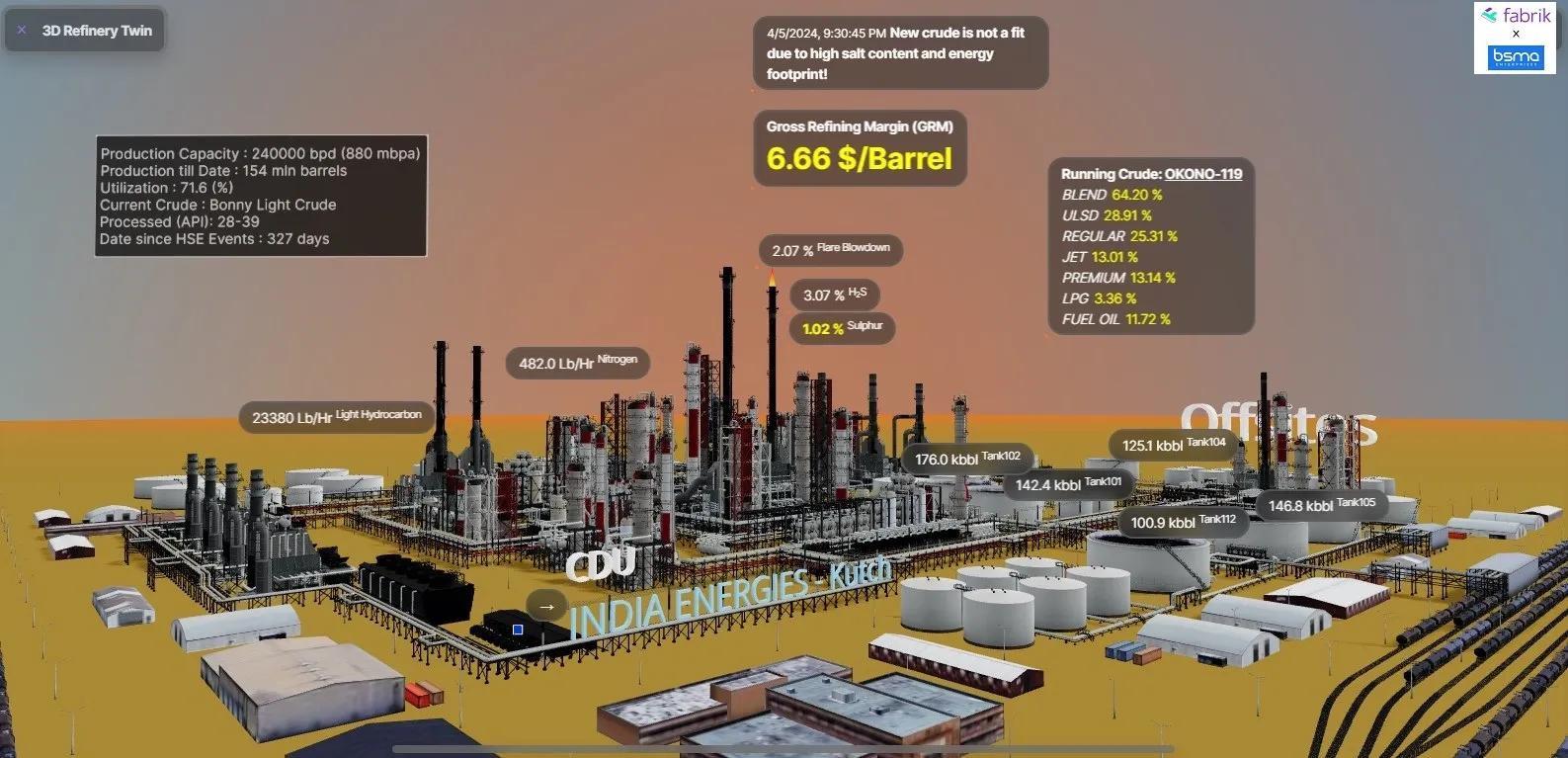
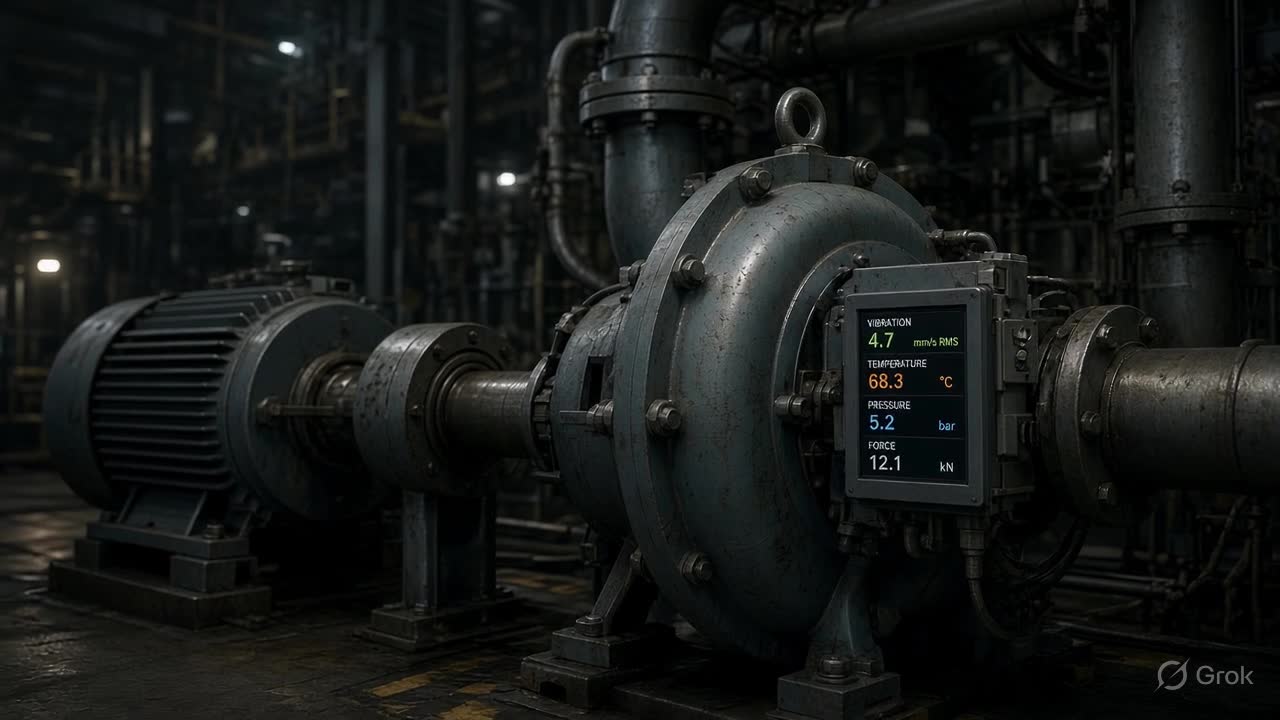
We see a pump change color when its temperature rises. We watch vibration charts when a bearing begins to degrade. We inspect a 3D model when reviewing an asset remotely.
Even immersive XR largely preserves this relationship. We may stand inside the digital representation, but we still experience most of it visually.
There is another possibility emerging.
What if operational data could be translated into something we can physically feel?
Not as science fiction, and not necessarily as a perfect reproduction of touch.
As another way of understanding the physical world.
That is where the idea of the Haptic Digital Twin becomes interesting.
From observing the twin to interacting with it
A conventional digital twin establishes a connection between a physical asset and its digital representation.
Sensors measure temperature, vibration, pressure, position, force and other states. The twin organizes those observations around the asset and presents them to people or machines.
A haptic interface introduces another path:
Physical asset → sensors → digital twin → haptic interpretation → human
And in teleoperation, the loop can run in both directions:
Human ↔ digital twin ↔ robot ↔ physical environment
This distinction matters.
The original concept behind this article describes a twin that converts operational measurements such as vibration, temperature or pressure into tactile or force feedback delivered through gloves or other haptic interfaces. 21-Haptic Digital Twins
The enabling technologies for that architecture already exist.
What does not yet exist at scale is a mature industrial category called the “Haptic Digital Twin.”
We are watching its components converge.
The building blocks are becoming real
Force-feedback devices can already create resistance when a user interacts with a virtual object. Vibrotactile systems can reproduce patterns across the hand or body. Robotic systems can measure forces during remote manipulation. XR environments can synchronize with physical assets.
Researchers are increasingly combining these capabilities with digital twins for teleoperation, training and remote interaction.
More importantly, the communications layer is beginning to mature.
IEEE 1918.1-2024 defines a reference architecture for the Tactile Internet, including applications in manufacturing, transportation and healthcare. IEEE 1918.1.1-2024 goes further by defining codecs for transmitting kinesthetic and tactile information, including mechanisms designed for remote-touch and teleoperation scenarios. IEEE Standards Association
ISO/IEC 23090-31:2025 now defines standardized representations for transmitting and rendering haptic media, including vibrotactile and kinesthetic information. ISO
That is an important signal.
We standardized ways to encode sound.
Then images and video.
Now we are developing standardized ways to encode touch.
But “feeling the asset” needs careful interpretation
Imagine a motor bearing vibrating at 120 Hz.
The simplest description of a Haptic Digital Twin would say:
The engineer remotely feels the bearing vibrating at 120 Hz.
The reality is more interesting.
The system might measure the vibration, determine its significance, map it onto the digital asset, and then translate it into a tactile pattern that a human can recognize.
What the engineer feels may therefore not be a literal reproduction of the bearing.
It may be a designed representation of its condition.
That opens a much larger possibility.
We could make things tactile that humans cannot normally feel.
A rise in pipeline pressure could become increasing resistance in a control device.
Structural strain could become a changing force pattern.
An approaching UAV obstacle could produce resistance against the operator's movement.
A thermal anomaly could create a localized tactile warning.
The objective is no longer simply to simulate touch.
It is to create a new sensory language for spatial and operational data.
This is where digital twins become different
Consider how industrial information is normally presented.
An engineer receives:
Temperature: 87°C
Vibration: 9.2 mm/s
Pressure: 8.4 MPa
Clearance: 240 mm
Each requires interpretation.
Now imagine that the twin can translate selected conditions into perceptual signals.
Increasing resistance means pressure is approaching a limit.
A vibration pattern indicates an abnormal machine condition.
Force opposing movement indicates that a remotely controlled manipulator is contacting an object.
The interface begins moving from:
data → cognition → decision
toward:
data → perception → cognition → decision
That does not eliminate engineering analysis.
It adds another channel through which humans can understand machines and environments.
Teleoperation may be the stronger near-term use case
There is little reason to add expensive haptic equipment simply to make BIM clash detection more dramatic. Visual collision detection already solves much of that problem effectively.
The value becomes clearer when physical judgement matters.
Imagine a robot operating inside a hazardous industrial facility.
Its gripper encounters resistance while turning a valve.
The robot measures torque and force.
Those measurements are synchronized with the digital twin.
A haptic interface translates them into resistance felt by the remote operator.
Now the twin is doing more than displaying the robot's location.
It is mediating interaction between the operator and the physical environment.
The same principle could eventually apply to nuclear facilities, offshore infrastructure, underwater systems, mines, disaster environments, remote maintenance and space operations.
Here, touch is not an XR novelty.
It becomes operational information.
The architecture also becomes harder
A visual digital twin can sometimes tolerate noticeable network delays.
A closed-loop haptic system may not.
If an operator moves a robotic arm, encounters an object and receives force feedback too late, the issue is no longer simply poor user experience. Delay and jitter can affect control behavior and system stability.
This is why the emerging Tactile Internet standards matter. IEEE's haptic codec standard explicitly addresses both kinesthetic and tactile information and includes a delay-robust kinesthetic codec. IEEE Standards Association
The architecture therefore begins shifting toward:
sensors → edge processing → twin state → haptic mapping → low-latency network → interface
rather than treating everything as another cloud visualization problem.
And then comes the deeper problem: trust
Suppose a remote operator feels resistance while manipulating a virtual valve.
Where did that resistance come from?
A physical torque sensor?
A physics simulation?
A predictive model?
An AI estimate?
A safety rule deliberately preventing further movement?
To the operator, they may all feel identical.
But they are not equivalent.
This suggests that Haptic Digital Twins will eventually need something beyond data provenance.
They may need sensory provenance.
A future system may have to distinguish between:
MEASURED | SIMULATED | PREDICTED | SYNTHESIZED
because once machine-generated information enters human perception directly, knowing its origin becomes part of trusting the interaction.
The larger shift is not really about gloves
It is tempting to view Haptic Digital Twins as another chapter in XR hardware.
I think that misses the more important direction.
Digital twins began by helping us see physical systems.
IoT allowed them to observe changing conditions.
Physics models helped them predict behavior.
AI is beginning to let us query and reason across those environments.
Haptics introduces something different:
the possibility of turning the digital representation into an interface for physical perception and action.
We are not yet at an industrial “Internet of Senses.” Haptic Digital Twins themselves remain an emerging integration pattern rather than a standardized product category.
But the pieces are becoming visible.
Haptic hardware exists.
Digital twins exist.
Robotic teleoperation exists.
Low-latency edge architectures exist.
And standards for communicating haptic information are now appearing. ISO/IEC 23090-31:2025 even provides representations for interoperable haptic experiences across devices. ISO
The interesting question, therefore, is not whether tomorrow's digital twins will somehow acquire a sense of touch.
It is what happens when the twin stops being merely a representation of reality and becomes the mediation layer between human perception, machine intelligence and physical action.
Perhaps the next evolution of spatial intelligence will not only make the physical world machine-readable.
It may also make machine-readable reality human-feelable.