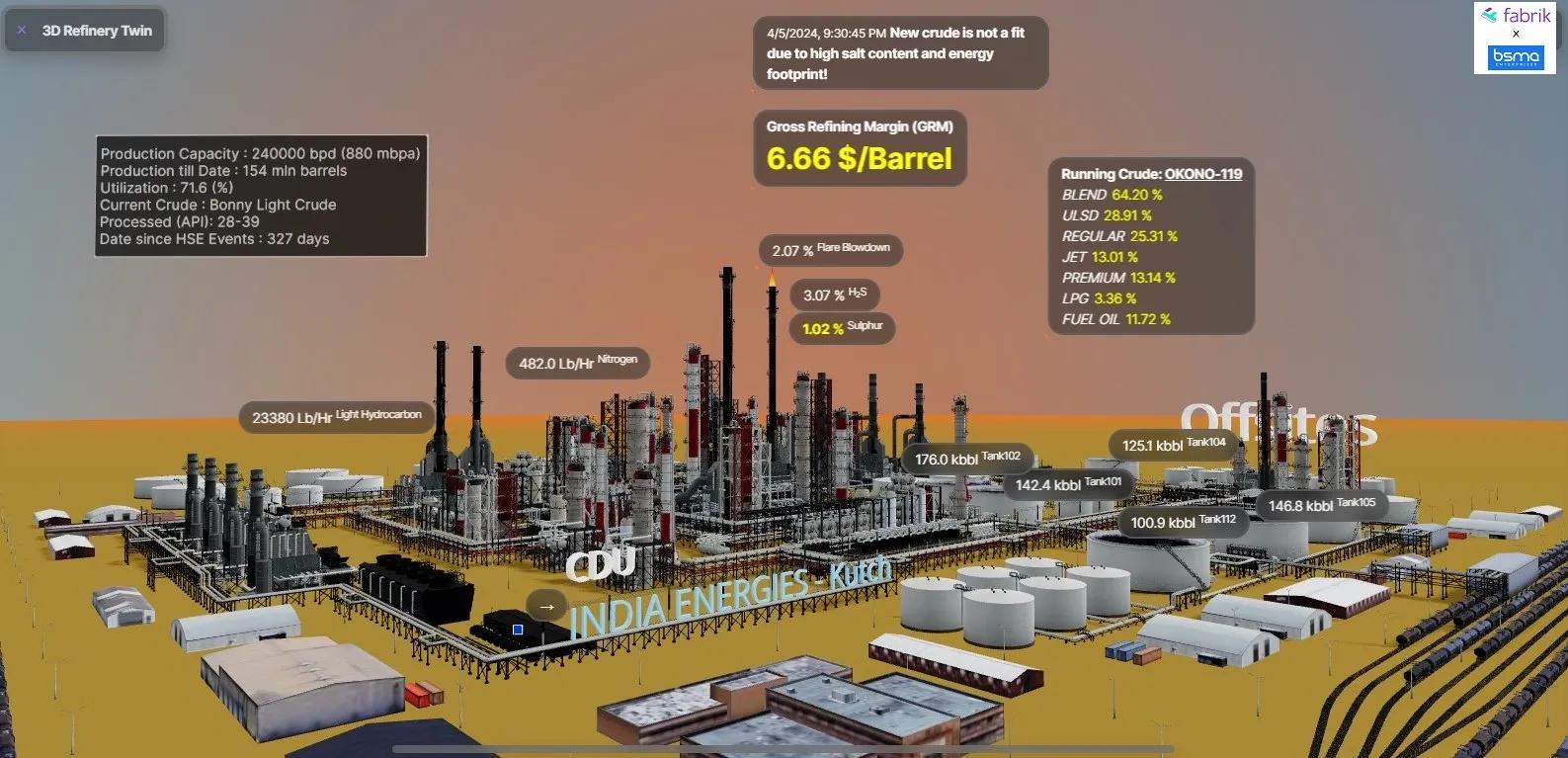
Digital Twins, virtual replicas of physical entities, are revolutionizing industries by providing real-time data and predictive insights that enhance decision-making, efficiency, and operational control. Traditionally, the creation and management of Digital Twins required extensive programming skills, making it a domain limited to experts. However, the advent of no-code platforms, like Fabrik 's, is democratizing access to these powerful tools, enabling users to create, deploy, and manage Digital Twins without needing advanced coding skills. This shift is particularly significant for industries that are increasingly adopting digital transformation strategies but are hindered by the lack of technical expertise.
Simplified Digital Twin Creation
No-code platforms streamline the process of creating Digital Twins by allowing users to build complex 3D models and workflows through intuitive drag-and-drop interfaces. This ease of use eliminates the need for specialized knowledge in programming languages or software development, making it accessible to a broader range of users, including those in management, operations, and other non-technical roles.
For instance, Fabrik’s no-code platform allows users to create 3D models, integrate various data sources, and build comprehensive digital workflows by simply selecting pre-built modules and connecting them through a visual interface. This approach reduces the time and cost associated with developing Digital Twins, as users can focus on their specific requirements without being bogged down by the technical intricacies of software development.
Accelerated Deployment and Iteration
One of the key advantages of no-code platforms is the ability to rapidly deploy Digital Twins and iterate on them as needed. Traditional coding processes can be time-consuming, often requiring weeks or months to develop, test, and deploy changes. In contrast, no-code platforms enable users to make modifications in real-time, ensuring that Digital Twins can be continuously updated to reflect the latest operational conditions or new requirements.
This agility is particularly beneficial in dynamic environments where conditions change frequently, such as in manufacturing, smart cities, and aerospace. For example, in the aerospace industry, Fabrik ’s platform has been used to create VR training modules that integrate real-time data from black boxes, allowing pilots to simulate and prepare for various scenarios more effectively. The ability to quickly adapt these training modules to new data ensures that training remains relevant and up-to-date.
Cost-Effectiveness and Scalability
The cost-effectiveness of no-code platforms is another significant advantage. By eliminating the need for specialized developers, organizations can reduce their development costs and allocate resources more efficiently. Additionally, the scalability of these platforms allows businesses to expand their use of Digital Twins across multiple projects or sites without incurring prohibitive costs.
Fabrik 's platform, for example, operates on a scalable cloud-based architecture that supports the creation and deployment of Digital Twins across various industries, from smart cities to industrial manufacturing. The platform’s no-code environment allows for rapid scaling, enabling organizations to extend their Digital Twin capabilities as their needs evolve without requiring extensive reconfiguration or redevelopment.
Enhanced Collaboration and Stakeholder Engagement
No-code platforms also facilitate better collaboration among stakeholders by making Digital Twins more accessible and understandable to non-technical users. With traditional development methods, the complexity of coding often creates a barrier between developers and end-users, leading to misunderstandings and misaligned expectations. No-code platforms, however, provide a more transparent development process, where stakeholders can directly interact with and contribute to the creation of Digital Twins.
This collaborative approach is exemplified in Fabrik ’s platform, where users can work together in real-time, annotate 3D models, and provide feedback within the same environment. This not only enhances the quality of the final product but also ensures that all stakeholders are aligned and engaged throughout the development process.
Future-Proofing and Adaptability
The rapid pace of technological change makes future-proofing an essential consideration for any digital transformation strategy. No-code platforms are inherently adaptable, allowing organizations to quickly integrate new technologies and data sources as they emerge. This flexibility ensures that Digital Twins remain relevant and effective over time, even as new challenges and opportunities arise.
Fabrik ’s platform, for instance, is designed with future integration in mind, supporting a wide range of data sources and formats. This adaptability is crucial for industries like smart cities, where the ability to integrate new IoT devices, data streams, and analytics tools can significantly enhance the effectiveness of Digital Twins.
Reducing Dependency on Technical Expertise
One of the most transformative aspects of no-code platforms is their ability to reduce an organization’s dependency on technical expertise. By providing tools that are easy to use, these platforms empower a broader range of employees to contribute to digital transformation efforts. This democratization of technology not only accelerates the adoption of Digital Twins but also fosters a culture of innovation within organizations.
Fabrik 's platform exemplifies this by enabling users with minimal technical skills to create and manage sophisticated 3D models and workflows. The platform’s intuitive design and comprehensive support materials allow users to quickly learn and apply the tools, leading to increased productivity and innovation across the organization.
Conclusion
The rise of no-code platforms represents a significant shift in the way Digital Twins are created and utilized. By simplifying the development process, reducing costs, and enhancing collaboration, these platforms are making Digital Twins more accessible and effective for a wide range of industries. Fabrik ’s no-code platform is at the forefront of this movement, providing a powerful tool that enables users to rapidly create, deploy, and manage Digital Twins with ease.
As the demand for Digital Twins continues to grow, no-code platforms like Fabrik ’s will play an increasingly important role in helping organizations achieve their digital transformation goals. By empowering users to build and iterate on Digital Twins without the need for advanced coding skills, these platforms are driving a new era of innovation and efficiency across industries.