A factory-tested infrastructure module arrives on site.
The equipment has passed its internal checks. The components are connected. The supplier confirms that the unit is ready.
Yet the project cannot operate at the expected capacity.
The reason may sit outside the module: insufficient power, a cooling system operating beyond its limits, an incomplete network connection or controls that do not communicate correctly.
For the owner, the result is still the same: delayed commissioning, underused investment and uncertainty about when the system can deliver its intended function.
As infrastructure becomes more modular, these points of connection deserve more attention.
What modular delivery changes
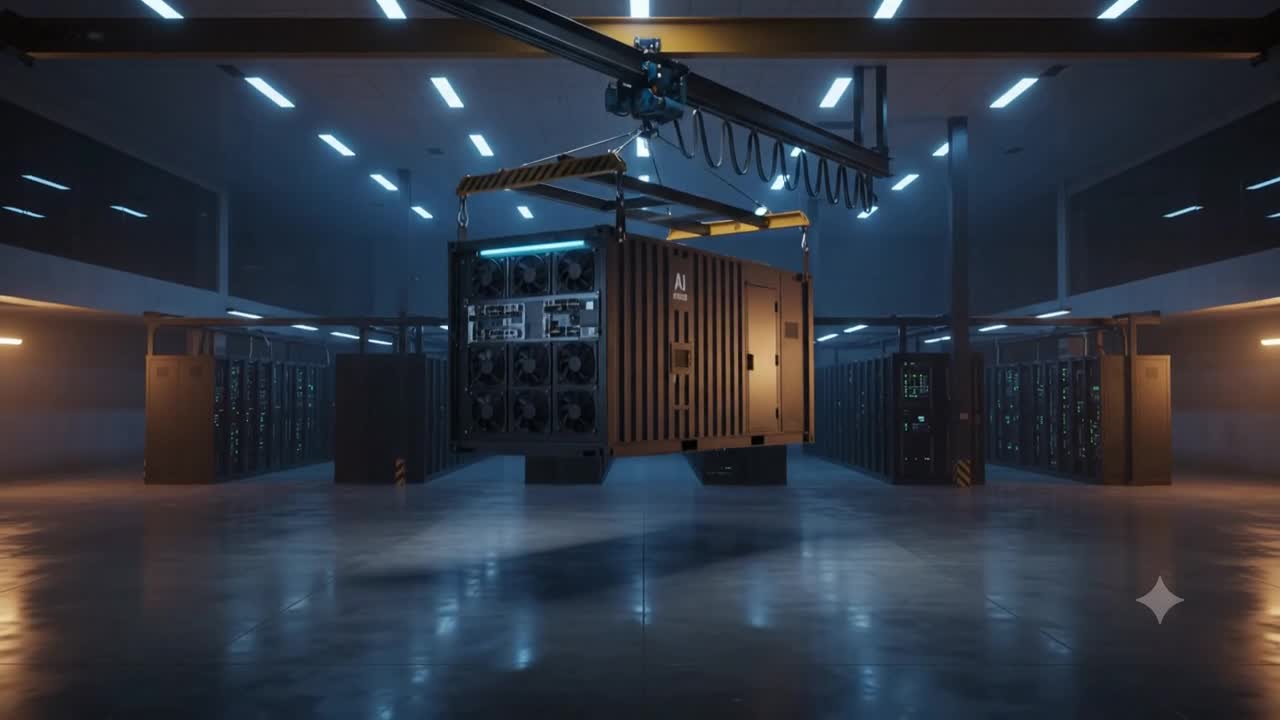
NVIDIA’s recently announced DSX POD offers a useful example. It is a reference design for AI infrastructure that partners will build, integrate and validate in modular containers before delivery.
NVIDIA says this approach can reduce deployment time at a prepared site from six months to as little as 14 days. The company expects partners to deliver the systems in early 2027. These are announced targets, not a guarantee for every project. NVIDIA Newsroom
The idea is compelling: factory teams can integrate and test equipment while site teams prepare foundations, power, cooling and connectivity in parallel.
But the prepared site matters. After delivery, teams still need to place the modules, connect them to external infrastructure and complete commissioning. NVIDIA Technical Blog
This changes where project teams need to focus their attention.
Some integration work moves into the factory. The remaining site work becomes concentrated around the conditions that allow the module and the facility to operate together.
A working component is not the same as a working system
Consider a hypothetical AI compute module called P17.
P17 passes factory acceptance. Its internal equipment operates within the supplier’s specified conditions.
At the site, however, several questions remain:
- Can the electrical supply support the intended load?
- Can the cooling system maintain the required conditions during peak operation?
- Does the network provide the required connectivity and performance?
- Are alarms and controls connected to the facility’s operating systems?
- Have the combined systems been tested under representative conditions?
If one answer is uncertain, P17 may be installed and internally functional without being ready to deliver its intended service.
For the owner, “installed capacity” and “deliverable capacity” are therefore different measures.
Deliverable capacity depends on the module, its supporting infrastructure and the conditions under which the complete system operates.
This is an engineering and management issue. Different parties may own the module, power supply, cooling plant, network and commissioning process. Each can complete its own work while no single party has a clear view of the complete operating chain.
The same problem appears across infrastructure
This issue extends well beyond AI data centers.
A transformer may pass its factory tests, yet its connection to the grid still requires site-specific protection, integration and commissioning checks.
A pump may be in good condition, while the pipeline or operating conditions prevent it from delivering the required flow.
An industrial robot may perform correctly in a controlled environment, while its assigned facility lacks the layout, connectivity or safety arrangements needed for the task.
A field sensor may measure correctly, while a failed communications path prevents the observation from reaching the operator.
In each case, checking the individual asset is necessary. The decision becomes stronger when we also examine the relationship between that asset and the system around it.
Give the interface its own identity
Digital twins commonly represent physical assets: a transformer, a pump, a server, a valve or a sensor.
I believe they should also represent critical interfaces as objects that can be inspected, tested and governed.
An interface record could connect:
Asset A → required condition → Asset B
For each important connection, the record could include:
- The assets and systems involved.
- The function the connection must support.
- Required and available capacity.
- Compatibility and operating limits.
- The responsible parties.
- The test or acceptance criteria.
- Supporting evidence and its date.
- The person authorized to accept the result.
- The current status: unverified, verified, accepted or requiring review.
This would allow a project team to ask a more useful question:
“Both assets are reported as healthy. Is the connection between them fit for the required operating condition?”
The interface can be physical, such as a pipe connection. It can also involve data, control signals, network access or a handover between organizations.
Turn commissioning into an evidence chain
For P17, a digital twin could link the factory record to the conditions verified at the site:
Factory acceptance → site electrical verification → cooling verification → network and controls integration → system test → authorized site acceptance
Each step answers a different question.
Factory acceptance indicates what was tested before shipment. Site verification checks whether the external conditions are suitable. System testing examines whether the combined installation performs as intended. Acceptance records who reviewed the evidence and approved the result.
The chain also makes gaps visible.
If cooling verification is incomplete, the system should not present full site readiness merely because the compute module has passed its factory checks.
That distinction supports more honest handovers between suppliers, contractors, commissioning teams and operators.
Acceptance is a point in time
An interface accepted today may need review later.
A facility may add another load. A network configuration may change. A cooling system may be modified. A sensor may lose its communications path.
For that reason, interface assurance should continue beyond commissioning for connections that are critical to operations.
A useful approach is to define:
- The operating envelope: the conditions under which the interface is expected to support its function.
- The evidence: the measurements, test results and records needed to assess it.
- The review trigger: the change, elapsed time or observed condition that requires reassessment.
Not every connection needs continuous monitoring. The level of assurance should reflect its consequence: what happens if it fails, how quickly the problem can be detected and what action an operator can take.
Human authority also matters. A digital twin can highlight a conflict between required and available capacity, but the designated engineer or operator should decide what the evidence means for commissioning or continued operation.
Where geospatial and BIM add value
This is also a practical opportunity for geospatial technology, BIM and operational data to work together.
BIM can describe the designed systems and their intended connections. Geospatial context can locate assets within a wider site or network. Reality capture and field records can help verify what was installed. IoT and control systems can provide observations about operating conditions.
A digital twin can bring those records together around the interface, provided the project maintains reliable asset identities, evidence and responsibility for keeping the information current.
For brownfield environments, this may be especially useful. A new module often connects to existing infrastructure whose documentation, capacity and actual condition need to be checked before the new system can be accepted.
A practical place to start
An organization does not need to model every interface at once.
Start with one critical function and trace the connections it depends on. For a modular data-center installation, that could be the path from site power and cooling to a compute module and its production workload.
Then ask:
- What must each connection deliver?
- Who is responsible for it?
- What evidence demonstrates readiness?
- What change would invalidate that evidence?
- Who decides whether the complete system can operate?
The result is a small, reviewable assurance model with a clear business purpose: reducing uncertainty between installation and useful operation.
Modular infrastructure can make delivery faster and more repeatable. But the value of a module is ultimately realized through the system it joins.
The next step for digital twins is to make those connections visible and keep the evidence behind them available when someone needs to make a decision.