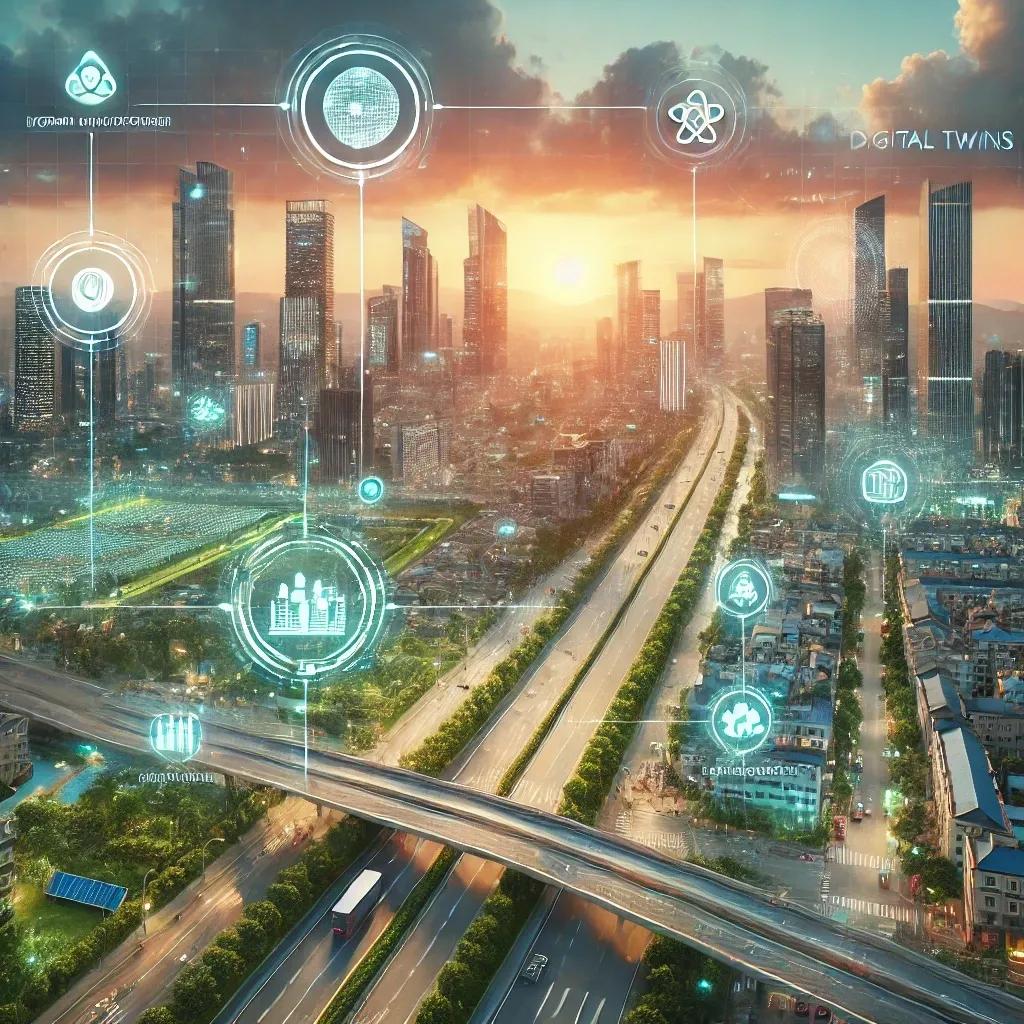
As urbanization accelerates, cities around the globe are grappling with the complexities of managing increasingly dense and dynamic urban environments. The evolution of smart cities offers a promising avenue for addressing these challenges, leveraging cutting-edge technologies to enhance the quality of life for citizens while promoting sustainable development. Central to this evolution is the adoption of Digital Twin strategies—a digital replication of physical assets, systems, and processes, enabled by real-time data and advanced simulations. In this article, we explore why every smart city needs a Digital Twin strategy and how such strategies can revolutionize urban infrastructure management, citizen services, and sustainability efforts.
Enhancing Urban Infrastructure Management
Managing urban infrastructure effectively is one of the most pressing challenges faced by smart cities. Infrastructure such as roads, bridges, public utilities, and transportation networks require continuous monitoring, maintenance, and optimization. A Digital Twin strategy enables cities to create accurate and dynamic models of their physical infrastructure, providing a powerful tool for real-time monitoring and predictive maintenance.
Digital Twins allow city planners and engineers to simulate the performance of infrastructure under various scenarios, helping to identify potential failures before they occur. For example, by integrating data from sensors embedded in roadways or bridges, a Digital Twin can predict when a component might fail due to wear and tear, allowing for timely repairs that minimize disruptions. This predictive capability not only extends the lifespan of infrastructure but also reduces maintenance costs and enhances public safety.
Moreover, Digital Twins can optimize the operation of urban systems by providing a holistic view of how different infrastructure components interact. For instance, traffic management systems can benefit from Digital Twins that simulate traffic flow and congestion, allowing city authorities to adjust traffic signals and reroute vehicles in real-time to alleviate bottlenecks. This level of operational insight is crucial for managing the complexities of modern urban environments.
Improving Citizen Services
Smart cities aim to enhance the quality of life for their residents by improving access to services and making urban living more efficient. Digital Twins play a pivotal role in achieving this goal by enabling a more responsive and personalized approach to service delivery.
With a Digital Twin strategy, cities can create detailed models of public service networks, such as water supply, electricity, and waste management. These models allow for continuous monitoring and real-time adjustments to service delivery, ensuring that resources are used efficiently and that service disruptions are minimized. For instance, a Digital Twin of the water distribution network can help identify leaks or inefficiencies, allowing for targeted repairs and reducing water wastage.
Furthermore, Digital Twins can enhance emergency response services by providing first responders with real-time data and simulations of incident scenarios. In the event of a fire or natural disaster, a Digital Twin can simulate the spread of the incident and identify the best routes for evacuation or the deployment of emergency services. This capability can save lives by enabling faster and more informed decision-making during critical situations.
Another significant benefit of Digital Twins is their ability to support citizen engagement and participation in urban planning. By providing a virtual representation of the city, residents can explore proposed developments, provide feedback, and engage in the decision-making process. This level of transparency and involvement is essential for fostering a sense of community and ensuring that urban development aligns with the needs and desires of the populace.
Driving Sustainable Development
Sustainability is at the forefront of smart city initiatives, with cities striving to reduce their environmental impact while supporting economic growth and social well-being. The Digital Twin strategy is a powerful tool for driving sustainable development by enabling cities to model and optimize the environmental performance of their systems.
One of the key applications of Digital Twins in this context is in energy management. Cities can create Digital Twins for their energy grids to monitor energy consumption, identify inefficiencies, and optimize the integration of renewable energy sources. For example, by simulating the impact of solar panels, wind turbines, and energy storage systems, cities can develop strategies to reduce reliance on fossil fuels and lower greenhouse gas emissions.
In addition to energy management, Digital Twins can also contribute to environmental monitoring and resource management. By integrating data from environmental sensors, such as those monitoring air quality, noise levels, or water quality, Digital Twins can provide a comprehensive view of the city's environmental health. This information can be used to develop strategies for mitigating pollution, managing natural resources, and improving the overall quality of life for residents.
Digital Twins also support the circular economy by enabling cities to better manage waste and resource recovery processes. For instance, a Digital Twin of the waste management system can simulate the flow of waste materials through the city, identify inefficiencies, and optimize recycling and disposal processes. This not only reduces the environmental impact of waste but also supports the sustainable use of resources.
In conclusion, the quest to build smarter, more sustainable cities, the adoption of a Digital Twin strategy is not just an option but a necessity. By providing a virtual mirror of the physical world, Digital Twins empower cities to manage their infrastructure more effectively, improve the delivery of services to citizens, and drive sustainable development. As urbanization continues to accelerate, cities that embrace Digital Twin strategies will be better equipped to meet the challenges of the future, ensuring a high quality of life for their residents and a sustainable path forward.
Our expertise in Digital Twin technology makes it a valuable partner for cities embarking on this journey. With a comprehensive suite of tools for urban infrastructure management, citizen services, and sustainability, we help cities unlock the full potential of their Digital Twin strategies, paving the way for a smarter, more connected future.