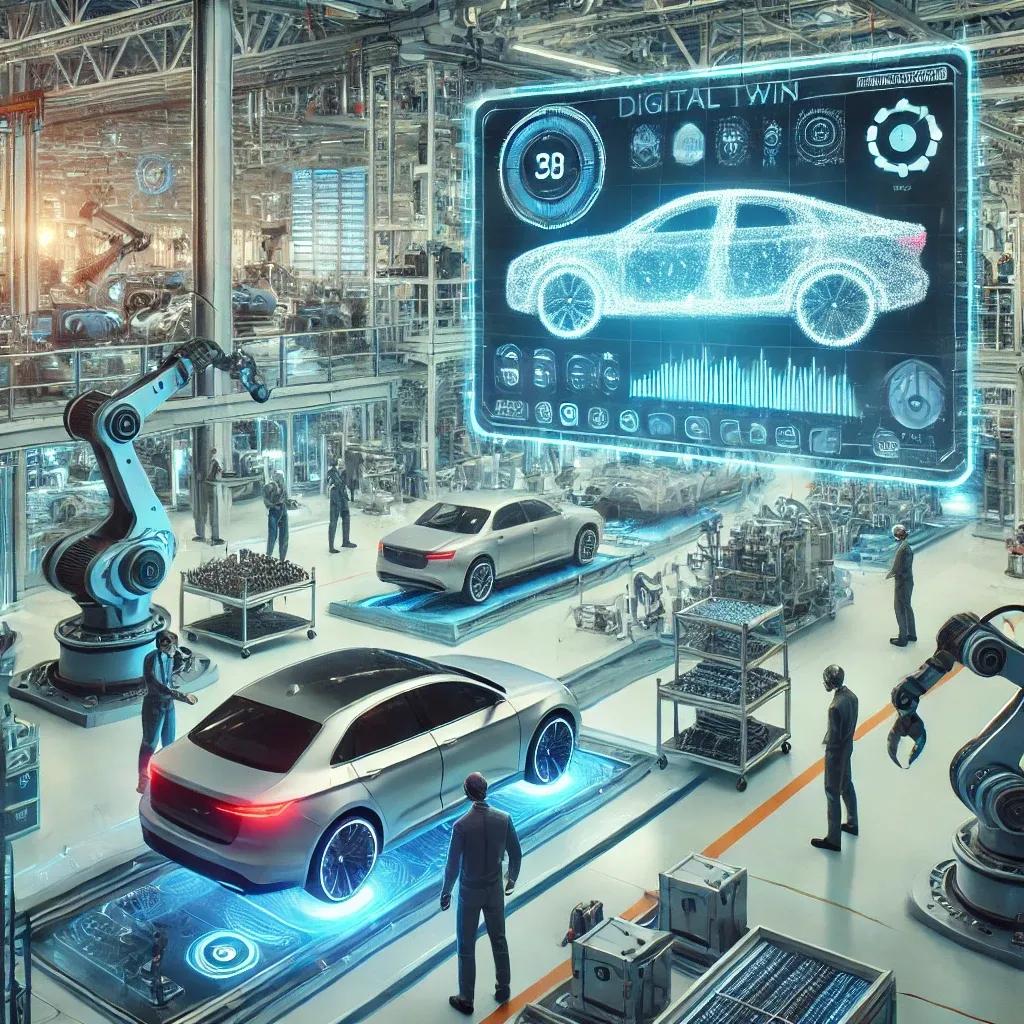
The automotive industry is undergoing a significant transformation driven by digital technologies, and at the heart of this revolution is the concept of Digital Twins. Digital Twins are virtual replicas of physical assets, processes, or systems that allow for real-time monitoring, simulation, and optimization. In automotive manufacturing, Digital Twins are becoming indispensable due to their ability to streamline production, enhance vehicle quality, and drive innovation. This article explores the critical role of Digital Twins in the future of automotive manufacturing, with a focus on their applications, benefits, and potential to reshape the industry.
The Emergence of Automotive Digital Twins
Digital Twins have emerged as a game-changing technology in the automotive sector, offering manufacturers the ability to create detailed 3D models and simulations of vehicles, components, and entire production processes. By leveraging data from sensors, IoT devices, and other sources, these digital replicas provide a comprehensive view of the manufacturing environment. Our Digital Twin technology exemplifies this trend, offering a robust platform that integrates 3D modeling, real-time data analysis, and simulation capabilities.
In automotive manufacturing, Digital Twins are used to mirror physical assembly lines, machinery, and even complete vehicles. This digital replication allows manufacturers to monitor the performance of these assets in real-time, identify potential issues before they occur, and optimize production processes to enhance efficiency and reduce costs.
Enhancing Production Efficiency
One of the primary benefits of Digital Twins in automotive manufacturing is their ability to enhance production efficiency. Traditional manufacturing processes often involve a significant amount of trial and error, leading to wasted time, resources, and materials. Digital Twins, however, enable manufacturers to simulate various production scenarios, identify bottlenecks, and implement corrective measures before actual production begins.
For instance, by using Digital Twins to model the assembly line, manufacturers can predict how changes in the production process will affect the overall workflow. This predictive capability is crucial for optimizing line speed, reducing downtime, and ensuring that production schedules are met. Moreover, by continuously monitoring the performance of machinery and equipment through their digital counterparts, manufacturers can implement predictive maintenance strategies, thereby minimizing unplanned outages and extending the lifespan of critical assets.
Improving Vehicle Quality
Vehicle quality is a paramount concern in the automotive industry, and Digital Twins play a crucial role in ensuring that vehicles meet the highest standards. By creating a Digital Twin of a vehicle, manufacturers can simulate various conditions and stress factors that the vehicle may encounter during its lifecycle. This simulation enables them to identify potential weaknesses and design flaws early in the development process, reducing the likelihood of costly recalls and warranty claims.
In addition, Digital Twins allow for more rigorous testing of vehicle components. For example, manufacturers can use Digital Twins to simulate crash tests, thermal tests, and other scenarios that are difficult or expensive to replicate in the physical world. This not only accelerates the testing process but also provides more detailed insights into how different components interact under various conditions. As a result, manufacturers can make data-driven decisions to improve vehicle safety, performance, and durability.
Driving Innovation in Automotive Design
Digital Twins are also a catalyst for innovation in automotive design. The ability to create and manipulate detailed 3D models in a virtual environment gives designers unprecedented flexibility in exploring new concepts and ideas. With Digital Twins, designers can experiment with different materials, geometries, and configurations without the constraints of physical prototyping. This accelerates the design process and allows for more creative exploration of innovative solutions.
Moreover, Digital Twins facilitate collaboration across different departments and with external partners. Designers, engineers, and manufacturers can work together in a shared virtual space, making real-time adjustments and providing instant feedback. This collaborative approach not only speeds up the design process but also ensures that all stakeholders are aligned, reducing the risk of miscommunication and costly revisions.
The Role of Digital Twins in Smart Manufacturing
As the automotive industry moves towards smart manufacturing, where production lines are highly automated and interconnected, Digital Twins will play an increasingly important role. In a smart factory, Digital Twins serve as the backbone of the entire operation, providing a real-time digital representation of all processes and systems. This enables manufacturers to monitor production in real-time, make data-driven decisions, and adapt quickly to changes in demand or production conditions.
For instance, in a smart factory, Digital Twins can be used to optimize energy consumption by analyzing the energy usage of different machines and processes in real-time. This allows manufacturers to identify areas where energy can be saved and implement measures to reduce the overall carbon footprint of the production facility. Additionally, by integrating Digital Twins with AI and machine learning algorithms, manufacturers can achieve advanced levels of automation, where the system can autonomously adjust production parameters to optimize efficiency and quality.
Transforming After-Sales and Maintenance Services
Digital Twins extend their benefits beyond the production floor, transforming after-sales and maintenance services in the automotive industry. By creating a Digital Twin of each vehicle, manufacturers can provide personalized maintenance services that are tailored to the specific conditions and usage patterns of that vehicle. This is particularly valuable for complex systems like electric vehicles (EVs), where traditional maintenance approaches may not be sufficient.
For example, a Digital Twin of a vehicle can continuously monitor the performance of its battery, motor, and other critical components. If the system detects any anomalies, it can alert the owner or the service center, enabling proactive maintenance before a failure occurs. This not only improves vehicle reliability but also enhances the customer experience by reducing the likelihood of unexpected breakdowns.
Conclusion: The Future of Automotive Manufacturing
Digital Twins are set to become an integral part of the automotive manufacturing landscape. Their ability to enhance production efficiency, improve vehicle quality, and drive innovation makes them essential for manufacturers looking to stay competitive in a rapidly evolving industry. As technology continues to mature, we can expect Digital Twins to play an even more significant role in shaping the future of automotive manufacturing, enabling smarter, more efficient, and more sustainable production processes.
Our Digital Twin technology, with its advanced 3D modeling, real-time simulation, and data integration capabilities, is at the forefront of this transformation. By adopting Digital Twins, automotive manufacturers can not only optimize their current operations but also position themselves for long-term success in an increasingly digital world.