Floods don’t happen suddenly.
They build up over time until systems fail to respond.
Introduction
In the previous articles, we explored how Digital Twins enable:
asset monitoring in highways
integrated operations in smart cities
real-time coordination in airports
safety-driven intelligence in railways
optimization in manufacturing and logistics
risk monitoring in energy and mining
Now we move to a sector where:
👉 natural systems and infrastructure intersect directly
👉 Water Management
Water systems involve:
rivers and reservoirs
drainage and urban infrastructure
weather and environmental dynamics
In Phase 3, the focus remains:
👉 how Digital Twins enable real-time monitoring, prediction, and coordinated response
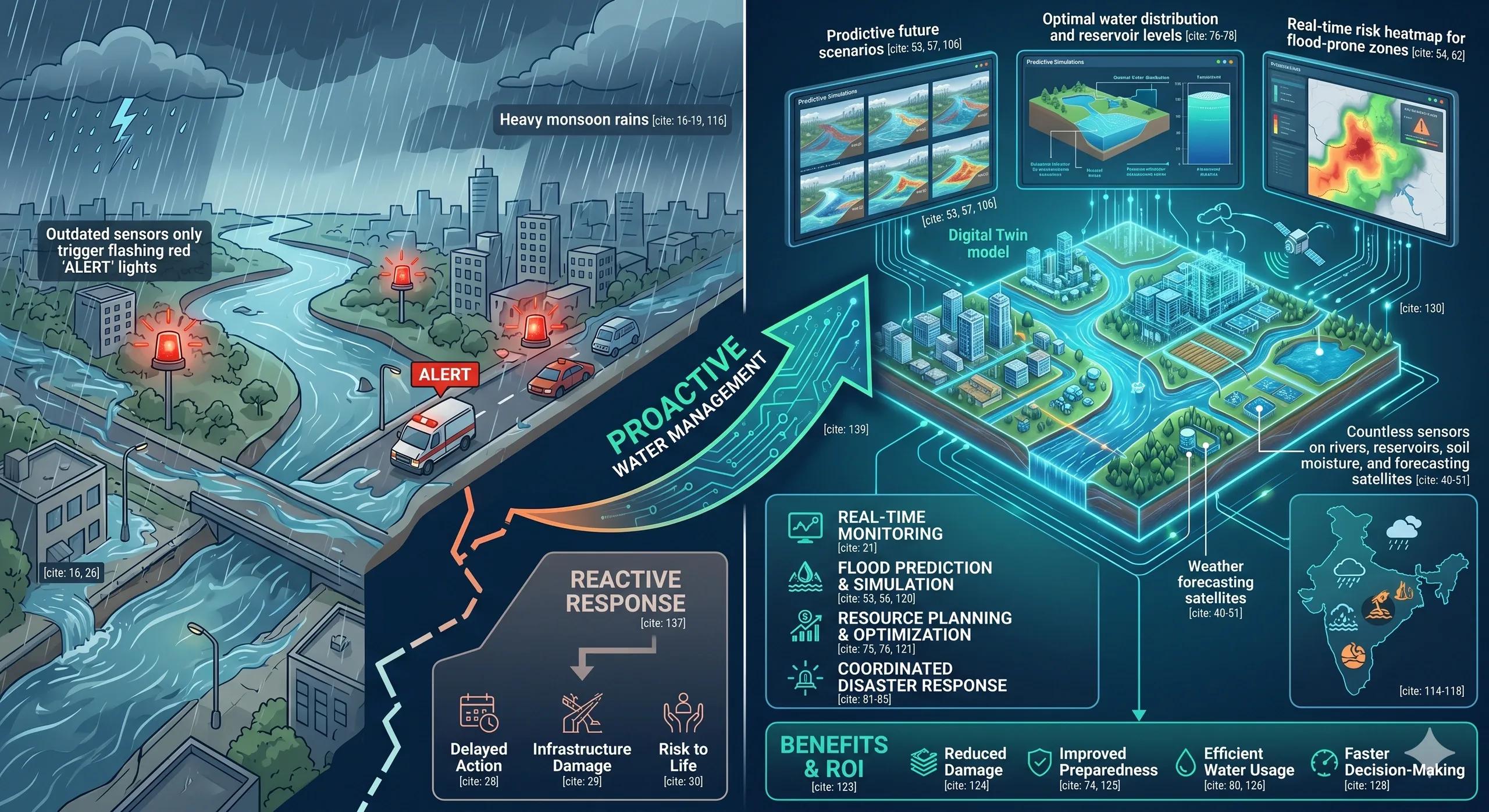
The Core Problem: Reactive Water Systems
Most water management systems today:
monitor rainfall and water levels
issue alerts after thresholds are crossed
respond to flooding after it begins
This leads to:
delayed response
infrastructure damage
loss of life and resources
👉 The system reacts instead of anticipating.
Where Digital Twins Change the Approach
A Water Management Digital Twin enables:
👉 continuous monitoring and predictive planning
Instead of:
reacting to events
It creates:
a system that anticipates and prepares
Key Components of a Water Digital Twin
1. Data Layer
rainfall data
river and reservoir levels
soil moisture
satellite imagery
historical flood data
2. Integration Layer
combines: hydrological data geospatial data infrastructure data
👉 creates a unified water system view
3. AI/ML Layer
predicts flood scenarios
identifies high-risk zones
forecasts water availability
4. Simulation Layer
models flood propagation
evaluates mitigation strategies
5. Visualization Layer
GIS flood maps
real-time dashboards
risk heatmaps
Use Case 1: Flood Prediction
Traditional Approach
monitor rainfall
issue alerts
👉 limited lead time
Digital Twin Approach
simulate rainfall impact
predict flood zones
estimate severity
👉 Outcome:
early warning
better preparedness
Use Case 2: Resource Planning
optimize reservoir operations
manage water distribution
balance supply and demand
👉 Outcome:
efficient water usage
Use Case 3: Disaster Response Coordination
integrate data across agencies
guide evacuation and response
👉 Outcome:
faster and coordinated action
Practical Example
Scenario: Heavy Rainfall Event
weather systems predict intense rainfall
Digital Twin simulates:
👉 flood-prone zones
System triggers:
reservoir release adjustments
early warnings
evacuation planning
👉 Outcome:
reduced damage
improved response
Where Most Implementations Fail
1. Data Without Coordination
multiple agencies
no unified response
2. Delayed Decision-Making
insights exist
👉 actions are late
3. Lack of Simulation
no scenario testing
4. Fragmented Governance
unclear ownership of decisions
Ask Yourself
Is your system:
👉 reacting to floods
Or
👉 preparing for them?
Indian Context
India faces:
seasonal monsoons
flood-prone regions
water scarcity in other areas
Digital Twins can help:
👉 predict floods
👉 manage water resources
👉 improve resilience
Benefits & ROI
reduced flood impact
improved preparedness
optimized water usage
better coordination
faster decision-making
Conclusion
Water systems are dynamic and interconnected.
Managing them requires:
👉 prediction
👉 coordination
👉 timely action
Digital Twins enable this shift.
From:
👉 reactive response
To
👉 proactive water management