You don’t lose efficiency in supply chains because of lack of data.
You lose it because you can’t see what’s happening across the system in time.
Introduction
In the previous articles, we explored how Digital Twins enable:
predictive maintenance in infrastructure
real-time coordination in airports
safety-driven intelligence in railways
production optimization in manufacturing
Now we move to a system that connects all of them:
👉 Supply Chains
Specifically:
👉 Warehousing & Logistics
This is where:
goods move
delays accumulate
inefficiencies compound
In Phase 3, the focus remains:
👉 how Digital Twins enable visibility, coordination, and decision-making across distributed systems
The Core Problem: Fragmented Visibility
Most logistics systems today:
track individual shipments
monitor warehouse operations
rely on disconnected systems
But:
👉 there is no end-to-end visibility
This leads to:
delayed deliveries
inventory mismatches
inefficient routing
reactive decision-making
Where Digital Twins Change the Approach
A Supply Chain Digital Twin enables:
👉 real-time visibility across the entire logistics network
Instead of:
tracking isolated events
It creates:
a connected view of movement, inventory, and operations
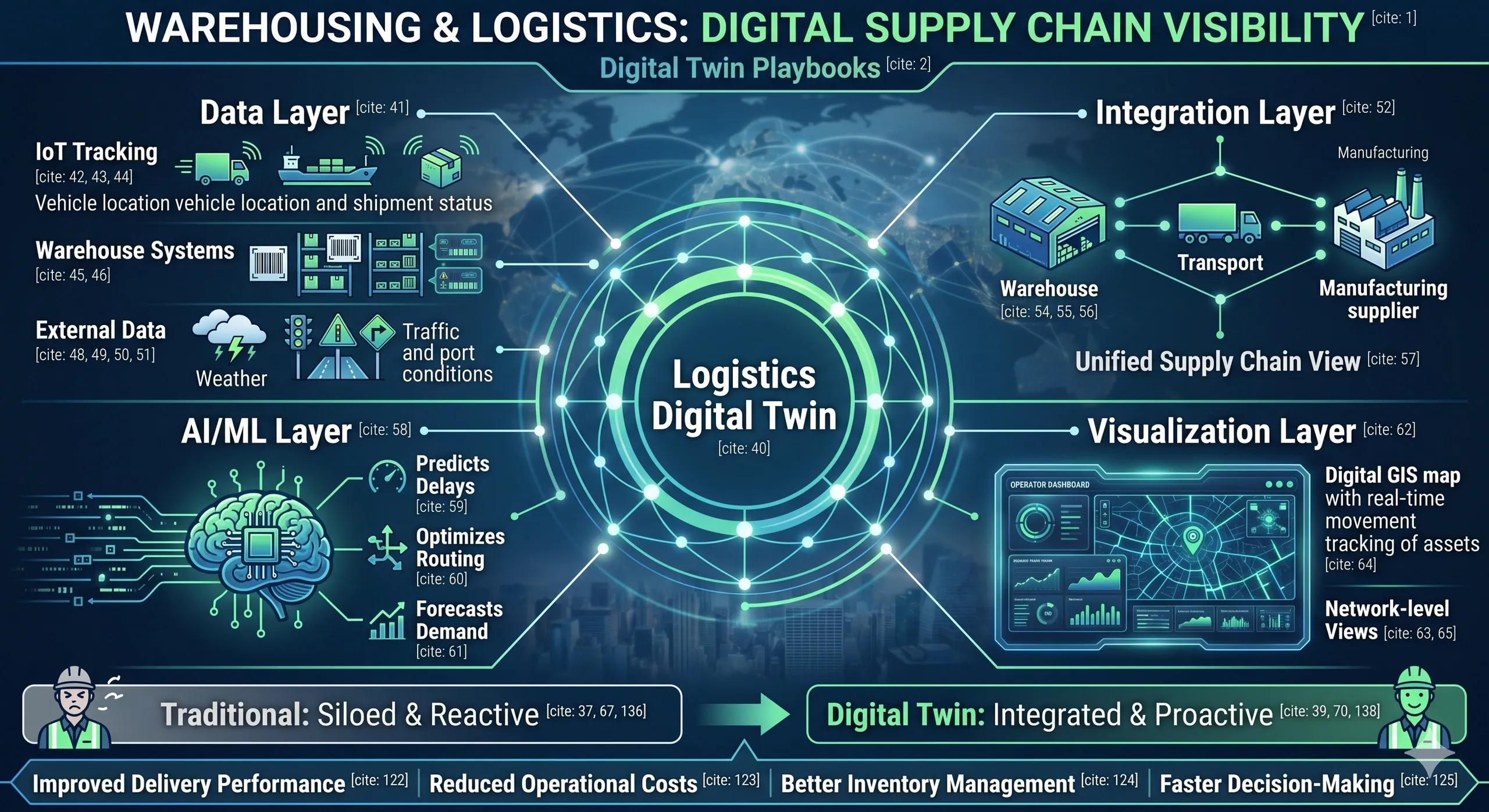
Key Components of a Logistics Digital Twin
1. Data Layer
IoT tracking: vehicle location shipment status
warehouse systems: inventory levels storage conditions
external data: traffic weather port conditions
2. Integration Layer
connects: warehouses transport systems suppliers and distributors
👉 creates a unified supply chain view
3. AI/ML Layer
predicts delays
optimizes routing
forecasts demand
4. Visualization Layer
dashboards for operations
GIS maps for movement tracking
network-level views
Use Case 1: Real-Time Shipment Tracking
Traditional Approach
periodic updates
limited visibility
Digital Twin Approach
continuous tracking
real-time status updates
predictive delay alerts
👉 Outcome:
improved delivery reliability
Use Case 2: Warehouse Optimization
monitor inventory movement
optimize storage allocation
reduce picking time
👉 Outcome:
improved operational efficiency
Use Case 3: Route Optimization
analyze traffic and conditions
dynamically adjust routes
👉 Outcome:
reduced transit time
lower fuel cost
Practical Example
Scenario: Shipment Delay
vehicle slows due to traffic congestion
AI predicts:
👉 delay in delivery schedule
System triggers:
route adjustment
customer notification
warehouse schedule update
👉 Outcome:
disruption minimized
Where Most Implementations Fail
1. Visibility Without Action
tracking exists
decisions are delayed
2. Siloed Systems
warehouse, transport, and supplier systems not integrated
3. Lack of Predictive Capability
focus on tracking
not on forecasting
4. No End-to-End Coordination
decisions optimized locally, not globally
Ask Yourself
Can you see your entire supply chain in real time or just parts of it?
Indian Context
India’s logistics sector is evolving rapidly with:
e-commerce growth
infrastructure development
increasing demand for efficiency
Digital Twins can help:
👉 improve supply chain visibility
👉 reduce delays
👉 optimize operations
Benefits & ROI
improved delivery performance
reduced operational cost
better inventory management
faster decision-making
increased customer satisfaction
Conclusion
Supply chains are not just networks of movement.
They are:
👉 dynamic systems influenced by geography, infrastructure, and conditions
Digital Twins enable:
real-time visibility
predictive insights
coordinated decision-making
This transforms logistics from:
👉 reactive tracking
to
👉 intelligent, adaptive supply chains