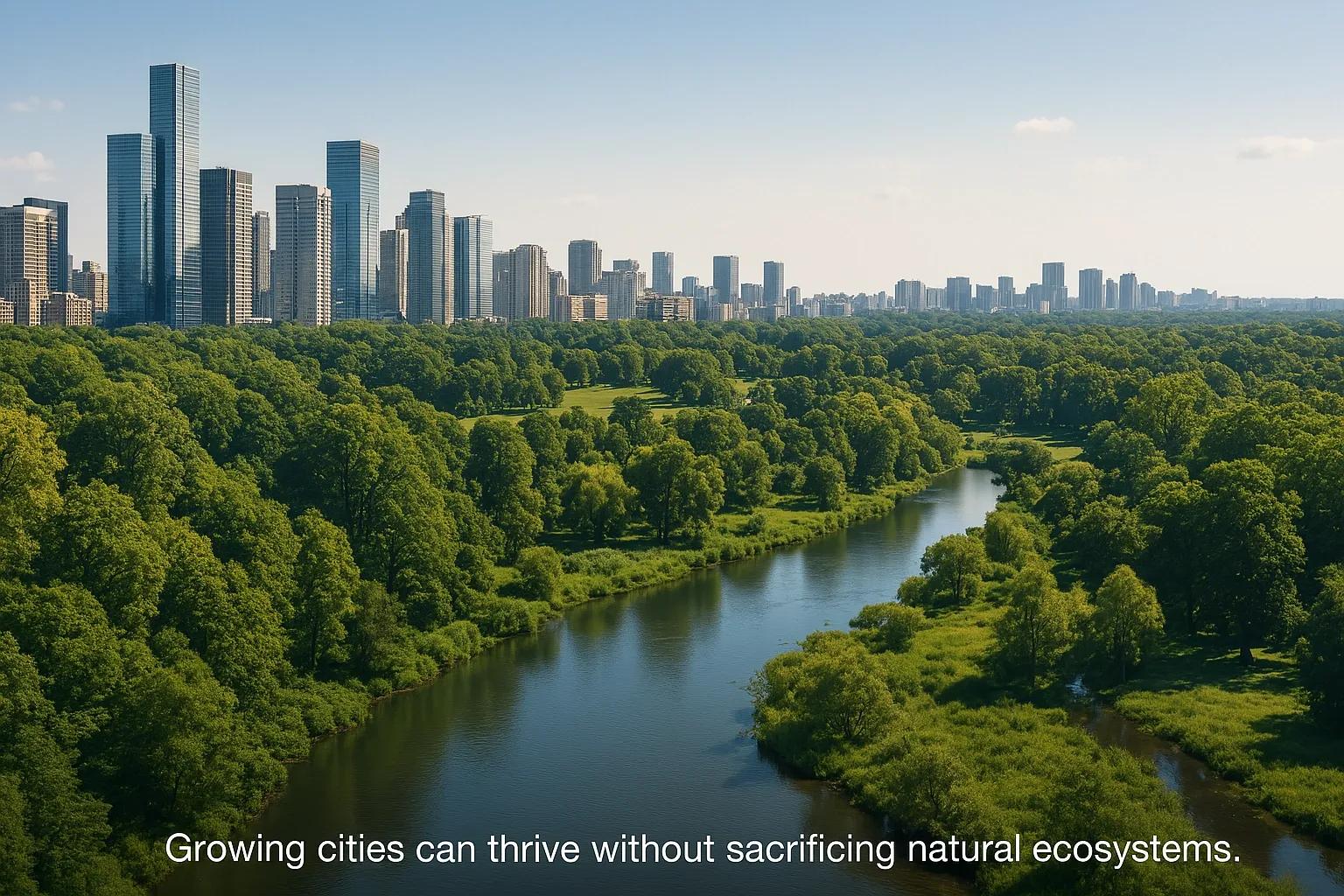
Cities are expanding at an unprecedented pace. By 2050, nearly 70% of the world’s population will live in urban areas. While urbanization drives economic growth and innovation, it often comes at the cost of natural ecosystems.
The traditional model of city expansion, clearing forests, filling wetlands, rerouting rivers, is no longer sustainable.
Today's challenge is clear: how can cities grow while preserving and enhancing the natural ecosystems that sustain them?
Why It Matters
Ecosystems are not optional amenities; they are essential urban infrastructure. Wetlands absorb floodwater, forests purify air, green spaces regulate city temperatures, and biodiversity supports food security.
Destroying these systems increases vulnerability to disasters, raises infrastructure costs, and undermines urban health and economic stability.
A report by the World Economic Forum highlights that cities risk losing over $29 trillion of global GDP if natural ecosystems continue to degrade.
Urban sprawl without environmental planning also accelerates climate change impacts, making cities hotter, more flood-prone, and less livable.
Preserving nature in cities is no longer a matter of aesthetics, it’s fundamental to economic and social resilience.
How It Can Be Addressed
Cities can achieve balanced growth by applying smarter planning and technology-driven strategies:
1. Urban Growth Boundaries and Land Use Zoning
Geospatial technologies help cities define growth boundaries that protect critical habitats. Urban zoning regulations can prioritize higher-density development in suitable areas while conserving natural spaces.
2. Green Infrastructure Integration
Instead of replacing natural systems, cities can integrate them.
Using BIM, planners can embed green corridors, urban forests, wetlands, and permeable surfaces into the design of neighborhoods, roads, and public spaces.
3. Early Environmental Assessment with UAVs
Drones provide rapid environmental mapping that identifies sensitive ecosystems before construction begins. This enables real-time decision-making to reroute or redesign projects to minimize environmental impacts.
4. Nature-Based Urban Designs
Digital twins allow cities to simulate different urban growth scenarios, quantifying how various approaches affect air quality, heat islands, water management, and biodiversity. Designs can then be optimized to maximize environmental and social benefits.
Role of Digital Technologies
The integration of digital technologies transforms how cities manage the tension between urbanization and nature:
Geospatial Mapping : Real-time visibility into existing natural assets and vulnerable areas.
UAV (Drone) Surveys : High-precision environmental monitoring at a fraction of traditional survey costs.
BIM for Green Design : Seamless incorporation of ecological elements into architectural and infrastructure models.
Digital Twins : Scenario modeling for climate resilience and ecosystem preservation.
AI Analytics : Predictive modeling to guide low-impact urban development.
By using these technologies, cities can reduce the guesswork in urban planning and make evidence-based decisions that protect nature while supporting human growth.
Conclusion
Urbanization does not have to mean environmental destruction.
Cities that adopt nature-positive planning will be healthier, wealthier, and more resilient in the decades ahead.
By combining forward-thinking policies with digital innovation, urban growth and ecosystem preservation can go hand in hand.
The future belongs to cities that are built with nature, not against it.