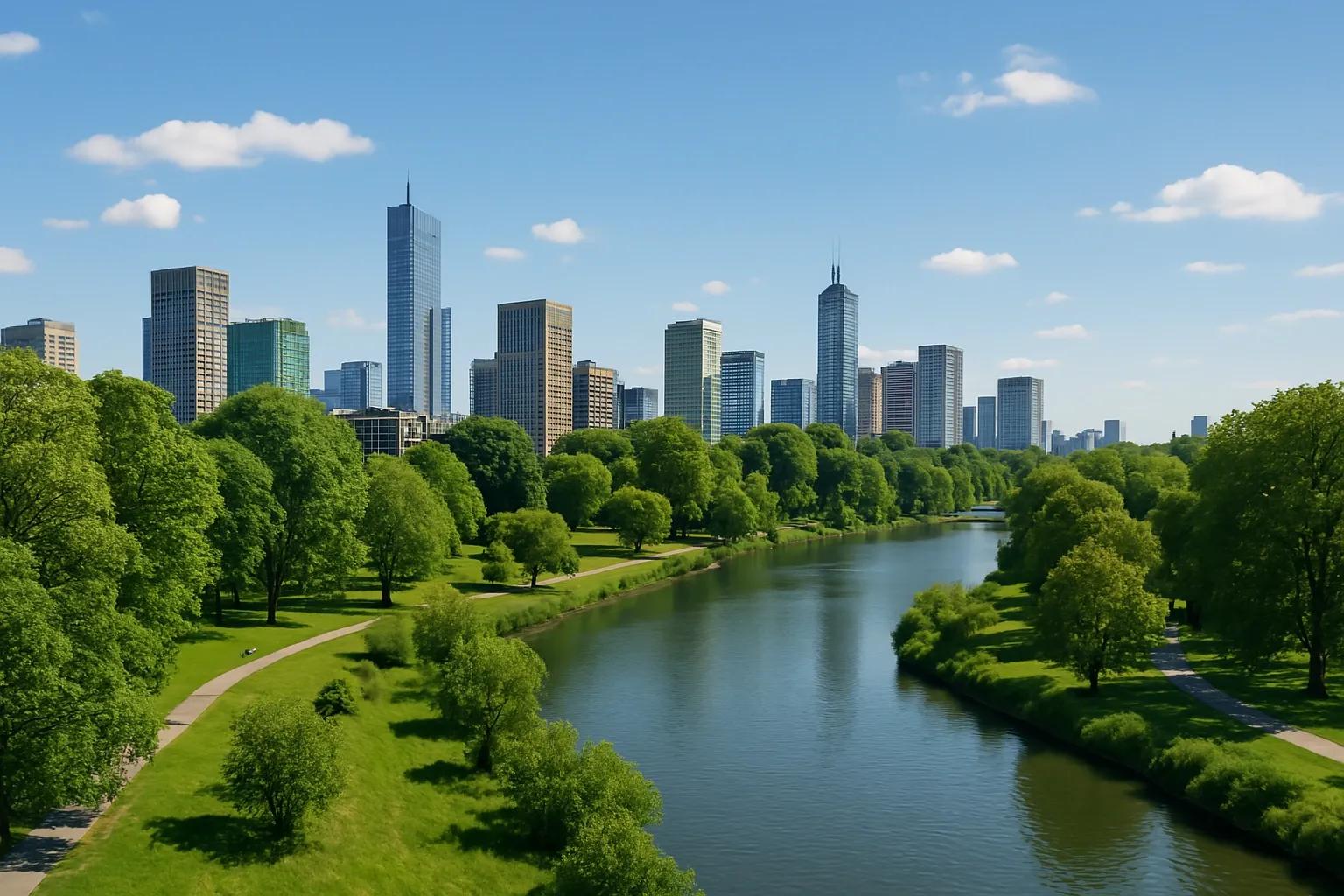
As cities continue to expand, they face a double challenge: supporting economic growth while ensuring environmental sustainability. Urban areas account for more than 80% of global GDP but are increasingly vulnerable to climate risks, biodiversity loss, and health crises. Integrating nature into urban infrastructure is no longer a choice, it is a critical investment for future resilience.
Advances in geospatial technology, UAVs, and digital modeling now offer cities unprecedented tools to plan, monitor, and finance nature-positive solutions.
Why It Matters
Urban ecosystems, parks, wetlands, forests, and waterways, offer more than aesthetic value. They provide critical services such as flood control, air purification, temperature regulation, and mental health benefits.
According to the World Economic Forum, over 44% of urban GDP is directly dependent on healthy ecosystems.
Ignoring nature in urban development exposes cities to rising risks: higher insurance costs, degraded public health, infrastructure failures, and economic volatility.
At the same time, only 0.3% of global urban infrastructure investment is currently directed toward nature-positive projects. This gap highlights both a serious risk and a major opportunity.
Cities that proactively embed nature into their infrastructure stand to strengthen their resilience, attract green investments, and improve quality of life for their residents.
How It Can Be Addressed
Building nature-positive cities requires a multi-layered approach:
1. Mapping and Identifying Natural Assets
Geospatial technologies allow city planners to create high-resolution maps identifying critical green areas, biodiversity hotspots, and areas vulnerable to climate stress. UAVs (drones) provide real-time aerial imagery that can track land-use changes and monitor ecosystem health.
2. Integrating Nature into Urban Planning
Urban masterplans must evolve from grey-only infrastructure to green-grey systems. Building Information Modeling (BIM) combined with ecological data allows cities to design buildings, roads, and neighborhoods that integrate natural elements, such as permeable pavements, bioswales, green roofs, and urban forests.
3. Quantifying the Economic Value of Nature
Using AI and predictive models, cities can now calculate the financial returns from urban nature, reduced healthcare costs, avoided flood damages, increased property values. Such models help strengthen the business case for investing in natural infrastructure.
4. Financing Nature-Positive Projects
Blended finance approaches, combining public funds, private investment, and philanthropic capital, are emerging as critical enablers. Digital twins can simulate project outcomes and de-risk investments by providing clear, measurable, and verifiable impact projections.
Role of Digital Technologies
Digital transformation technologies are central to operationalizing nature-positive urban development:
Geospatial Platforms : Real-time mapping of ecological assets and risk zones
UAVs : Rapid environmental monitoring, enabling early intervention
BIM : Integrated design that embeds green infrastructure
Digital Twins : Predictive modeling of ecosystem services and resilience planning
IoT Sensors : Continuous data streams on air quality, water management, and ecosystem health
AI and Machine Learning : Advanced analytics for forecasting environmental and economic impacts
Together, these technologies enable evidence-based decision-making, support dynamic adaptation, and make it easier for cities to attract financing tied to measurable sustainability outcomes.
Conclusion
The urban opportunity for nature-positive investment is clear and urgent. Cities that prioritize nature today will be the economic and social leaders of tomorrow.
By leveraging modern digital tools and embracing blended finance models, cities can align growth with resilience, ensuring they thrive in a future shaped by climate change and biodiversity challenges.
Now is the time for cities to act, to move beyond rhetoric and put nature at the center of urban transformation.