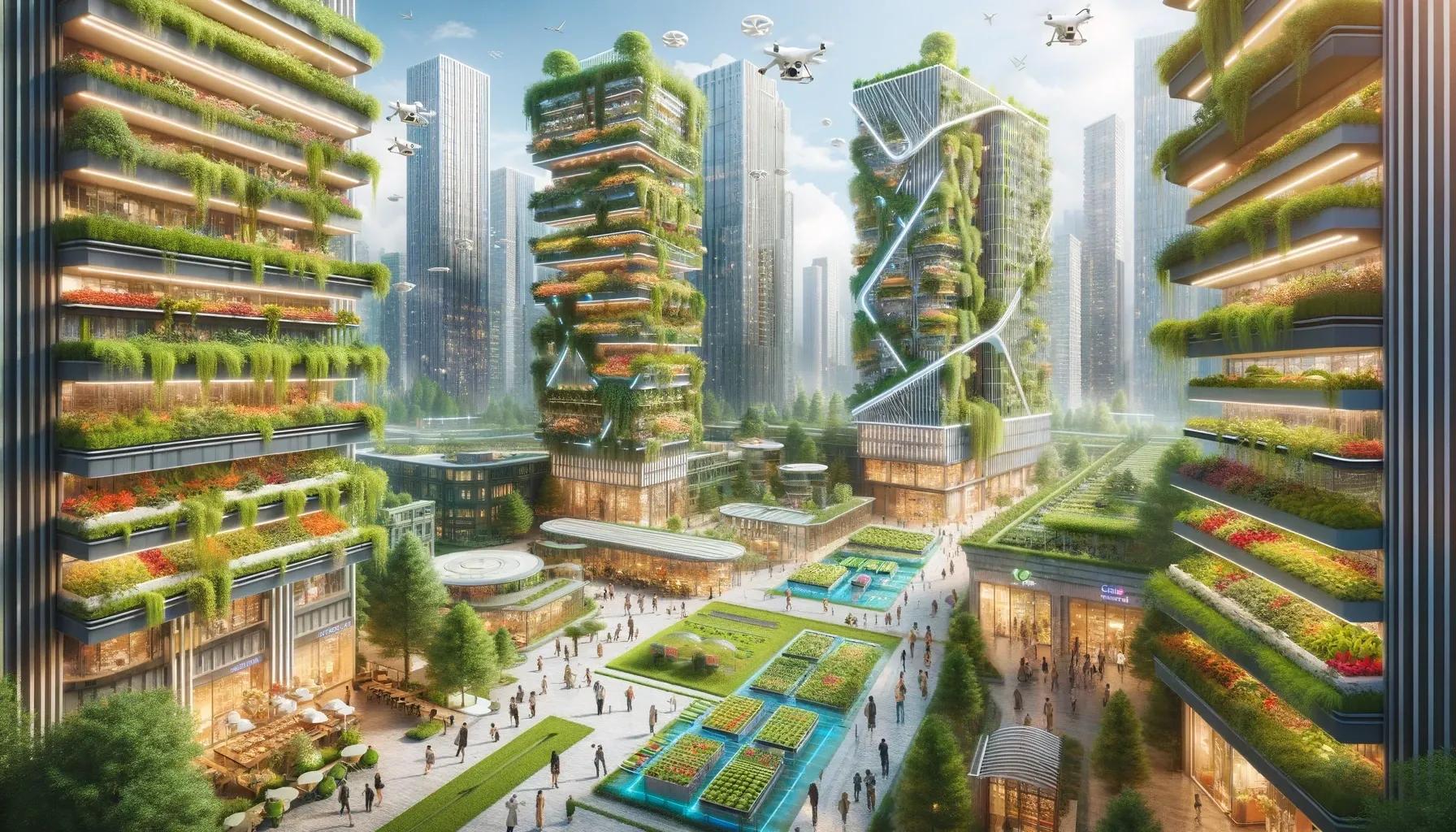
In the contemporary urban landscape, the burgeoning population and shrinking green spaces have necessitated a paradigm shift in food production techniques. Urban farming technologies, particularly vertical farming and hydroponics, have emerged as innovative solutions to these challenges, playing a pivotal role in the transformation of smart cities. This article delves into how these technologies are integrated into urban areas, their benefits, and the future they portend for sustainable urban living.
The Emergence of Urban Farming Technologies
Urban farming, the practice of cultivating, processing, and distributing food in or around urban areas, has been revolutionized by technological advancements. Two of the most significant technologies that have been integrated into urban farming are vertical farming and hydroponics, which not only optimize limited space but also enhance productivity and sustainability.
Vertical Farming: Maximizing Urban Space
Vertical farming involves growing crops in vertically stacked layers, often integrating various agricultural technologies such as hydroponics, aeroponics, and aquaponics. This approach to farming is particularly suited to urban environments where space is at a premium. By growing upwards rather than outwards, vertical farms can produce significantly more food per square meter than traditional farms or greenhouses.
The integration of vertical farming into urban areas is facilitated by the use of abandoned buildings, warehouses, and even skyscrapers, transforming them into productive agricultural hubs. This not only helps reduce the city's carbon footprint by localizing food production but also contributes to urban renewal and green building practices.
Hydroponics: Soilless Cultivation in Urban Settings
Hydroponics, a method of growing plants without soil and instead using nutrient-rich water, is another cornerstone of urban farming technologies. This technique allows for precise control over the growing environment, including nutrients, pH level, and water usage, leading to higher yields and faster growth rates.
The integration of hydroponics into urban farming is exemplified by its adaptability to various settings, from rooftop gardens to indoor farming operations. It significantly reduces water usage by recirculating water in the system, making it an ideal method for water-scarce urban areas. Furthermore, by eliminating soil, it reduces the risk of soil-borne diseases and pests, making it a cleaner, more sustainable option for food production in cities.
The Synergy of Vertical Farming and Hydroponics in Smart Cities
The combination of vertical farming and hydroponics represents a potent synergy for urban agriculture, particularly in the context of smart cities. Smart cities, characterized by the integration of information and communication technologies into infrastructure and services, provide an ideal environment for these advanced farming techniques.
Integration into Urban Infrastructure
Smart cities are increasingly incorporating vertical farms and hydroponic systems into their urban planning and building designs. These farming technologies are integrated into residential buildings, commercial complexes, and even public spaces, providing fresh produce at the heart of urban communities. This not only shortens the food supply chain but also promotes local economies and reduces transportation emissions.
Automation and Data Analytics
In smart cities, vertical farming and hydroponics are often automated and equipped with sensors and IoT (Internet of Things) devices. These technologies provide real-time data on plant health, nutrient levels, and environmental conditions, enabling precise control over the farming process. This level of automation and data analytics ensures optimal plant growth, reduces labor costs, and minimizes waste, exemplifying the efficiency and sustainability goals of smart cities.
Sustainable Urban Ecosystems
The integration of vertical farming and hydroponics into urban areas contributes to the creation of sustainable urban ecosystems. These technologies support biodiversity, improve air quality, and enhance the urban microclimate. By localizing food production, they reduce the need for agricultural land expansion, thus preserving natural habitats and reducing urban sprawl.
Challenges and Future Directions
Despite the promising benefits, the integration of vertical farming and hydroponics into urban areas faces challenges. These include high initial investment costs, technical complexities, and the need for skilled labor. Moreover, the energy consumption of these systems, particularly for lighting in vertical farms, raises sustainability concerns.
To address these challenges, ongoing research and innovation focus on developing more energy-efficient lighting technologies, such as LED grow lights, and integrating renewable energy sources. The future of urban farming technologies lies in the convergence of biotechnology, nanotechnology, and artificial intelligence, further enhancing productivity and sustainability.
In conclusion, the integration of vertical farming and hydroponics into urban areas is a testament to human ingenuity in the face of urbanization and environmental challenges. By harnessing these technologies, smart cities are not only addressing food security and sustainability but also pioneering a new paradigm of urban living. As we move forward, the continued evolution and adoption of urban farming technologies will play a crucial role in shaping resilient, self-sufficient, and sustainable urban communities.