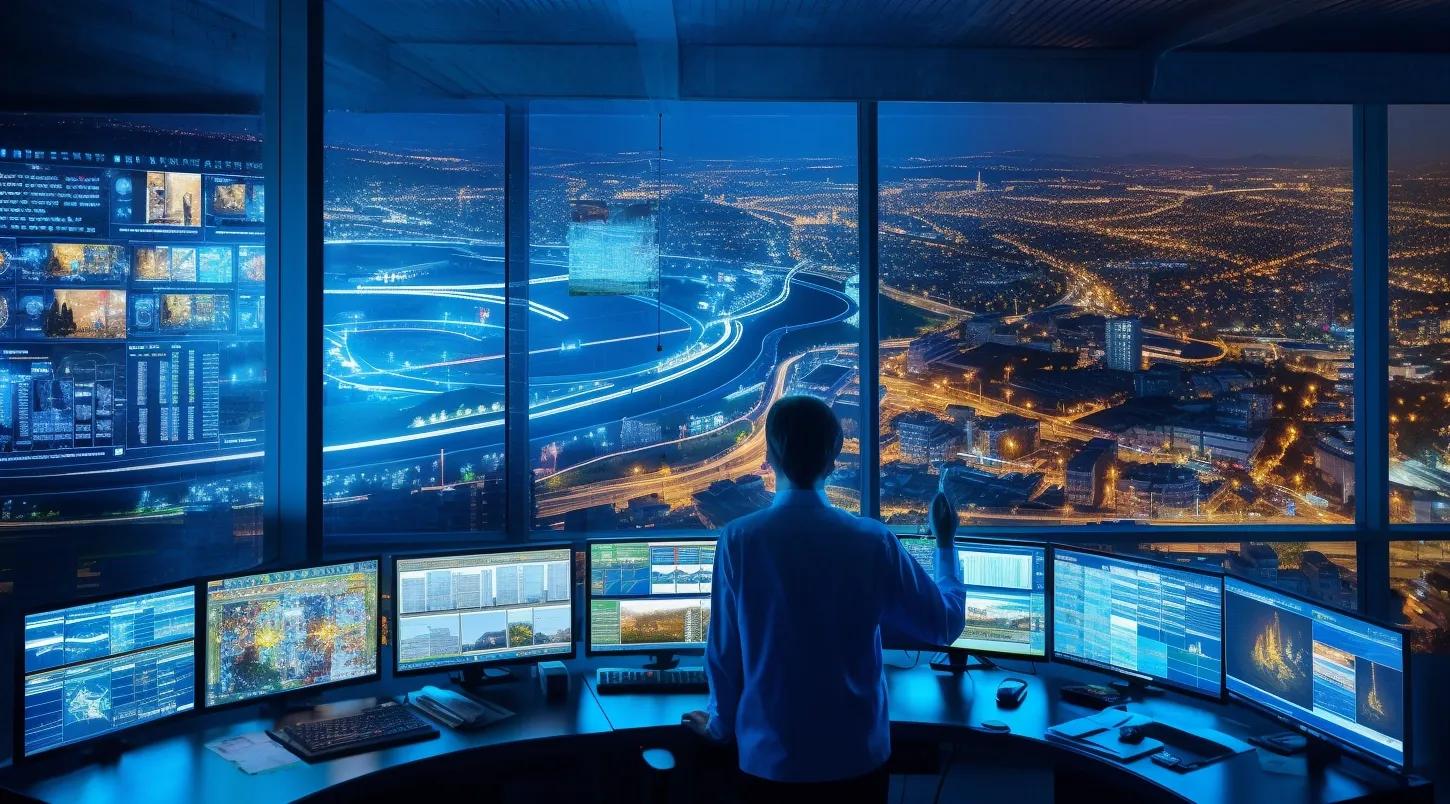
In the realm of construction and facility management, there's a buzzword that has been making waves: Digital Twins. But what exactly are they, and why are they becoming so crucial in the industry? Let's dive deep into this concept, guided by some thought-provoking questions that shed light on its significance.
What is a Digital Twin, and how can organizations ensure it truly meets the owner’s long-term needs?
Imagine having a digital replica of a building or facility, mirroring its every nook and cranny, system, and component. That's a Digital Twin for you. Born from the marriage of Building Information Modeling (BIM) and advanced sensor technology, Digital Twins are exact digital counterparts of physical structures. They allow facility owners to analyze, forecast, and even simulate facility repairs and maintenance over the building's lifespan.
But creating a Digital Twin isn't just about having a fancy digital model. It's about aligning this model with the owner’s asset management system. This alignment is the bedrock of a successful Digital Twin. It ensures that the digital representation is not just a static model but a dynamic tool that evolves with the building's lifecycle.
To ensure that a Digital Twin truly serves the owner's long-term needs, there's a need for clear communication right from the outset. Designers and stakeholders must effectively convey objectives, address concerns, and engage the facilities management team. By doing so, they can ensure that the Digital Twin is not just a technological marvel but a practical tool tailored to the owner's requirements.
What are the potential challenges in aligning the BIM model with the owner’s asset management system, and how can they be overcome?
Aligning the BIM model with the owner’s asset management system sounds straightforward, but in practice, it's a complex task fraught with challenges. One of the primary hurdles is the integration between BIM models and asset management platforms. Often, there's a mismatch or misalignment between asset data and CMMS (Computerized Maintenance Management System) data.
To address this, designers with expertise in BIM play a pivotal role. They can ensure that the asset registry (which catalogs equipment and components within the Digital Twin) aligns seamlessly with the owner's CMMS. This integration facilitates the smooth transfer of asset information, making maintenance planning and execution a breeze.
Another challenge is the level of detail and accuracy in the BIM model. The model's Level of Development (LOD) should be established by system or element in the Digital Twin. This ensures that critical systems, like HVAC or electrical components, are represented with the necessary fidelity for accurate simulation and analysis.
Overcoming these challenges requires a proactive approach. Designers and stakeholders must anticipate potential issues, engage in open communication, and leverage technology to bridge gaps.
How will advancements in technologies like machine learning and artificial intelligence further enhance the capabilities of Digital Twins in the future?
The future of Digital Twins is incredibly promising, thanks to rapid advancements in technologies like machine learning, artificial intelligence, and the Internet of Things (IoT). These technologies are set to supercharge the capabilities of Digital Twins.
For instance, with machine learning, Digital Twins can predict when a component might fail based on historical data, allowing for preemptive maintenance. Artificial intelligence can simulate various scenarios, helping facility managers make informed decisions about space utilization, energy conservation, and more.
The integration of IoT devices means that Digital Twins can receive real-time data from sensors placed throughout the building. This live-stream of information ensures that the Digital Twin is always up-to-date, reflecting the current state of the physical structure.
Moreover, as technologies evolve, we can expect Digital Twins to become even more sophisticated. They might integrate augmented reality for immersive walkthroughs, use blockchain for secure data sharing, or leverage big data analytics for deeper insights.
In conclusion, Digital Twins represent a significant leap forward in the world of construction and facility management. While challenges exist, the potential benefits — from optimized facility management to predictive maintenance and informed decision-making — make it an exciting frontier for the industry. As technology continues to advance, the capabilities of Digital Twins will only expand, heralding a new era of smart, efficient, and sustainable buildings.