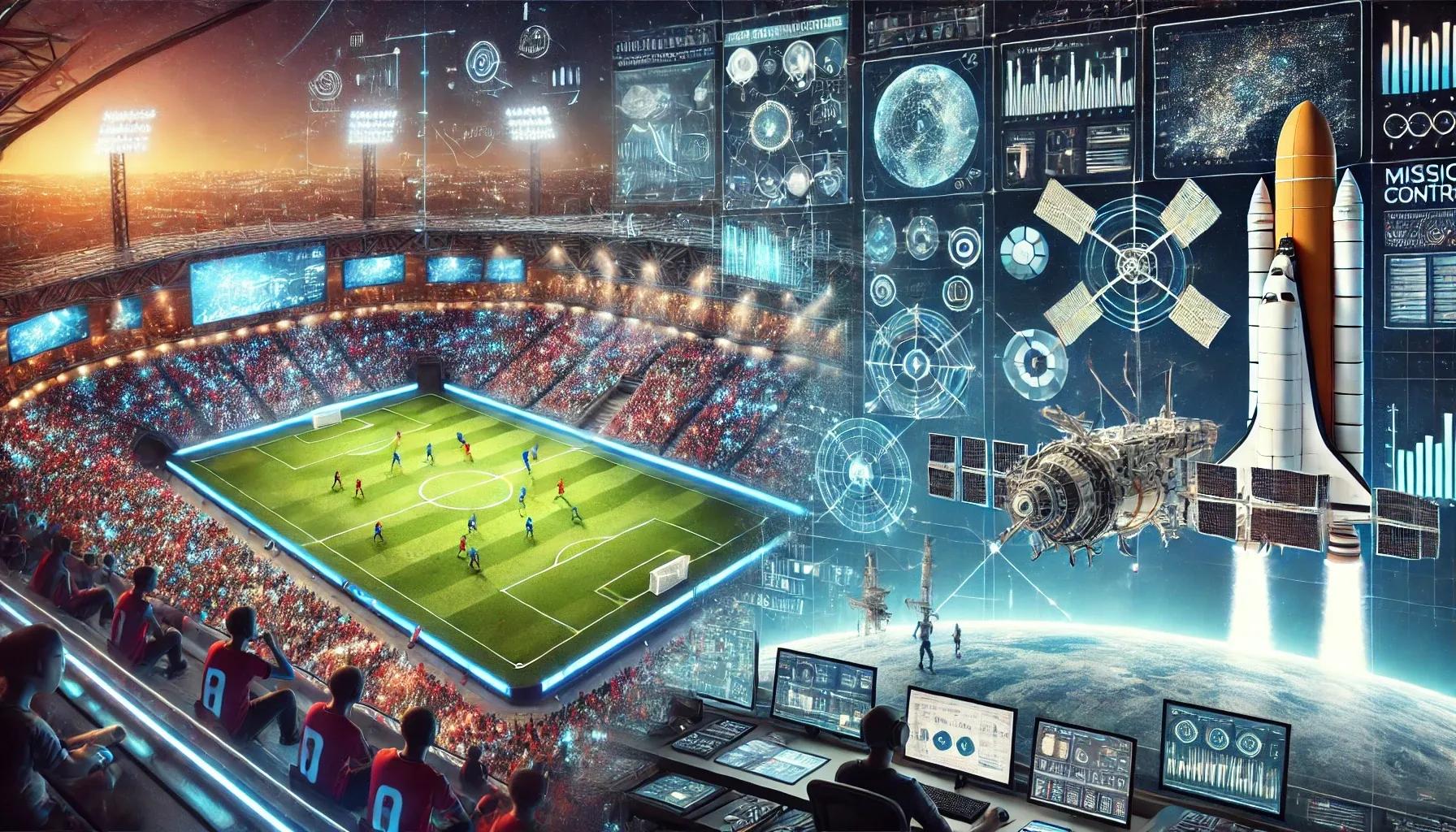
Digital twins, virtual replicas of physical entities, have transformed traditional industries such as manufacturing, healthcare, and urban planning. However, their applications extend far beyond these conventional realms, venturing into unexpected territories like sports and space exploration. This article explores how digital twins are reshaping these diverse fields, highlighting their potential and innovative use cases.
Digital Twins in Sports
Performance Optimization
In the realm of sports, digital twins are revolutionizing how athletes train and perform. By creating a virtual model of an athlete, coaches and trainers can monitor and analyze performance metrics in real time. These digital replicas capture a wide array of data, including biomechanics, physiological parameters, and environmental conditions. This comprehensive data allows for precise performance analysis and tailored training regimens.
For instance, professional football teams are leveraging digital twins to enhance player performance and reduce injury risks. By simulating different game scenarios, coaches can devise strategies that optimize player movements and decision-making. Additionally, wearable sensors collect data on players' physical conditions, which is then fed into the digital twin to monitor fatigue levels and predict potential injuries. This proactive approach helps in designing personalized training programs that enhance performance while minimizing injury risks.
Fan Engagement
Beyond the field, digital twins are enhancing fan engagement in unprecedented ways. Virtual stadiums, created using digital twin technology, allow fans to experience games from different perspectives, providing a more immersive viewing experience. Fans can virtually explore the stadium, select different seating angles, and even replay key moments from the game.
Moreover, digital twins enable interactive fan experiences. For example, augmented reality (AR) applications powered by digital twins allow fans to interact with virtual avatars of their favorite players, participate in virtual meet-and-greets, and engage in interactive games. This level of engagement fosters a deeper connection between fans and their favorite sports teams.
Digital Twins in Space Exploration
Mission Planning and Simulation
In the realm of space exploration, digital twins play a crucial role in mission planning and simulation. Space agencies utilize digital twins to create virtual replicas of spacecraft, rovers, and other mission-critical assets. These digital models allow engineers to simulate various mission scenarios, test different strategies, and identify potential issues before they arise.
For instance, during the Mars Rover missions, digital twins of the rovers were used to simulate their movements on the Martian surface. By replicating the Martian environment and rover dynamics, engineers could test different navigation paths, analyze the impact of terrain features, and optimize rover operations. This approach not only enhances mission efficiency but also mitigates risks associated with unforeseen challenges.
Maintenance and Troubleshooting
Digital twins are also instrumental in the maintenance and troubleshooting of space assets. Spacecraft and satellites operate in harsh environments, making physical maintenance challenging and costly. Digital twins offer a solution by providing real-time monitoring and predictive maintenance capabilities.
By continuously collecting data from sensors embedded in spacecraft, digital twins can monitor the health and performance of various components. This data is then analyzed to detect anomalies and predict potential failures. For instance, if a spacecraft's propulsion system shows signs of wear, the digital twin can simulate different scenarios to identify the best course of action, whether it's adjusting operational parameters or planning a maintenance mission.
Cross-Disciplinary Innovations
Enhancing Sports through Space Technology
Interestingly, the convergence of sports and space exploration technologies is yielding innovative applications. Techniques developed for space missions, such as advanced sensor technologies and data analytics, are being adapted to enhance sports performance.
For example, microgravity simulations, originally developed for training astronauts, are now being used by athletes to improve their balance and coordination. These simulations create environments where athletes can practice movements and refine their techniques in a controlled setting. Additionally, space-grade materials and designs are being incorporated into sports equipment, resulting in lighter, more durable gear that enhances athlete performance.
Space Missions Inspired by Sports Analytics
Conversely, methodologies from sports analytics are finding applications in space missions. The extensive use of data analytics in sports for performance optimization is inspiring similar approaches in space exploration. For instance, the data-driven techniques used to analyze player movements and strategies are being adapted to monitor and analyze the behavior of spacecraft and rovers.
Machine learning algorithms, widely used in sports analytics to identify patterns and trends, are now being employed to analyze vast amounts of data generated by space missions. These algorithms can detect anomalies, predict system failures, and optimize mission parameters, contributing to more efficient and successful space operations.
Future Prospects and Challenges
Expanding Horizons
The future of digital twins in unconventional fields looks promising. In sports, the integration of artificial intelligence (AI) and machine learning (ML) with digital twins will enable even more precise performance analysis and personalized training programs. Additionally, advancements in AR and virtual reality (VR) technologies will further enhance fan engagement by providing increasingly immersive experiences.
In space exploration, the continued development of digital twin technology will facilitate more complex and ambitious missions. Digital twins will play a pivotal role in the planning and execution of missions to distant planets, moons, and asteroids. Moreover, as space missions become more intricate, the ability to simulate and optimize every aspect of the mission will be crucial for success.
Addressing Challenges
Despite the exciting prospects, there are challenges to overcome. The creation and maintenance of accurate digital twins require extensive data collection and processing capabilities. Ensuring the reliability and accuracy of the data is critical, as any discrepancies can lead to incorrect simulations and predictions. Additionally, the integration of digital twins with existing systems and workflows can be complex and resource intensive.
In the context of sports, privacy concerns related to the collection and use of athletes' data must be addressed. Transparent data governance policies and robust cybersecurity measures are essential to protect sensitive information. Similarly, in space exploration, the vast amount of data generated by digital twins necessitates efficient data management and storage solutions.
In conclusion, digital twins are transcending their traditional applications, venturing into unconventional fields like sports and space exploration. In sports, they are optimizing performance, enhancing fan engagement, and fostering cross-disciplinary innovations. In space exploration, they are revolutionizing mission planning, maintenance, and simulation. As technology continues to advance, the potential for digital twins to transform these fields is boundless. By addressing the associated challenges and leveraging the power of digital twins, we can unlock new frontiers of innovation and excellence.