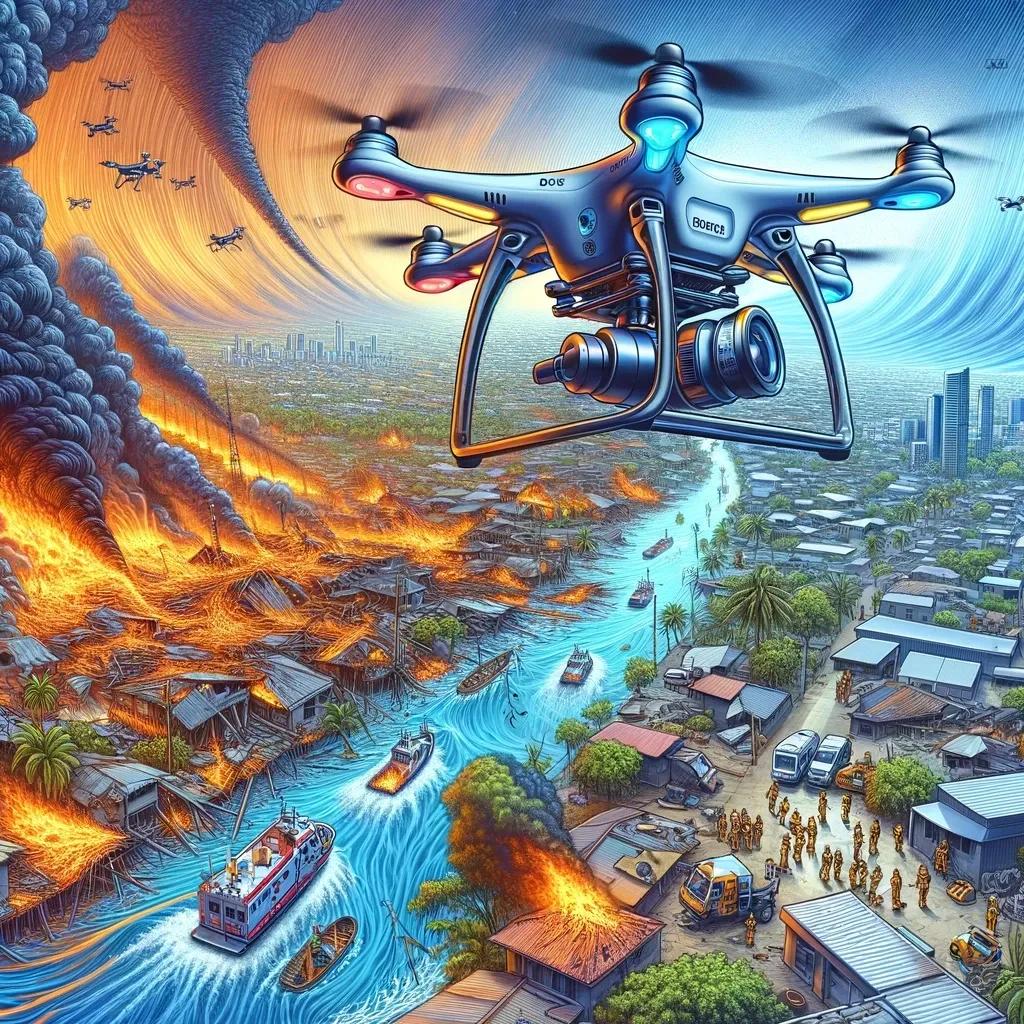
The advent of Unmanned Aerial Vehicles (UAVs), commonly known as drones, has revolutionized various fields, including disaster management. UAVs offer a unique vantage point, maneuverability, and ease of deployment, making them invaluable tools in assessing and responding to disasters. This article delves into the use of UAVs in disaster management, exploring real-world case studies and extracting vital lessons learned.
Introduction to UAVs in Disaster Management
UAVs have become increasingly prominent in disaster management due to their ability to rapidly assess situations from an aerial perspective without risking human lives. They are equipped with various sensors, cameras, and sometimes payload delivery systems. This versatility allows them to perform a range of tasks, from damage assessment to search and rescue operations.
Case Studies of UAVs in Disaster Management
a. Nepal Earthquake, 2015
One of the seminal examples of UAV deployment in disaster management was following the devastating earthquake in Nepal in 2015. UAVs were used for rapid damage assessment in areas inaccessible to rescue teams. They provided high-resolution imagery that assisted in mapping the extent of the destruction and identifying safe routes for ground teams. This case highlighted the UAVs' ability to quickly gather crucial data, which is vital in the initial hours following a disaster.
b. Hurricane Harvey, 2017
During Hurricane Harvey in the United States, UAVs played a crucial role in monitoring flood levels, assessing infrastructure damage, and aiding in rescue operations. They provided real-time data which was crucial for emergency responders in prioritizing areas needing immediate attention. This example showcased the UAVs' effectiveness in large-scale natural disasters, where timely and accurate information can significantly impact relief efforts.
c. California Wildfires, 2018
UAVs were extensively used during the California wildfires to monitor fire progression, identify hotspots, and assess damage to property and natural resources. They enabled firefighters to strategize and respond more effectively, reducing risks and optimizing resource allocation. This case demonstrated the importance of UAVs for continuous monitoring and providing actionable intelligence in dynamic disaster scenarios.
d. Floods in Indian States, 2018–2022
During the massive floods that hit Kerala in 2018, Uttarakhand in 2021, and Assam in 2022, drones were used to locate missing individuals and assess the extent of damage. The drones provided real-time information to rescue teams, enabling them to save lives and plan their operations more effectively.
Lessons Learned from UAV Deployments
a. Need for Rapid Deployment and Flexibility
One of the key lessons is the importance of rapid deployment. In disaster scenarios, time is of the essence, and the ability of UAVs to be quickly deployed can make a significant difference in the outcome. Additionally, the flexibility of UAVs to adapt to different scenarios, whether it be navigating through debris in an earthquake-hit area or monitoring vast flood-affected regions, is crucial.
b. Importance of Data Integration and Analysis
The effectiveness of UAVs lies not just in data collection but also in the integration and analysis of this data. In all the cases, the ability to quickly process and interpret aerial data to make informed decisions was pivotal. This underscores the need for robust data processing frameworks and skilled personnel capable of analyzing UAV data in real-time.
c. Regulatory and Ethical Considerations
The use of UAVs also brings forth regulatory and ethical considerations. Ensuring UAV operations comply with local and international laws is essential, especially in cross-border disaster scenarios. Furthermore, issues related to privacy and data security need careful navigation, especially when operating in areas with civilians.
d. Training and Preparedness
Effective UAV operations in disaster management require well-trained personnel. This includes not only the UAV operators but also the decision-makers who interpret and act upon the data provided. Regular training and preparedness exercises can greatly enhance the effectiveness of UAV deployments in real disaster scenarios.
In conclusion, UAVs have proven to be a game-changer in disaster management, offering rapid, flexible, and safe means of assessing and responding to various disasters. The case studies from the Indian States and the United States provide tangible evidence of their utility. However, maximizing their potential requires attention to rapid deployment, data integration, regulatory compliance, and ongoing training.
As we move forward, the lessons learned from past deployments should guide the development of more advanced UAV technologies and strategies, further enhancing their role in managing disasters more effectively. The future of disaster management will undoubtedly see greater integration of UAVs, making responses quicker, safer, and more efficient.