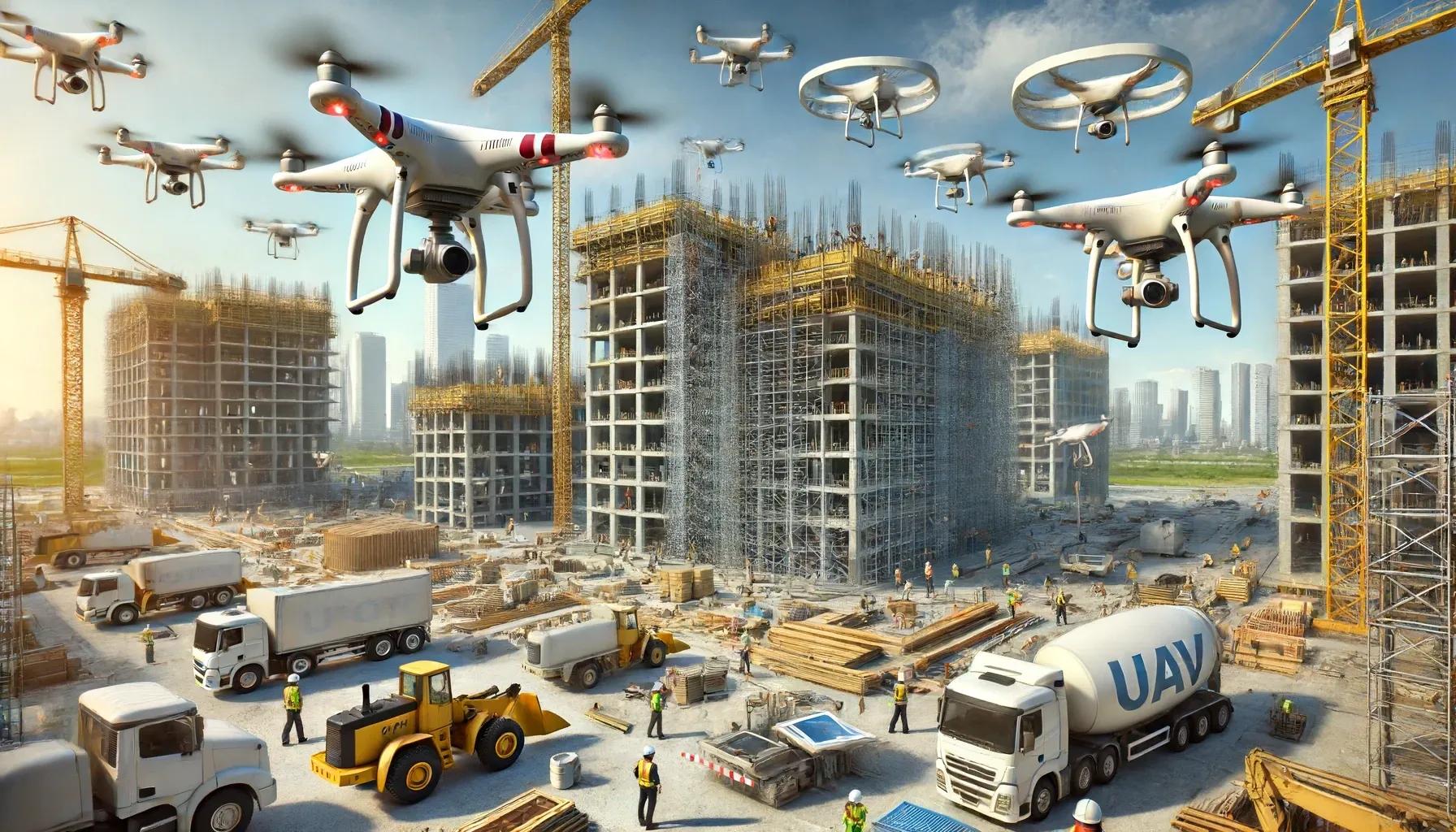
The construction industry, traditionally labor-intensive and time-consuming, is undergoing a technological revolution with the integration of Unmanned Aerial Vehicles (UAVs). UAVs, commonly known as drones, are transforming various aspects of construction projects, from surveying and mapping to monitoring and inspection. This article delves into the cost analysis and return on investment (ROI) of UAVs in construction, providing a comprehensive understanding of their financial implications and benefits.
Cost Components of UAVs in Construction
Initial Investment
The initial cost of UAVs includes the purchase price of the drone, which can range from a few hundred to several thousand dollars, depending on the model and capabilities. High-end UAVs equipped with advanced sensors, cameras, and GPS systems can cost upwards of $10,000. Additionally, construction companies must invest in software for data processing and analysis, which can add another significant expense.
Training and Certification
Operating UAVs in construction requires skilled personnel. Companies must invest in training programs to ensure that their staff are proficient in drone operation and understand the regulatory requirements. The cost of training varies but typically includes the expense of obtaining certification from relevant aviation authorities, such as the Directorate General of Civil Aviation (DGCA) in India or the Federal Aviation Administration (FAA) in the United States.
Maintenance and Repairs
UAVs require regular maintenance to ensure optimal performance and longevity. Maintenance costs include routine checks, software updates, and replacements of parts such as propellers and batteries. Accidents or crashes can also lead to repair expenses, which can be substantial depending on the extent of the damage.
Insurance
Given the potential risks associated with UAV operations, insurance is a critical cost component. Insurance policies for UAVs cover liabilities arising from accidents, property damage, and personal injuries. The cost of insurance depends on various factors, including the type of drone, its usage, and the coverage limits.
Operational Costs
Operational costs encompass expenses related to the actual deployment of UAVs on construction sites. These include costs for data storage, battery replacements, and potential downtime during unfavorable weather conditions. Additionally, companies may need to allocate budget for data analysis and interpretation, which often involves hiring or contracting specialized personnel.
Cost Savings and Efficiency Gains
Reduced Surveying and Mapping Costs
Traditionally, surveying and mapping in construction projects require extensive manpower and time. UAVs can perform these tasks more efficiently and accurately, significantly reducing labor costs and time. Aerial surveys conducted by drones can cover large areas in a fraction of the time required by ground-based surveys, leading to substantial cost savings.
Enhanced Project Monitoring and Management
UAVs provide real-time data and high-resolution imagery, enabling better project monitoring and management. This capability allows for early detection of potential issues, reducing the likelihood of costly rework and project delays. Improved site visibility also facilitates better communication and coordination among project stakeholders, enhancing overall project efficiency.
Improved Safety and Risk Mitigation
Safety is a paramount concern in construction. UAVs can perform hazardous tasks such as inspections of high-rise structures or confined spaces, minimizing the risk to human workers. By reducing the need for manual inspections in dangerous areas, UAVs contribute to lower insurance premiums and fewer workplace accidents, translating to cost savings.
Optimized Resource Allocation
The data collected by UAVs can be used to optimize resource allocation on construction sites. Accurate and up-to-date information on site conditions enables better decision-making regarding material procurement, equipment deployment, and workforce scheduling. This optimization leads to reduced waste, improved productivity, and cost savings.
ROI Analysis of UAVs in Construction
Quantifying the Benefits
To evaluate the ROI of UAVs in construction, it is essential to quantify the benefits in monetary terms. This involves estimating the cost savings achieved through efficiency gains, reduced labor, and minimized rework. For instance, if a UAV reduces the time required for a site survey from two weeks to two days, the labor cost savings can be significant. Similarly, early detection of construction defects can prevent costly rework, contributing to the overall ROI.
Calculating the Payback Period
The payback period is the time required to recover the initial investment in UAVs. This is calculated by dividing the total initial investment by the annual cost savings. For example, if the initial investment in UAVs and associated costs is $25,000 and the annual cost savings amount to $10,000, the payback period would be 2.5 years. A shorter payback period indicates a more attractive investment.
Long-Term Financial Benefits
Beyond the payback period, UAVs continue to provide financial benefits over their operational lifespan. These benefits include ongoing cost savings, improved project outcomes, and competitive advantages in the market. Companies that effectively leverage UAV technology can enhance their reputation for innovation and efficiency, potentially attracting more clients and projects.
Case Studies and Real-World Examples
Several real-world examples illustrate the ROI of UAVs in construction. For instance, a construction company that implemented UAVs for site surveys and inspections reported a 30% reduction in project timelines and a 25% decrease in overall project costs. Another company found that using UAVs for volumetric measurements of stockpiles improved accuracy and reduced material wastage, resulting in significant cost savings.
Challenges and Considerations
Regulatory Compliance
Operating UAVs in construction involves navigating complex regulatory frameworks. Compliance with aviation regulations, such as obtaining necessary permits and adhering to flight restrictions, can be challenging and time-consuming. Companies must stay updated on regulatory changes to ensure continued compliance.
Data Management
The vast amount of data generated by UAVs requires efficient storage, processing, and analysis. Investing in robust data management systems is essential to harness the full potential of UAV technology. Additionally, companies must address data security concerns to protect sensitive project information.
Technological Limitations
While UAV technology has advanced rapidly, it still faces limitations such as battery life, payload capacity, and susceptibility to weather conditions. These limitations can impact the frequency and duration of UAV deployments, affecting their overall effectiveness.
Integration with Existing Workflows
Integrating UAVs into existing construction workflows requires careful planning and coordination. Companies must ensure that drone operations complement traditional construction processes and do not disrupt ongoing activities. This may involve re-evaluating and adjusting standard operating procedures.
In conclusion, UAVs are revolutionizing the construction industry by offering significant cost savings and efficiency gains. A thorough cost analysis reveals that the initial investment in UAVs is offset by substantial benefits, leading to a positive ROI. As technology continues to evolve, the role of UAVs in construction is expected to expand, further enhancing their value proposition. Companies that embrace UAV technology can achieve better project outcomes, improved safety, and a competitive edge in the market.