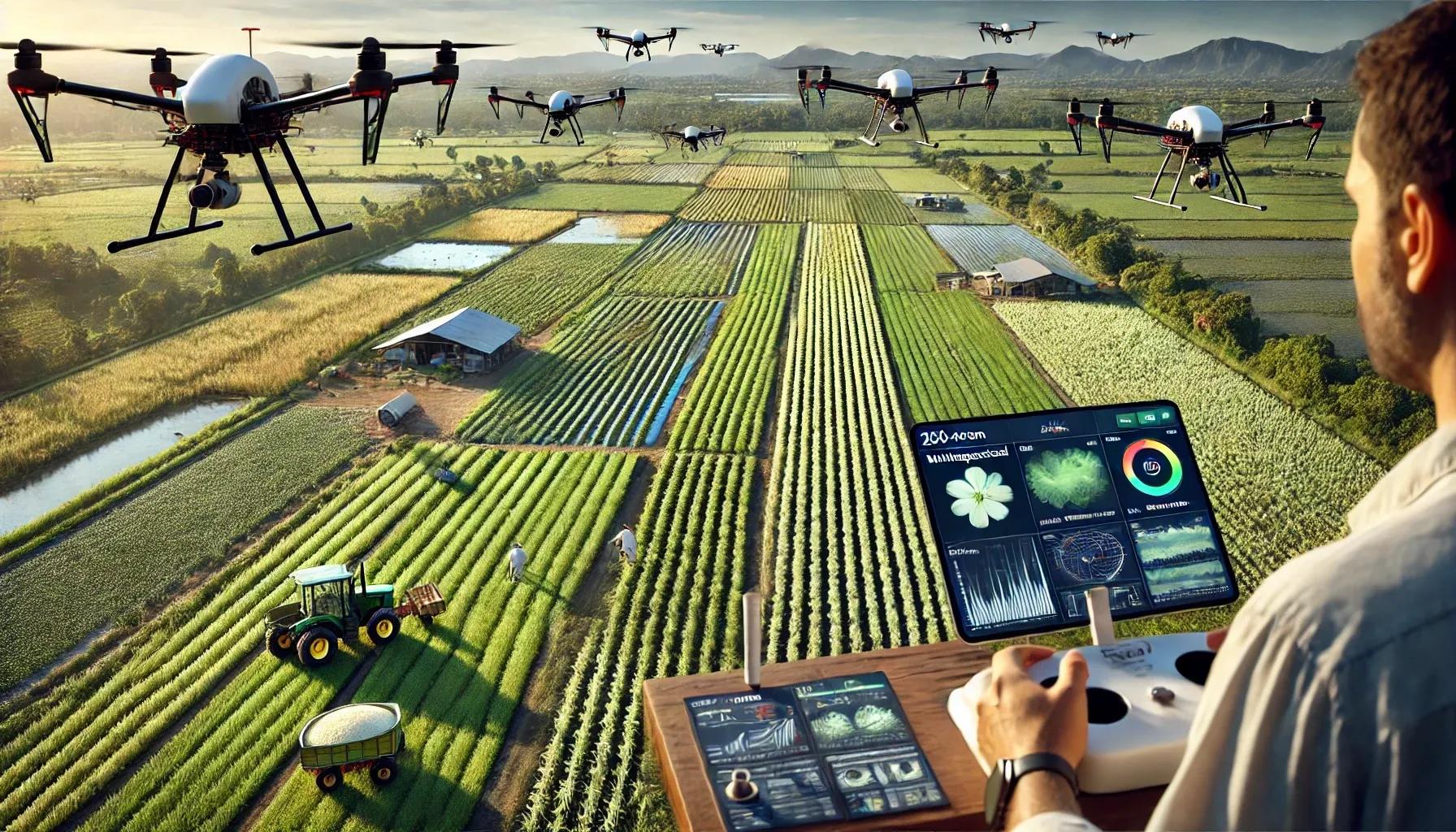
Precision farming, a modern agricultural practice that uses advanced technology to optimize field-level management, has seen significant advancements with the integration of unmanned aerial vehicles (UAVs). This article explores the transformative role of UAVs in precision farming through a detailed case study of an Indian farm, highlighting their benefits, applications, and the challenges faced during implementation.
Background on Precision Farming
Precision farming aims to enhance crop yields and reduce waste by employing technology to monitor and manage agricultural resources. Key technologies in precision farming include GPS, IoT sensors, data analytics, and now, UAVs. UAVs, or drones, offer a unique perspective and capability set, providing high-resolution aerial imagery and real-time data collection, which are critical for informed decision-making.
The Role of UAVs in Agriculture
UAVs have revolutionized several aspects of agriculture:
Crop Monitoring: UAVs equipped with multispectral and thermal cameras can detect plant health issues, stress, and nutrient deficiencies, enabling timely intervention.
Soil Analysis: Pre-planting UAV surveys can help create precise 3D maps for soil analysis, assisting in irrigation and nitrogen-level management.
Irrigation Management: UAVs can identify areas of dry soil and water pooling, facilitating efficient water use.
Planting: Some UAVs are designed to shoot pods with seeds and nutrients into the soil, promoting reforestation and planting.
Pesticide and Fertilizer Application: UAVs can apply pesticides and fertilizers uniformly, reducing chemical use and environmental impact.
Case Study: UAV Integration in an Indian Farm
Farm Profile
The case study focuses on a 200-acre paddy and sugarcane farm in Andhra Pradesh, India. The farm faced challenges such as inconsistent crop yields, inefficient water use, and labor-intensive crop monitoring. To address these issues, the farm management decided to integrate UAV technology into their precision farming practices.
Implementation Process
Phase 1: Needs Assessment and Planning
The farm conducted a thorough needs assessment to identify specific areas where UAVs could add value. Key objectives included improving crop health monitoring, optimizing irrigation, and enhancing pest management. A comprehensive plan was developed, outlining the types of UAVs and sensors required, training for farm personnel, and integration with existing farm management software.
Phase 2: Equipment Acquisition and Training
The farm invested in a fleet of UAVs equipped with RGB, multispectral, and thermal cameras. The chosen UAV models offered both autonomous flight capabilities and manual control options. Farm personnel underwent training sessions to operate the UAVs, interpret the data collected, and integrate the insights into their daily operations.
Phase 3: Deployment and Data Collection
UAVs were deployed to perform weekly flights over the farm, capturing high-resolution images and data. The data was processed using specialized software to generate actionable insights. Key activities included:
Crop Health Monitoring: UAVs provided detailed imagery that highlighted areas of crop stress. The multispectral imagery enabled the detection of early-stage diseases and nutrient deficiencies, allowing for timely interventions.
Soil Moisture Analysis: Thermal imaging helped identify variations in soil moisture levels, facilitating more efficient irrigation practices.
Pest and Disease Management: UAVs detected early signs of pest infestations and disease outbreaks, enabling targeted pesticide application and reducing overall chemical use.
Results and Benefits
Improved Crop Yields
By identifying and addressing issues such as nutrient deficiencies and pest infestations early, the farm saw a 20% increase in crop yields. The high-resolution imagery allowed for precise interventions, ensuring that crops received the right treatment at the right time.
Efficient Resource Use
UAV-enabled soil moisture analysis optimized irrigation schedules, reducing water use by 25%. This not only conserved water but also minimized the risk of overwatering and related crop damage.
Reduced Labor Costs
Automated UAV flights and data analysis significantly reduced the time and labor required for crop monitoring. Farm personnel could focus on strategic decision-making rather than manual field inspections.
Environmental Benefits
Targeted pesticide application reduced chemical usage by 30%, decreasing the environmental impact and promoting sustainable farming practices. The precise application also minimized crop damage and improved overall crop health.
Challenges and Lessons Learned
Technical Challenges
Data Management: The large volumes of data collected by UAVs required robust data management and processing capabilities. The farm invested in advanced software solutions to handle and interpret the data efficiently.
Weather Dependency: UAV operations were often impacted by adverse weather conditions, leading to delays in data collection. The farm developed contingency plans to ensure critical monitoring activities were not compromised.
Operational Challenges
Training and Expertise: Adequate training was crucial to ensure personnel could operate UAVs and interpret the data correctly. Continuous training programs were implemented to keep the team updated on the latest UAV technologies and data analysis techniques.
Regulatory Compliance: Navigating the regulatory landscape for UAV operations required careful planning and adherence to guidelines. The farm collaborated with local authorities to ensure compliance with all relevant regulations.
Key Takeaways
Integration with Existing Systems: Seamless integration of UAV data with existing farm management systems was essential for maximizing the benefits of UAV technology.
Continuous Improvement: Regular evaluation and adaptation of UAV practices helped the farm stay ahead of challenges and leverage new opportunities.
In conclusion, the integration of UAV technology in precision farming has transformed agricultural practices, as evidenced by the case study of the Indian farm in Andhra Pradesh. UAVs have enhanced crop monitoring, optimized resource use, and improved overall farm productivity. While challenges remain, the benefits of UAV integration are clear, promising a future of more efficient, sustainable, and productive farming. As technology continues to evolve, the potential for UAVs in agriculture will only grow, offering new opportunities for innovation and improvement in the sector.