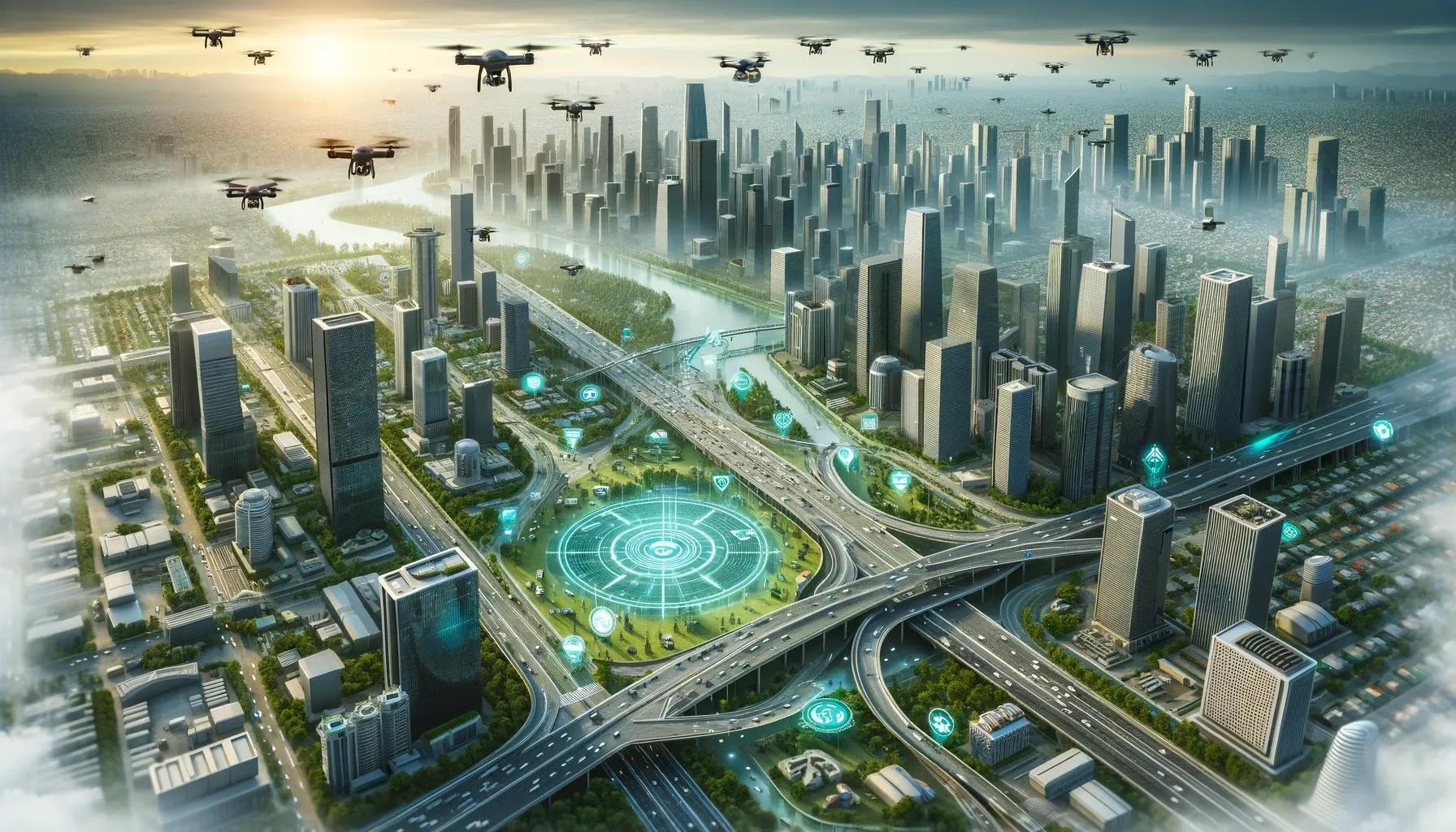
In the era of rapid urbanization and technological advancement, the concept of 'smart cities' has emerged as a beacon of sustainable and efficient urban development. Central to the evolution of these smart cities is the deployment of Unmanned Aerial Vehicles (UAVs), commonly known as drones. UAV technology, with its versatility and advanced capabilities, is playing a pivotal role in shaping the infrastructure and operational dynamics of smart cities. This article delves into the various facets of UAV utilization in smart city development, highlighting its transformative impact on urban management and planning.
Traffic and Transportation Management
One of the most critical challenges in urban settings is traffic congestion and transportation management. UAVs offer an innovative solution to this problem. Equipped with high-resolution cameras and real-time data transmission capabilities, UAVs can monitor traffic patterns, detect congestion points, and relay this information to traffic control centers. This data is instrumental in optimizing traffic signals, rerouting traffic, and even aiding in emergency response. Moreover, UAVs contribute to public transportation planning by analyzing commuter flow and identifying areas that require service improvements or infrastructural development.
Infrastructure Inspection and Maintenance
Maintaining urban infrastructure is a mammoth task for any city administration. UAVs simplify this process by enabling quick and efficient inspections of buildings, bridges, roads, and utilities. With the ability to access hard-to-reach areas and capture high-definition images, UAVs provide detailed insights into the structural integrity of infrastructure. This proactive approach to maintenance helps identify potential problems before they escalate, ensuring the safety and longevity of urban infrastructure.
Environmental Monitoring and Sustainability
Sustainability is a cornerstone of smart city initiatives. UAVs contribute significantly to environmental monitoring by collecting data on air quality, water levels, and vegetation health. They can swiftly survey large areas, providing valuable information for urban planning and environmental protection strategies. This data is crucial in managing resources, combating pollution, and implementing green initiatives, all of which contribute to the creation of healthier and more sustainable urban environments.
Disaster Management and Emergency Response
In the face of natural disasters or emergencies, rapid response and accurate information are vital. UAVs excel in these scenarios, offering aerial views that aid in assessing the situation and planning rescue operations. They can navigate through disaster-stricken areas, providing real-time visuals and data to emergency responders, thereby enhancing situational awareness and response efficiency. UAVs also play a role in post-disaster recovery efforts, helping in damage assessment and coordinating rebuilding initiatives.
Urban Planning and Development
UAV technology is revolutionizing urban planning by providing comprehensive aerial views and detailed geographical data. Planners can utilize this information to design urban layouts, plan new infrastructure projects, and envision future expansions. UAVs also assist in land-use planning, historical preservation, and monitoring construction progress, ensuring that development projects align with the overall vision of smart cities.
Public Safety and Law Enforcement
Ensuring public safety is paramount in smart cities. UAVs enhance law enforcement capabilities by offering aerial surveillance, crowd monitoring, and crime scene analysis. They act as a force multiplier, extending the reach of law enforcement agencies and providing critical information that aids in crime prevention and response. Additionally, UAVs can be deployed in search and rescue operations, enhancing the efficiency and success rate of these missions.
Challenges and Future Prospects
While the benefits of UAVs in smart city development are evident, there are challenges to be addressed. Regulatory frameworks, privacy concerns, and airspace management are among the key issues that need careful consideration. However, as technology advances and regulatory guidelines evolve, the potential of UAVs in urban environments will undoubtedly expand. Future advancements in UAV technology, such as autonomous flight and AI integration, will further enhance their capabilities, making them an indispensable tool in the continued evolution of smart cities.
In conclusion, the role of UAVs in the development and management of smart cities is multifaceted and profound. From traffic control and infrastructure maintenance to environmental monitoring and public safety, UAVs are not just tools but partners in building smarter, safer, and more sustainable urban environments. As cities continue to grow and evolve, the integration of UAV technology will be crucial in addressing the complex challenges of urbanization. Embracing UAVs in urban planning and management is not just an option but a necessity for the cities of the future. The sky is not the limit; it's the starting point.