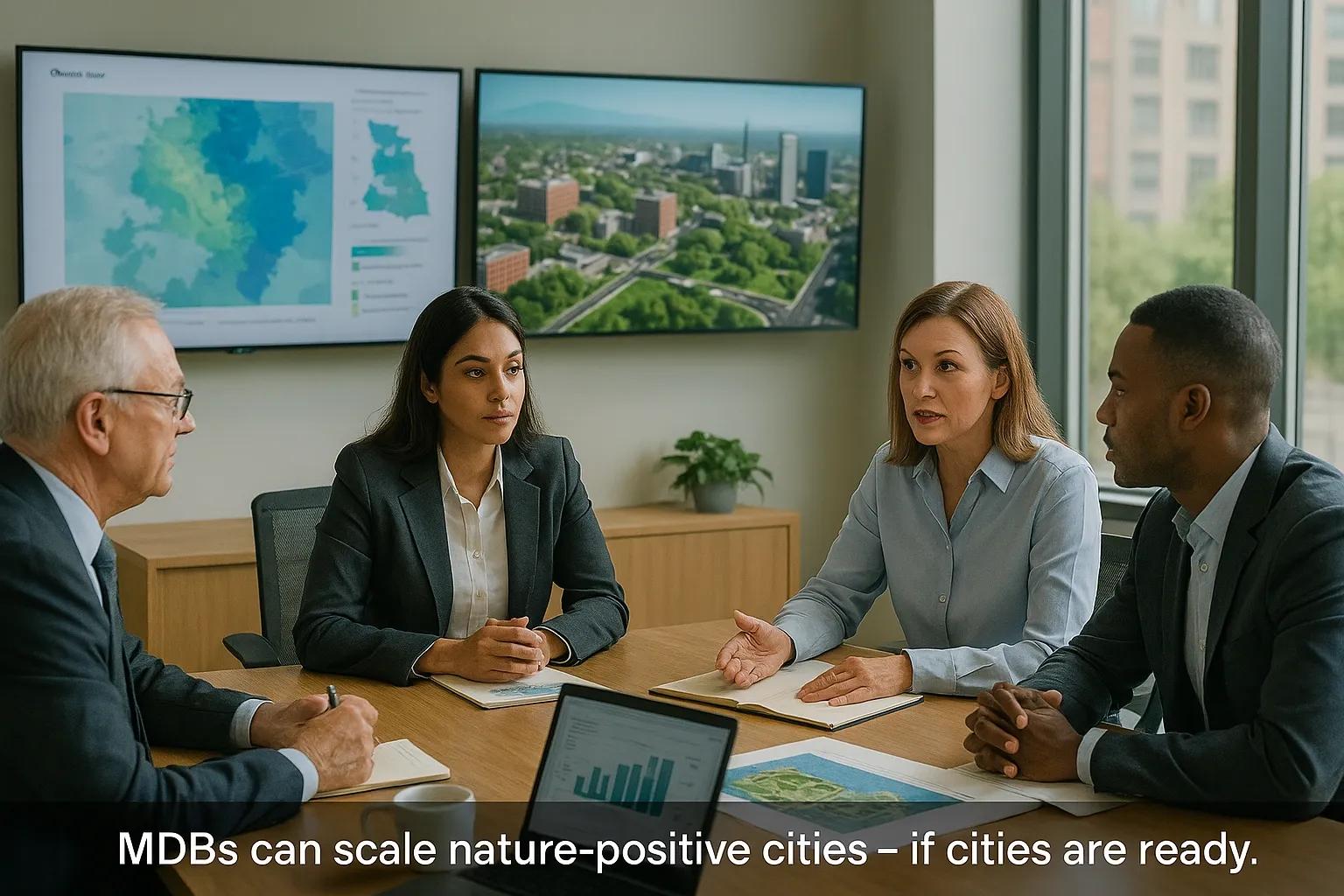
Multilateral Development Banks (MDBs) have long played a pivotal role in supporting infrastructure development across the globe.
Now, as cities face climate risks, biodiversity loss, and ecosystem degradation, MDBs are evolving their mandates to fund nature-positive urban development.
But while MDBs control significant capital, many cities, especially small and mid-sized ones, struggle to access these funds due to complexity, eligibility requirements, or lack of readiness.
Unlocking this finance requires alignment between policy, planning, and technology.
Why It Matters
MDBs like the World Bank, ADB, and EIB are increasingly prioritizing,
Climate-resilient infrastructure
Biodiversity conservation
Urban nature integration
as key components of their investment strategies.
However, less than 10% of MDB environmental finance currently reaches nature-based urban projects.
That means billions remain untapped while cities struggle to fund the nature infrastructure they need.
MDBs bring more than money, they offer:
Technical assistance
Policy guidance
Risk mitigation instruments
Long-term financing terms
These elements can transform pilot projects into large-scale, replicable solutions, if cities are prepared.
How Cities Can Engage MDBs Effectively
1. Align with MDB Frameworks
Cities must align proposals with MDB sustainability criteria, climate adaptation, inclusivity, and biodiversity value.
Geospatial mapping tools can help cities demonstrate this alignment through data-backed visualizations.
2. Develop Strong Environmental and Financial Narratives
Using Digital Twins and AI modeling, cities can simulate ecosystem service benefits (e.g., reduced flood risk, heat reduction) and financial returns from nature investments.
3. Improve Institutional Readiness
Cities should strengthen project documentation, monitoring systems, and financial governance, often with help from MDB technical support.
BIM-based urban models improve project clarity and performance tracking.
4. Package Bankable Projects
MDBs prefer scalable projects with co-benefits.
Bundling green infrastructure projects across regions and sectors (e.g., water, energy, health) can increase attractiveness.
5. Track and Report Impact
UAVs, IoT sensors, and geospatial dashboards allow cities to collect and report real-time nature impact data, essential for MDB monitoring and accountability.
Role of Digital Technologies
MDB funding increasingly depends on measurable, reportable, verifiable impacts. Here’s how your technology stack fits in:
Geospatial Intelligence : Site selection, risk mapping, equity planning
UAV Surveys : Baseline environmental data, visual evidence
BIM : Design integration of green infrastructure with conventional builds
Digital Twins : Predictive modeling and scenario planning
IoT Networks : Real-time data for impact tracking
AI Dashboards : Automated reporting for compliance and transparency
These tools reduce friction, de-risk projects, and demonstrate operational maturity, which MDBs require.
Conclusion
Multilateral Development Banks hold the key to scaling nature-positive city infrastructure.
But funding won’t flow unless cities are prepared with solid data, performance models, and environmental metrics.
Cities that combine good governance with strong digital infrastructure will not only access more MDB funds, but they’ll also set the benchmark for future-ready urban ecosystems.