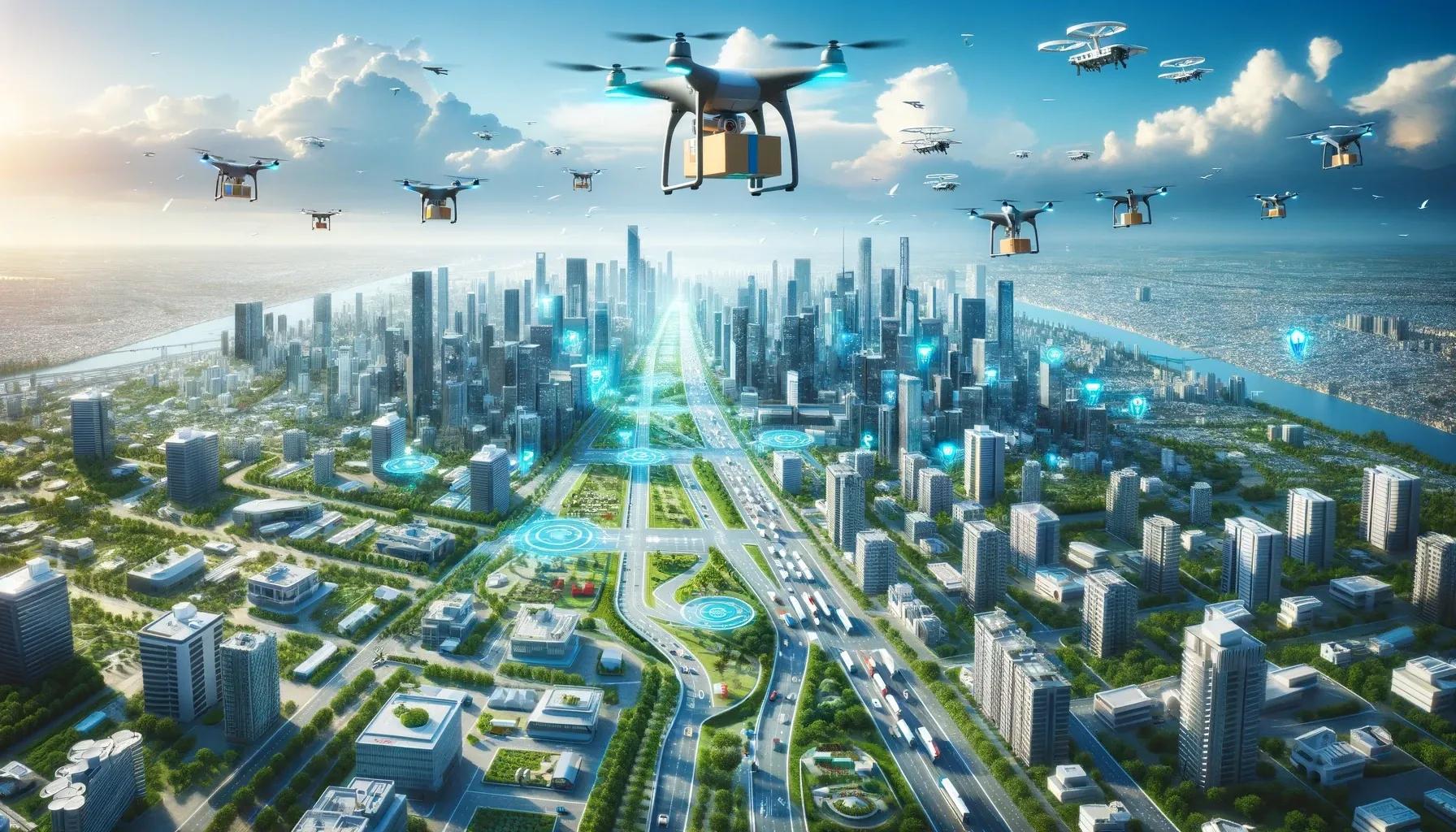
In the rapidly evolving landscape of urban development, smart cities have emerged as a beacon of innovation, efficiency, and sustainability. Central to this transformation is the integration of advanced technologies for managing the complexities of urban logistics and enhancing surveillance capabilities. Among these technologies, drones, also known as Unmanned Aerial Vehicles (UAVs), have played a pivotal role. This article delves into the multifaceted contributions of drones to smart city logistics and surveillance, from revolutionizing delivery services to augmenting emergency response mechanisms.
Enhancing Delivery Services through UAVs
The development of drone technology has dramatically changed the logistics sector, which is a vital component of urban economies. Drones offer a swift, cost-effective, and environmentally friendly alternative to traditional delivery methods, particularly in congested urban areas. They are capable of bypassing ground traffic, thereby reducing delivery times and operational costs. Moreover, drones emit no direct pollutants, aligning with the green initiatives of smart cities.
E-commerce giants and postal services have begun pilot projects for drone-based delivery systems. These UAVs are equipped with GPS and advanced navigation systems, allowing for precise drop-off of packages at designated locations. This not only enhances customer satisfaction through faster delivery but also alleviates road traffic, contributing to the overall efficiency of urban transportation networks.
UAVs in Emergency Response and Disaster Management
In emergency situations where every second counts, drones offer a swift and effective tool for disaster response and management. Equipped with high-resolution cameras, thermal imaging, and real-time data transmission capabilities, drones can provide immediate aerial views of disaster-affected areas. This is invaluable for assessing damage, locating victims, and strategizing rescue operations.
Drones also play a crucial role in delivering emergency supplies to areas that are otherwise inaccessible due to floods, earthquakes, or other natural calamities. By doing so, they ensure that life-saving aid reaches those in need promptly. Furthermore, UAVs are instrumental in monitoring post-disaster recovery, providing detailed data to aid in rebuilding efforts.
Surveillance and Security Enhancement with UAV Technology
The application of drones extends beyond logistics and emergency response; they are also transforming urban surveillance and security systems. Drones equipped with advanced sensors and imaging technologies can perform routine surveillance over large areas, offering real-time data that is critical for maintaining public safety and security.
In scenarios ranging from monitoring traffic conditions to overseeing public events, drones provide a bird's-eye view that enhances situational awareness. They can also be deployed rapidly in response to security threats, offering a mobile surveillance platform that supports law enforcement agencies in crime prevention and investigation.
Moreover, drones contribute to the safety of critical infrastructure. By conducting regular inspections of bridges, buildings, and other structures, UAVs help identify potential risks, ensuring timely maintenance and averting accidents.
Challenges and Considerations
While the benefits of integrating drones into smart city logistics and surveillance are undeniable, several challenges need to be addressed. Regulatory hurdles, privacy concerns, and airspace management are among the key issues that require careful consideration.
Regulatory frameworks must be developed to ensure safe and responsible drone operations, prevent conflicts with manned aircraft, and ensure the protection of citizens' privacy. The potential for intrusive surveillance necessitates strict guidelines on data collection and usage.
Furthermore, the integration of drones into urban environments must consider the risk of accidents and the need for reliable anti-collision systems. Ensuring public safety is paramount, necessitating robust standards for drone manufacturing, operation, and maintenance.
In conclusion, drones are revolutionizing smart city logistics and surveillance, offering innovative solutions that enhance efficiency, safety, and sustainability. From transforming delivery services to improving emergency response and public security, UAVs are proving to be an indispensable tool in the smart city toolkit. However, realizing their full potential requires addressing regulatory, privacy, and safety challenges. With thoughtful implementation and oversight, drones can significantly contribute to the development of smarter, more resilient, and more sustainable urban environments. The journey towards fully integrating drones into the fabric of smart cities is ongoing, but the trajectory is clear: UAVs are set to play a pivotal role in shaping the future of urban living.