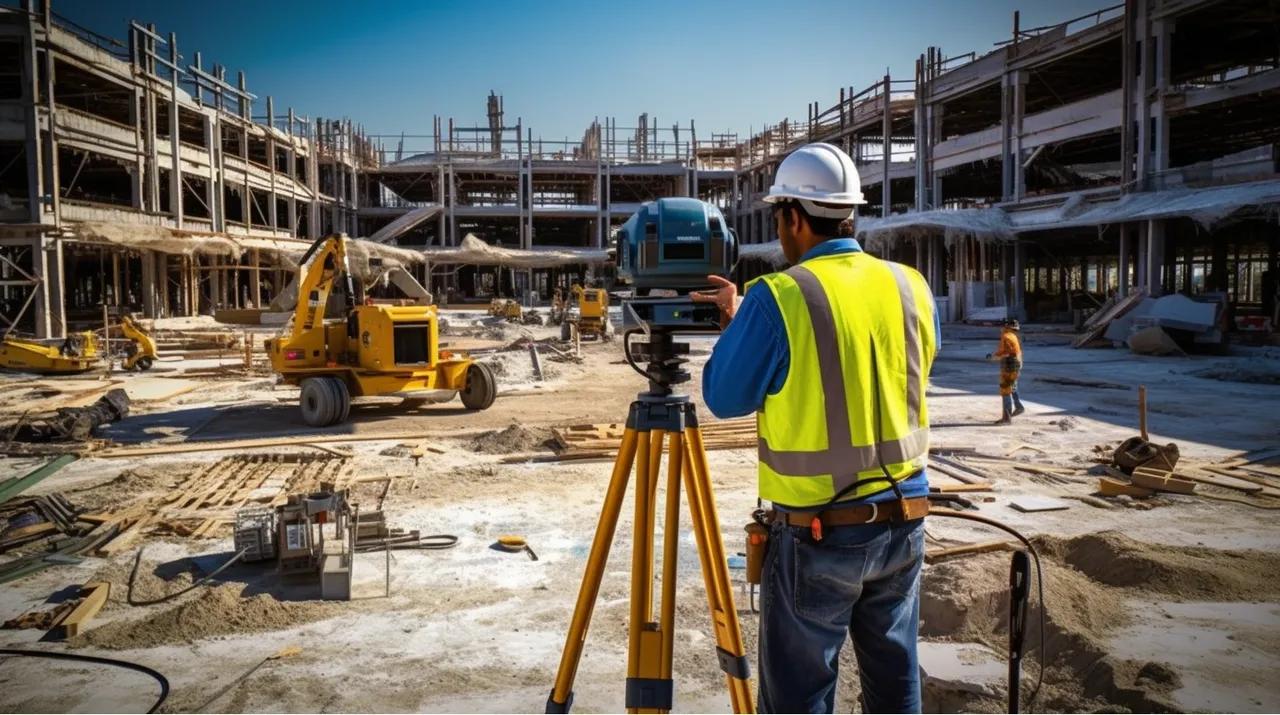
Engineer Operating Laser Scanning Gear on Busy Construction Site
As technology continues to advance at an unprecedented rate, laser scanning has positioned itself as a groundbreaking innovation with the capability to redefine various sectors. From the realms of construction and design to the fields of manufacturing and historical preservation, this cutting-edge method offers unmatched levels of detail, efficiency, and accuracy in obtaining 3D spatial data. This article explores the pivotal features that establish laser scanning as an essential component in today's industrial landscape.
Peerless Accuracy and Intricacy
Among the most striking benefits of laser scanning is its extraordinary accuracy. Utilizing a synergistic blend of laser beams and sensory equipment, the technology crafts highly precise 3D models of objects and spaces. Conventional measurement techniques often lack the capability to capture complex details, a gap that laser scanning fills exceptionally well, especially in specialized areas like architectural studies and archaeological research.
Amplified Operational Efficiency
Efficiency is a crucial asset in any operational setting, and laser scanning shines in this regard. Unlike traditional data gathering methods, which can be both time-intensive and laborious, laser scanning technology can quickly amass a large dataset in a matter of minutes. This accelerated data collection not only conserves time but also reduces interruptions in ongoing activities, a feature particularly beneficial in sectors like industrial manufacturing and building construction.
Resource Optimization and Cost Reduction
The operational efficiency of laser scanning has a direct impact on cost-effectiveness. The reduced need for manual labor hours for data gathering allows organizations to redistribute their resources more effectively. Furthermore, the high precision of the technology minimizes the likelihood of errors, thereby averting expensive modifications or corrections in projects. In a competitive market where resource management is key, the cost-saving attributes of laser scanning offer a distinct advantage.
Elevated Safety Standards
In industries where safety is a critical concern, such as construction and engineering, laser scanning offers a significant improvement. Traditional approaches often necessitate that workers venture into hazardous or inaccessible locations, posing potential safety risks. Laser scanning alleviates this requirement, thereby enhancing overall workplace safety. This not only safeguards the workforce but also decreases organizational liability and insurance expenditures.
Exhaustive Digital Records
The 3D point cloud data generated through laser scanning serves as an exhaustive digital archive of the scanned environment. This archive is multi-functional, serving as a foundational layer for planning, designing, and analytical tasks. In specialized scenarios like forensic analysis or accident reconstructions, this data becomes an invaluable asset for understanding the sequence of events.
Precise Design and Immersive Visualization
In the Architecture, Engineering, and Construction (AEC) sector, laser scanning aids in the development of exact as-built models. This allows design professionals to work with accurate existing conditions, thus minimizing design discrepancies and ensuring seamless project implementation. Additionally, the data collected can be transformed into immersive visual experiences, aiding stakeholders in visualizing the end product even before the commencement of construction activities.
Preservation of Cultural Assets
In the sphere of archaeology and cultural conservation, laser scanning is instrumental in digitally documenting and preserving historical landmarks and artifacts. This is especially crucial in a world where such cultural assets are increasingly endangered due to both natural and human-induced factors.
Swift Data Analytics
Although laser scanning generates enormous volumes of data, contemporary software solutions equipped with sophisticated algorithms facilitate efficient data processing and analysis. These software platforms can convert raw point cloud data into actionable models, maps, and visual representations.
In conclusion, laser scanning is progressively reshaping a variety of industries, offering benefits that range from time and resource conservation to enhanced accuracy and safety. As the technology continues to evolve, it promises to unlock even more groundbreaking applications that will redefine our interaction with the physical world.
The transformative essence of laser scanning is not merely an incremental advancement but a quantum leap in how industries operate and interact with spatial environments. Whether it's the detailed mapping of a historical edifice or the optimization of manufacturing workflows, laser scanning is undeniably setting the course for the future of multiple sectors.
Reference:
https://www.arc-corporate.com/post/laser-scanning-arc