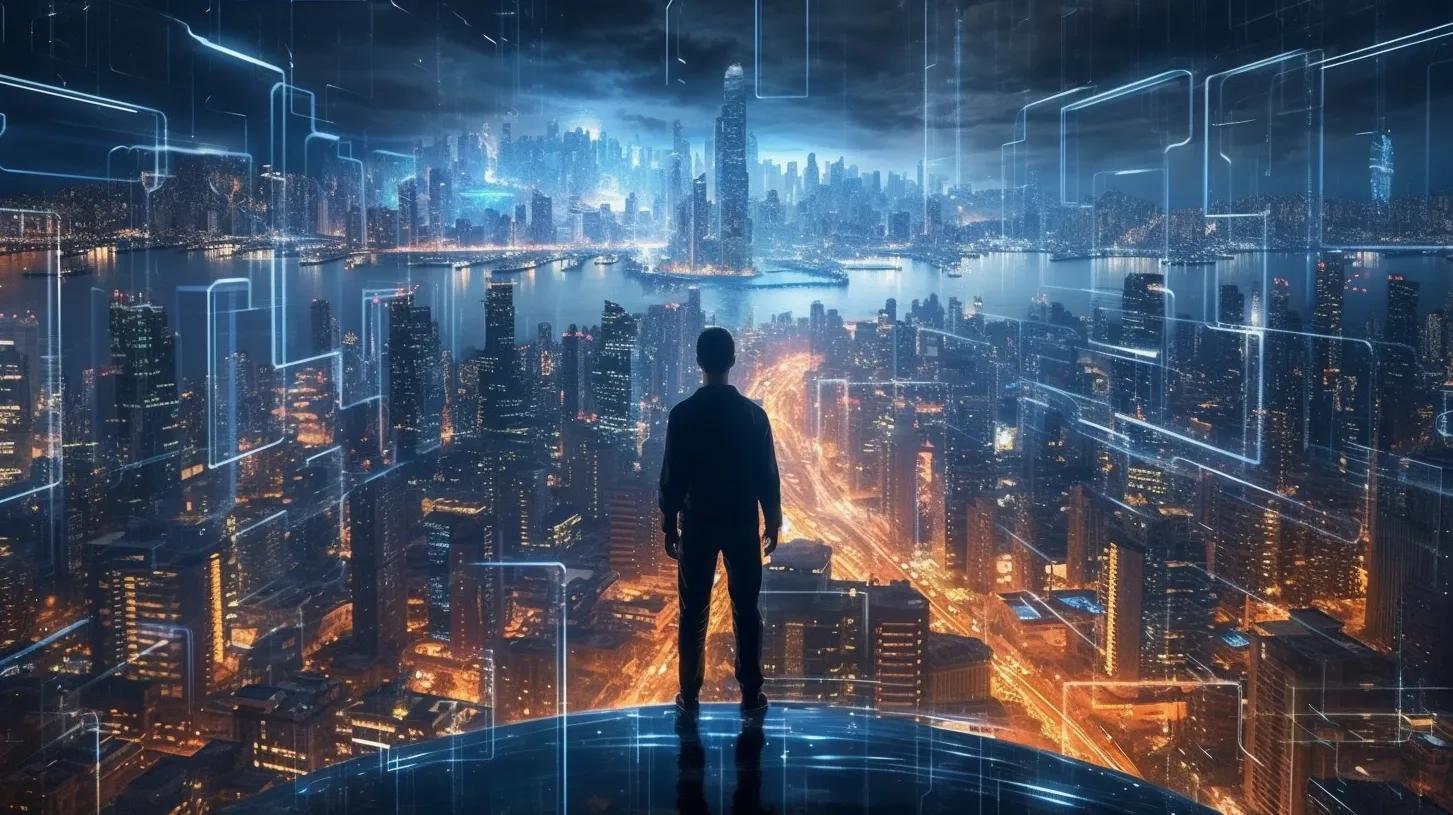
In today's rapidly evolving technological landscape, the ability to visualize and understand complex systems is paramount. Enter the world of geospatial digital twins, a groundbreaking concept that offers unparalleled clarity for intricate environments. This article delves into the essence of geospatial digital twins, tracing their evolution and highlighting their transformative potential.
Understanding Geospatial Digital Twins:
Imagine being in a vast international airport, trying to navigate your way through its sprawling infrastructure. Now, think of a digital map on your mobile device, not just guiding you to your gate but also revealing the intricate workings of the entire facility. This isn't just a map; it's a dynamic representation of the airport, capturing everything from doors and trees to underground utilities. This comprehensive digital replica, which integrates various layers of data and operations, is what we refer to as a geospatial digital twin.
The Evolutionary Journey:
The concept of a digital twin isn't novel. Its roots trace back to the manufacturing sector several decades ago, where it was used to measure the performance of machinery and processes. However, these early versions had their limitations. While they could pinpoint strengths and weaknesses in a system, they struggled to capture the system's entirety.
Fast forward to today, and digital twins have undergone a transformative evolution. Modern versions provide a holistic view without compromising on detail. They recognize that in any complex system, the interactions between various components are as crucial as the components themselves. This shift in perspective has been instrumental in capturing the dynamic nature of today's intricate environments.
The Magic of Geospatial Technology:
One of the pivotal factors behind the success of modern digital twins is geospatial technology. This technology has been around for over half a century, pioneering the concept of digital twins. Its visual language, the map, has evolved from static representations to dynamic digital replicas that capture real-time data and interactions.
Today's geospatial digital twins seamlessly integrate immersive 3D environments, harnessing details from advanced capture techniques. But they don't stop at just three dimensions. They add the dimension of time, evolving as the systems they represent evolve. By compiling historical and present data, these twins can analyze past patterns, predict future trends, and offer invaluable insights.
Diverse Applications and Potential:
The versatility of geospatial digital twins is evident in their wide range of applications. From aiding in the design and construction of infrastructure projects to assisting architects and urban planners in visualizing alternative scenarios, their potential is boundless. They provide a detailed view of concealed systems, making them indispensable tools in various sectors.
One of the most promising applications is in the environmental sector. Here, digital twins serve as a bridge, linking natural ecosystems with human-made systems. They offer insights into how these systems interact and influence each other, paving the way for more sustainable and harmonious coexistence.
The Bigger Picture:
Beyond their technical prowess, geospatial digital twins play a crucial role in fostering collaboration and communication. They offer a unified view, enabling stakeholders from diverse backgrounds to come together, understand evolving systems, and work towards common goals. Their visual intuitiveness serves as a powerful tool for explaining progress to communities, regulatory bodies, and other stakeholders.
Furthermore, these digital twins excel in organizing vast amounts of spatial information. Despite data coming from varied sources, the one commonality they share is their spatial component. Geospatial digital twins emphasize this shared location, offering a contextual understanding that is unparalleled.
To conclude, in a world where data is abundant, and systems are increasingly complex, geospatial digital twins emerge as beacons of clarity. They represent a harmonious blend of technology and insight, capturing the essence of dynamic environments and offering a roadmap for the future. As we continue to navigate the challenges of the modern world, these digital twins promise a future where understanding, collaboration, and innovation reign supreme.