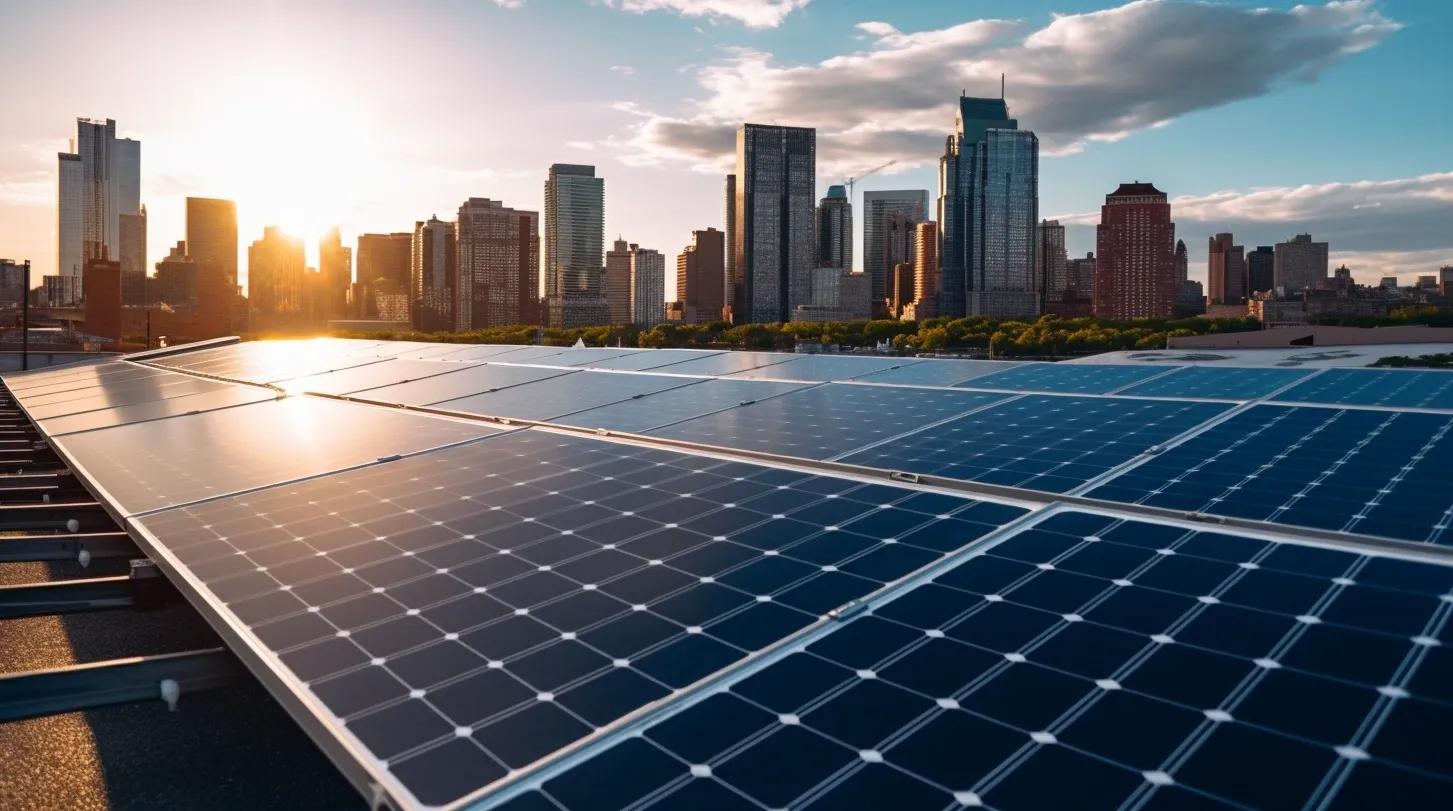
The global landscape of energy production is undergoing a seismic shift, with renewable energy sources becoming increasingly dominant. According to the International Renewable Energy Agency (IRENA), renewable energy capacity grew by a record 295 GW or by 9.6% in 2022, with 83% of all power capacity added last year produced by renewables[^4^]. This article delves into the rapid growth of renewable energy, its impact on businesses, and the crucial role that geospatial technology plays in this sector.
Global and National Trends
Global Perspective
Globally, renewables made up 29% of electricity generation in 2020, and the International Energy Agency (IEA) predicts that renewable capacity will meet 35% of global power generation by 2025[^6^]. The main drivers for this growth include the decline in the cost of generating solar and wind power, government subsidies, and the need to strengthen energy security[^2^][^5^].
India's Renewable Energy Landscape
India is emerging as a global leader in renewable energy, with a 396% increase in installed non-fossil fuel capacity in the last 8.5 years[^1^]. The country has already achieved its target of 40% installed electric capacity from non-fossil fuels and aims to achieve 50% by 2030[^1^]. India's renewable electricity is growing at a faster rate than any other major economy[^2^].
Business Impact of Renewable Energy Growth
Job Creation
The switch from fossil fuels to renewable energy sources can provide a boost to the economy by creating more jobs. Every dollar of investment in renewables creates three times more jobs than in the fossil fuel industry[^5^].
Sustainable Business Practices
Sustainable business practices that support green energy can resonate with your customer base and increase brand loyalty. Businesses need to take the lead in becoming more sustainable by increasing their renewable energy use[^1^]. Corporations need to become leaders in making this change because the amount of energy they use is undeniably more than energy used personally.
Cost Savings
Renewable energy can help businesses save on energy costs in the long run. The cost of solar photovoltaic cells has dropped 90% over the past decade[^1^]. Renewable energy sources generally lessen the impact of energy on the environment compared with fossil fuels, and they’ll never die out because they’re continuously replenished.
Marketing Opportunities
Using renewable energy sources can provide marketing opportunities for businesses. Customers are increasingly interested in sustainable products and services, and businesses that use renewable energy can differentiate themselves from their competitors[^4^].
Research and Development
The use of renewable energy sources by businesses can help develop the research and funding needed to allow for the wider use of these sources around the world[^4^].
The Role of Geospatial Technology
Identifying Optimal Locations
Geospatial technologies, including geographic information systems (GIS), remote sensing, and global positioning systems (GPS), can be used to identify the most suitable sites for renewable energy projects. GIS allows developers to analyze geospatial data to determine optimal locations for renewable energy projects, taking into account factors such as wind speeds, solar radiation, and topography. These data help reduce risks associated with site selection and ensure that renewable energy projects are economically viable[^5^].
Modeling and Forecasting
Geospatial tools can model renewable energy production and storage variables, enabling the rates and amounts of energy to be calculated, integrated, and managed for both non-renewable and renewable energy sources[^1^]. GIS energy modeling is used heavily in hydrogen infrastructure, demand, market, and resource analysis[^5^].
Forecasting renewable energy production
Geospatial technologies have further enhanced the forecasting of renewable energy production, enabling utilities to manage their electricity supply more effectively. By analyzing geospatial data, developers can forecast the expected energy production from renewable energy projects accurately. These data can help utilities plan and manage their electricity supply, ensuring that the energy supply meets demand[^5^].
Economic Analysis and Forecasting
Geospatial technologies can support deeper integration and understanding of energy development, distribution, and use. GIS-based frameworks can be used to predict or forecast building energy performance at various scales, such as on a building or city level. GIS allows people to deploy resources in a more coordinated way and get data without so much power and distance[^4^].
Assessing Availability of Sources
In the sustainable energy sector, GIS technologies are used to assess the availability of sources. GIS is enabling new energy production by identifying sites of maximum energy potential and optimized economic development while minimizing environmental impact[^6^].
To conclude, the growth of renewable energy presents significant opportunities for businesses in the sector. Geospatial technology plays a vital role in this growth by helping identify optimal locations, model and forecast energy production, and assess the availability of renewable energy sources. The continuous development of geospatial technologies will be instrumental in ensuring a sustainable energy future.
Citations
[^1^]: [Invest India]( https://www.investindia.gov.in/sector/renewable-energy )
[^2^]: [IEA]( https://www.iea.org/news/renewable-power-s-growth-is-being-turbocharged-as-countries-seek-to-strengthen-energy-security )
[^3^]: [C2ES]( https://www.c2es.org/content/renewable-energy/ )
[^4^]: [IRENA]( https://www.irena.org/News/pressreleases/2023/Mar/Record-9-point-6-Percentage-Growth-in-Renewables-Achieved-Despite-Energy-Crisis )
[^5^]: [Scientific American]( https://www.scientificamerican.com/article/renewable-energy-is-charging-ahead/ )
[^6^]: [World Economic Forum]( https://www.weforum.org/agenda/2023/03/electricity-generation-renewables-power-iea/ )