The Metaverse. You've probably heard the term thrown around quite a bit lately. We're going to demystify it, not just as a buzzword but as a groundbreaking realm that's transforming how we perceive and interact with the digital world.
The Metaverse, in essence, is the successor to our current mobile internet. It's the promise of an internet that's more immersive, engaging, and omnipresent than we've ever known. Picture an internet that breaks free from the confines of our smartphones and PCs and expands to envelope us in a seamless 3D universe. This is the crux of the Metaverse, the digital era's Web 3.0.
In the Metaverse, the internet is not a passive service we log into; it's an all-encompassing environment that we live, work, and play within. We can think of it as a massive shared space, a convergence of virtually enhanced physical reality and physically persistent virtual reality, with multiple users interacting in real-time.
This immersive universe is made possible by a host of technologies. Artificial intelligence (AI), augmented reality (AR), virtual reality (VR), 5G and 6G network technologies, cloud and edge computing, and even blockchain - they all have roles to play. However, a pivotal and perhaps less celebrated enabler is geospatial data, the geographic data that helps construct and navigate the digital worlds of the Metaverse with remarkable accuracy and interactivity.
So, how is geospatial data making the Metaverse more immersive?
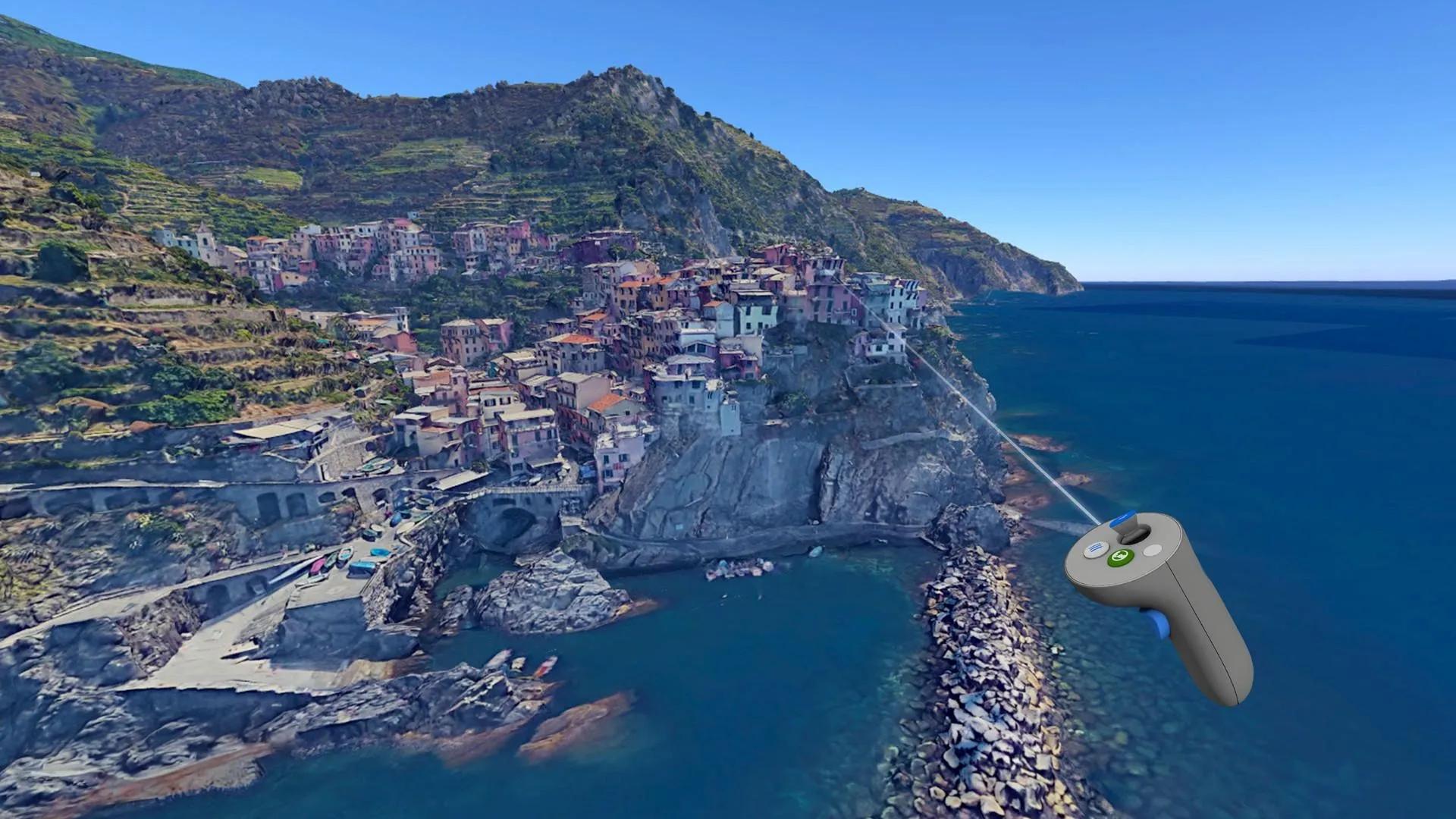
Take Google Earth VR, which utilizes geospatial data to create a globally encompassing, interactive 3D world. Or Fortnite, the popular online video game that uses geospatial data to evolve its elaborate virtual world continually. Even the world of virtual real estate, platforms like Decentraland and Cryptovoxels, where users can purchase and customize properties, relies on geospatial data to offer unique, fixed locations within the Metaverse.
Examples of this seismic shift are becoming more numerous and significant. The Metaverse has been embraced by industry leaders like Meta (previously Facebook), who announced in late 2021 that the company would prioritize Metaverse-oriented development. Major brands, including Nike and Gucci, are creating virtual experiences that allow customers to explore their history, products, and designs in a completely new dimension. Even retail giant Walmart has joined the party with Walmartland, a virtual world where people can play games, attend concerts, and purchase virtual merchandise for their avatars.
The Metaverse still has a long way to go, and it's essential to understand that the technology is a long-term vision. However, promising developments are on the horizon. Apple unveiled its long-awaited Vision Pro, a mixed reality headset, in 2023. BMW introduced the world's first virtual factory, a digital twin of a factory that can run simulations on NVIDIA's Omniverse platform, a platform that its CEO compares to the Metaverse. Epic Games, known for Fortnite, is raising $2 billion to advance the company's vision to build the Metaverse, indicating a strong industry belief in this digital future.
Yet, as exciting as the concept of the Metaverse is, it's crucial to remember that it shouldn't and won't be limited to a single platform. The beauty of the Metaverse lies in its interoperability—the ability to move seamlessly across platforms and experiences. Whether through Roblox, Fortnite, NVIDIA's Omniverse, a Meta or Apple headset, or something yet to be conceived, the Metaverse will embody the future of the internet.
The Metaverse is more than a phase or a trend. It's the future. As technology continues to evolve, the internet will become more immersive, and hardware will move beyond our phones. Geospatial data is and will continue to be a key player in this evolution, creating immersive, interactive, and engaging spaces within the Metaverse. It's a fascinating journey we're all embarking on, where the digital and physical blur into a unified experience. Let's dive in and explore this brave new world together.