Revolutionizing Manufacturing through Integrated Technologies
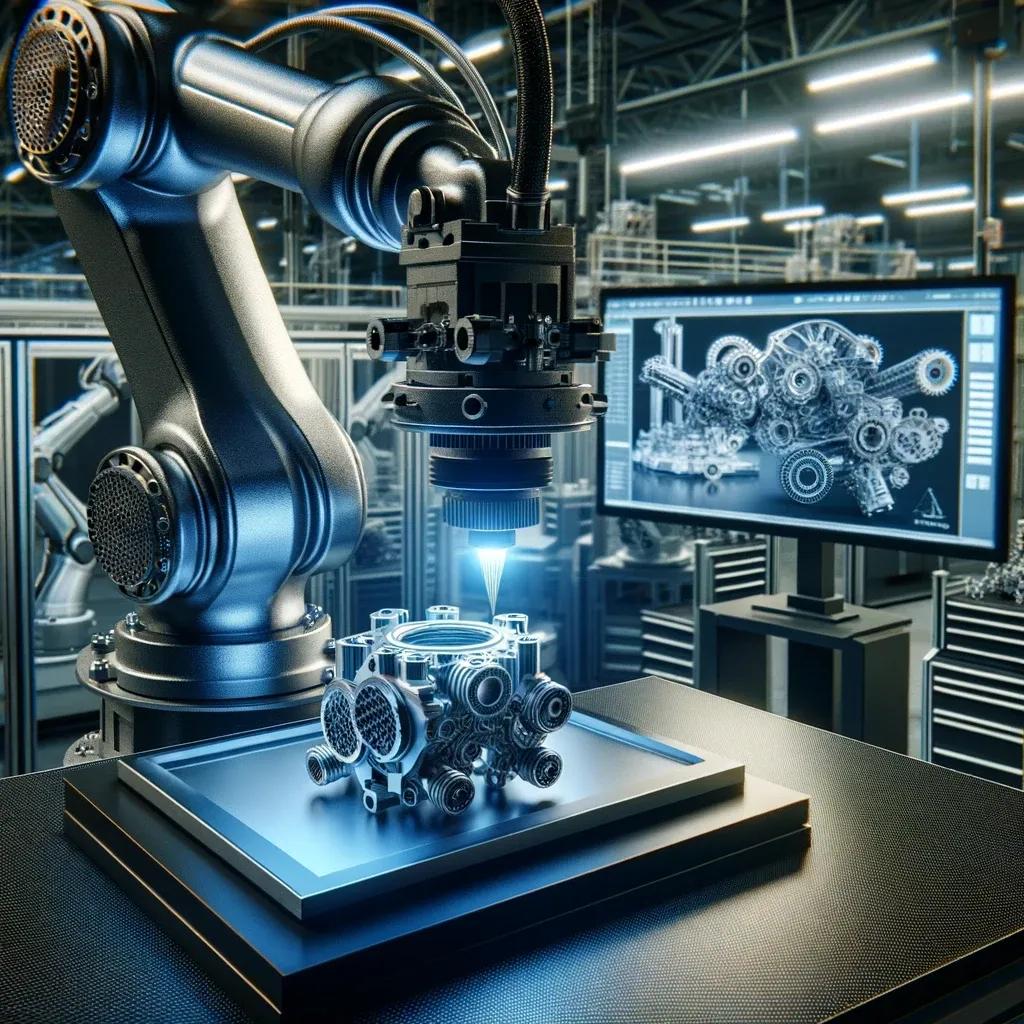
In an era where technology drives innovation, the convergence of 3D printing with geospatial and Building Information Modeling (BIM) technologies is setting the stage for a transformative leap in various industries, particularly in manufacturing critical naval and aviation parts.
Geospatial Data: Enhancing Industrial Applications
The industrial sector, encompassing aerospace, automotive, and maritime industries, is witnessing a surge in the adoption of 3D printing for manufacturing large-scale objects such as 900 mm diameter propellers and complex aerospace components. The integration of geospatial data is pivotal in this expansion, offering enhanced insights for optimizing the location and efficiency of production facilities. By factoring in logistical, environmental, and resource-related aspects, geospatial analytics aids in streamlining production and distribution processes, making them more efficient and cost-effective.
BIM: A Game-Changer for Complex Structures
BIM's role in 3D printing extends beyond traditional construction. It is instrumental in designing intricate structures, enabling simulations and analyses prior to the printing process. This synergy ensures that printed components are not only structurally sound but also optimized for their intended purpose, bringing a new level of precision and customization to the manufacturing process.
Material Mapping with Geospatial Analysis
The frontier of printable materials is expanding, with innovations encompassing advanced composites and alloys. Geospatial analysis emerges as a crucial tool in this realm, facilitating the mapping of raw material availability, assessing environmental impacts, and planning for sustainable material sourcing. This approach not only enhances the efficiency of material use but also aligns with global sustainability goals.
Supply Chain Optimization: A Collaborative Approach
The transformative potential of 3D printing in supply chains can be fully realized through the collaborative use of BIM and geospatial data. These technologies offer valuable insights for designing efficient layouts for on-demand production facilities and assist in the real-time management of logistics, revolutionizing the traditional supply chain models.
Sustainable Urban Development and Planning
Incorporating sustainability into the narrative, 3D printing's alliance with urban planning and development, underpinned by BIM and geospatial technologies, is of paramount importance. This integration facilitates sustainable urban expansion, ensuring that new 3D printing facilities are in harmony with environmental regulations and urban planning guidelines.
Overcoming Challenges with Integrated Solutions
Addressing the challenges in large-scale 3D printing, such as skilled operator requirements and quality assurance, is more effective when BIM and geospatial technologies are integrated. This combination enhances training programs, augments quality control through precise modeling, and streamlines operational procedures, paving the way for a smoother adoption of 3D printing technologies in complex industrial applications.
Workforce Development: A New Educational Paradigm
The evolving technological landscape necessitates a new approach to workforce development. Educational initiatives that blend 3D printing with BIM and geospatial technologies are crucial. Specialized training programs that interweave these disciplines are essential in preparing a skilled workforce, capable of navigating and excelling in this new era of manufacturing.
In conclusion, the future of 3D printing, particularly in fabricating critical naval and aviation parts, transcends the boundaries of technology advancement. It embodies the integration with geospatial and BIM technologies, forming a triad that promises not only enhanced efficiency and sustainability but also a new horizon of innovation in various industries. This integrated approach marks a significant milestone in the journey towards Industry 4.0, heralding a new era of manufacturing excellence.
Reference
https://www.linkedin.com/posts/endritrestelica_ai-tech-robotics-ugcPost-7130978257423712256-qEC7?utm_source=share&utm_medium=member_desktop