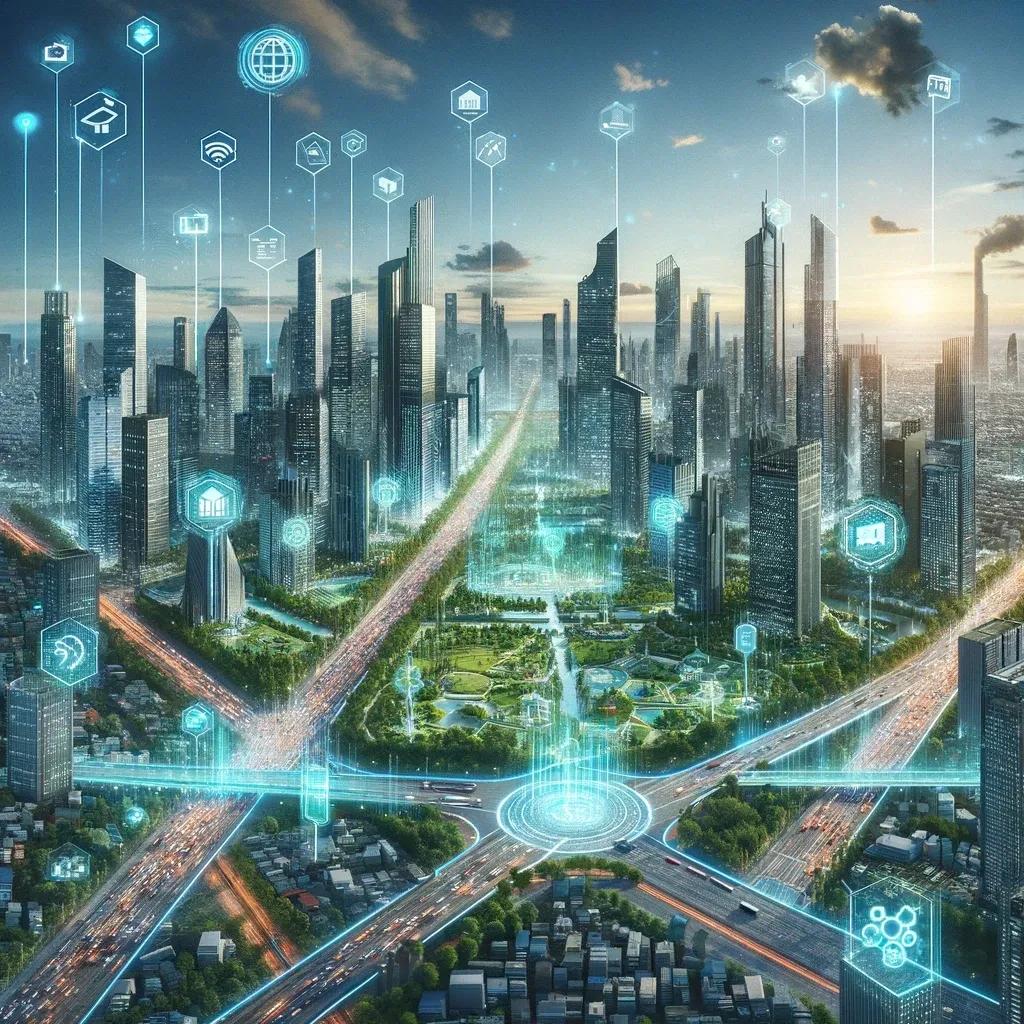
In the rapidly evolving landscape of urban development, the integration of cutting-edge technologies is not just a trend but a necessity. Among these, the concept of Digital Twins stands out for its potential to revolutionize the way cities are planned, developed, and managed. This technology, rooted in the convergence of Information Technology (IT) and Operational Technology (OT), promises a more efficient, sustainable, and resilient future for urban environments. This article delves into the essence of Digital Twins, explores their application in urban planning, and envisions the future they are poised to create.
Understanding Digital Twins
A Digital Twin is a virtual replica of a physical entity, system, or process. It goes beyond static 3D modeling by incorporating dynamic data, which allows the virtual entity to simulate real-world conditions. This technology leverages the Internet of Things (IoT), artificial intelligence (AI), machine learning (ML), and spatial analytics, providing a comprehensive and interactive model that can predict, simulate, and analyze real-world scenarios.
The Role of Digital Twins in Urban Planning
Urban planning is a complex field that involves the consideration of countless variables, from traffic patterns and environmental impacts to social dynamics and economic development. Traditional methods of urban planning, while effective to a degree, often struggle to cope with the scale and complexity of modern urban challenges. Digital Twins offer a solution to this dilemma by providing a platform for:
1. Comprehensive Simulation and Analysis
Digital Twins allow planners to simulate various scenarios and assess the potential impacts of different development strategies. This includes analyzing traffic flow, optimizing public transportation routes, simulating emergency response scenarios, and assessing the environmental impact of urban projects. By enabling a holistic view of potential outcomes, Digital Twins support more informed decision-making.
2. Real-time Monitoring and Management
With IoT sensors integrated throughout the urban infrastructure, Digital Twins can provide real-time data on various aspects of the city's functioning. This data can be used to monitor traffic, energy consumption, air quality, and more, facilitating a proactive approach to urban management. For instance, real-time traffic data can be used to adjust signal timing to reduce congestion, enhancing the efficiency of urban transportation networks.
3. Enhancing Citizen Engagement
Digital Twins also offer new avenues for citizen engagement. By visualizing urban projects in a virtual environment, citizens can better understand their implications and provide valuable feedback. This fosters a more inclusive approach to urban planning, where community input plays a crucial role in shaping development strategies.
4. Sustainable and Resilient Urban Development
Sustainability and resilience are critical considerations for future urban development. Digital Twins support these goals by enabling the simulation of environmental impacts and the exploration of sustainable solutions. They can also play a vital role in planning for resilience by simulating disaster scenarios and assessing the effectiveness of response strategies.
The Future of Urban Planning with Digital Twins
The future of urban planning with Digital Twins is marked by several key trends and potentials:
Integration with Emerging Technologies
As technologies like AI, ML, and IoT continue to evolve, their integration with Digital Twins will deepen, leading to even more sophisticated analysis and simulation capabilities. For instance, AI-driven predictive analytics can forecast urban growth patterns, helping planners to proactively design infrastructure and services to accommodate future needs.
Towards a Data-driven Governance Model
Digital Twins are paving the way for a shift towards data-driven governance. By leveraging the wealth of data generated by urban environments, city administrators can make more informed decisions, optimize public services, and respond more quickly to urban challenges.
Customization and Scalability
Future Digital Twins will likely offer greater customization and scalability, allowing cities of different sizes and with varying resources to benefit from this technology. This flexibility will enable both large metropolises and smaller municipalities to leverage Digital Twins for their unique urban planning needs.
Global Standards and Interoperability
As the adoption of Digital Twins grows, the development of global standards and protocols for data sharing and interoperability will become increasingly important. This will facilitate the integration of data from diverse sources, enhancing the accuracy and utility of Digital Twins.
Enhanced Public Safety and Well-being
By enabling more efficient urban services, improved environmental conditions, and proactive disaster management, Digital Twins have the potential to significantly enhance public safety and well-being. The technology's ability to simulate and predict outcomes can lead to more resilient urban environments that are better equipped to handle both current challenges and future uncertainties.
In conclusion, the application of Digital Twins in urban planning represents a paradigm shift towards more dynamic, data-driven, and participatory approaches to city development and management. By bridging the gap between the physical and digital realms, Digital Twins offer a powerful tool for creating more sustainable, resilient, and livable urban environments. As we move forward, the continued evolution and integration of this technology will undoubtedly play a crucial role in shaping the future of urban planning, promising a smarter, more connected, and more human-centric approach to city living. The journey towards fully realizing the potential of Digital Twins in urban planning is just beginning, but the possibilities