As we contemplate the ebb and flow of the geospatial industry, it is important to understand the emerging trends and shifts in business models. A recent survey conducted by Geospatial World provides a vital perspective on this subject, enabling us to reflect on our current practices and anticipate future directions.
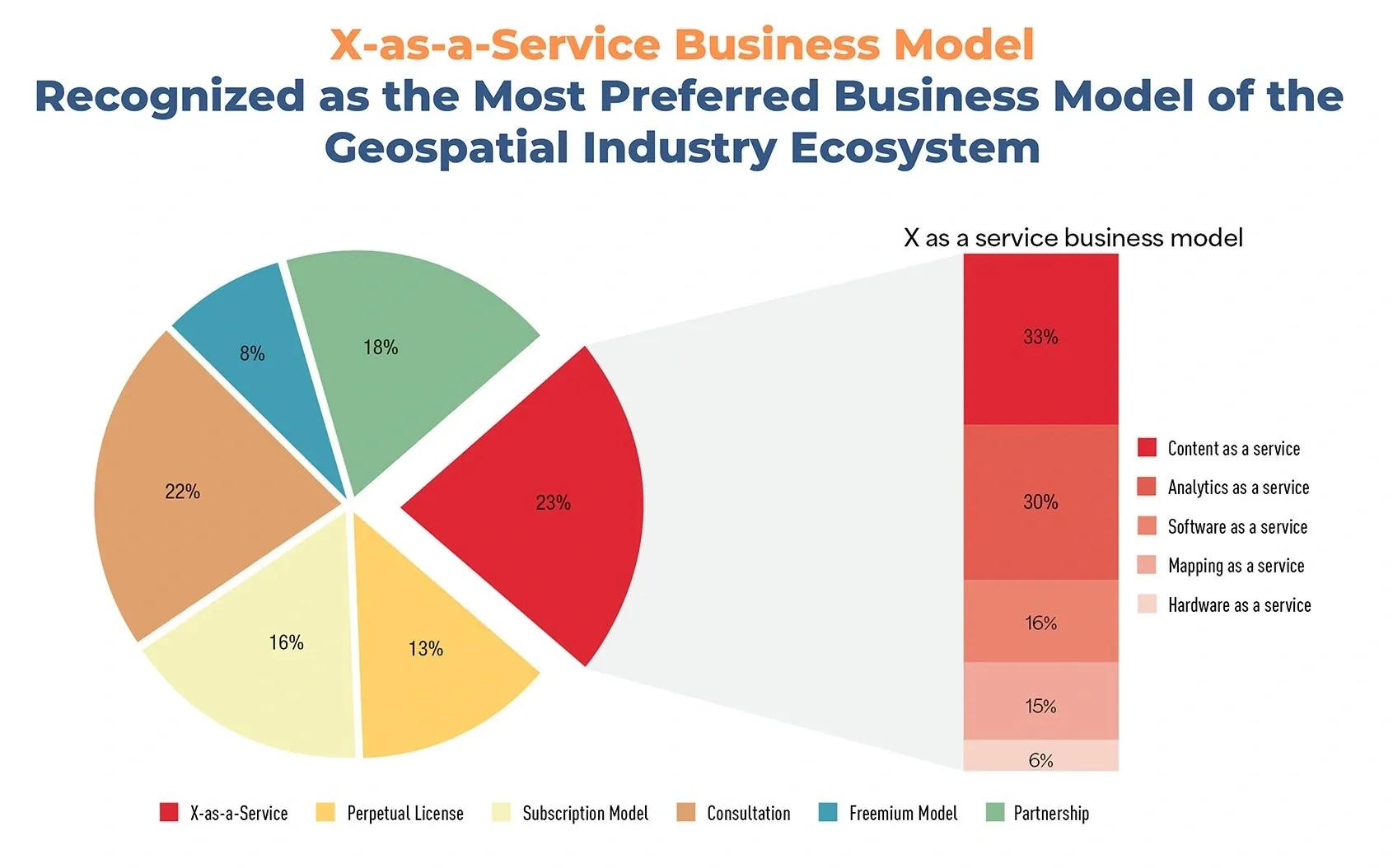
The survey's findings were illuminating. They revealed that the consultation and X-as-a-service models are the most preferred, accounting for 45% of total responses. Partnerships and subscription models followed, with a substantial 18% and 16%, respectively. The traditional perpetual license model accounted for 13%, while the freemium model stood at 8%. Reflecting on these figures, it’s clear that the geospatial industry is embracing flexible, service-based business models. But what does this mean for the future?
Consultation and X-as-a-service Models: Dominating the Present and Future
In a rapidly evolving industry like ours, the consultation and X-as-a-service models offer a compelling proposition. They allow businesses to stay agile, adapting to new technologies and market demands. With their customer-centric approach, these models encourage continuous innovation, which is key to staying competitive in the geospatial sector.
Moving forward, we can expect the popularity of these models to continue to rise. The need for expert guidance in leveraging geospatial technologies effectively makes the consultation model crucial. Similarly, the X-as-a-service model's flexibility, scalability, and cost-effectiveness make it an attractive choice for businesses.
Partnerships and Subscription Models: The Power of Collaboration and Continuity
Partnerships highlight the power of collaboration in the geospatial industry. By combining resources, expertise, and technologies, businesses can offer more comprehensive solutions. Given the increasing complexity of geospatial projects, this collaborative approach is likely to become even more critical in the future.
The subscription model, on the other hand, has always been popular in the software industry, and it's interesting to see it gain traction in the geospatial realm. The model's predictability of revenue and the ability to provide continuous value to customers make it a strong contender for the future.
Perpetual License and Freemium Models: A Declining Trend?
The perpetual license model, once the default in software, has seen a decline. The model's upfront cost and the need for periodic upgrades make it less appealing in today's fast-paced environment. Although this model may still have its niche, its popularity is expected to decrease further.
The freemium model, while appealing in its offer of free basic services, faces its own challenges. Converting free users into paying customers is often difficult, affecting the model's profitability. While the freemium model may remain relevant for certain applications, its overall adoption in the geospatial industry is likely to remain low.
Reflecting on the X-as-a-Service Breakdown
Within the X-as-a-service model, content-as-a-service and analytics-as-a-service emerged as the top choices. The geospatial industry’s increasing need for real-time, actionable insights makes the latter particularly relevant. Meanwhile, software-as-a-service, mapping-as-a-service, and hardware-as-a-service trailed behind. This distribution shows a clear preference for services that deliver direct business value.
Looking forward, it’s likely that the demand for content and analytics services will continue to grow. As geospatial technologies become more advanced and integrated, these services will play an increasingly significant role in helping businesses make informed decisions.
Conclusion
In reflecting on these findings, it's clear that the geospatial industry is evolving. The shift towards service-based, flexible, and collaborative business models reflects the industry's adaptation to technological advancements and changing customer needs. As we move forward, these trends will continue to shape the geospatial landscape, driving innovation and growth. As part of this industry, we must remain aware of these shifts, adapting our strategies and practices to stay competitive and relevant in this exciting future.
Disclaimer:
The views and interpretations expressed in this article are my own and do not necessarily reflect the official position of Geospatial World. The information is derived from my personal interpretation of an image published by Geospatial World, and while I strive to provide accurate and insightful analysis, there may be different interpretations or perspectives on the same data. Readers are encouraged to view the original image and make their own judgments. The intention of this article is to foster thoughtful discussion about the future of business models in the geospatial industry and not to present an absolute or definitive interpretation of the survey results.