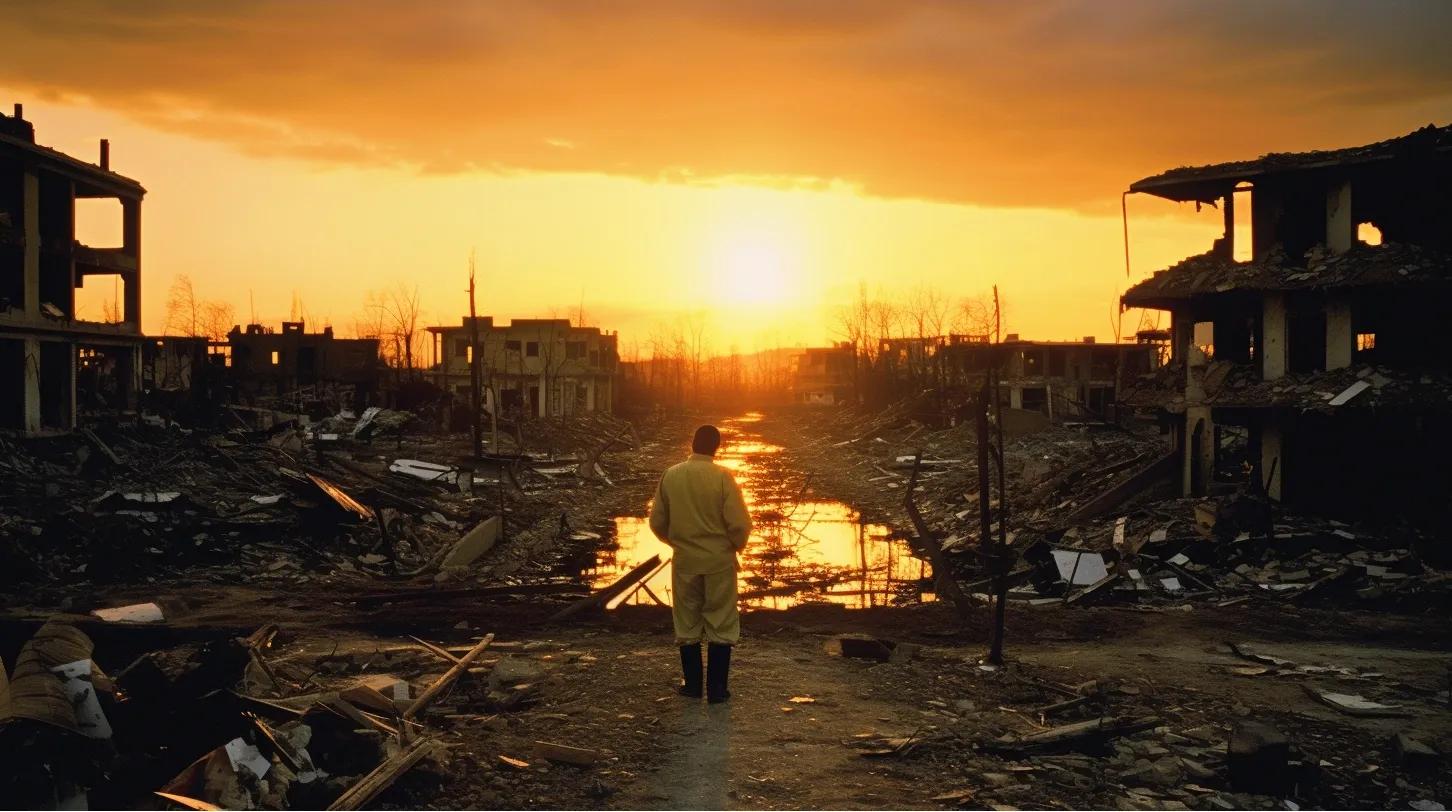
In today's rapidly evolving technological landscape, the fusion of geospatial data analytics and healthcare has taken a significant leap forward. This merger is not just a mere coincidence but a result of the pressing need to address global health challenges more efficiently. Let's delve into the cause-and-effect relationship of this development and its potential impact on our world.
The Catalyst: A Global Need
The world is becoming increasingly interconnected, and with this comes the challenge of addressing health issues that transcend borders. Natural disasters, climate change, and pandemics don't recognize national boundaries. As these challenges grow, so does the need for a unified approach to healthcare infrastructure that can address both chronic needs and acute events.
The Response: Harnessing Earth Observations
To address these global challenges, experts have turned to Earth observations. These are not just satellite images we see; they are a comprehensive collection of data about our planet. By harnessing the power of open Earth observations, decision-makers can influence policies across various sectors. But how does this relate to healthcare?
The Intersection: Geospatial Data Meets Healthcare
Enter the world of geospatial data analytics. This technology allows for the collection, analysis, and visualization of data that has a geographical component. When applied to healthcare, it provides a bird's eye view of patient populations, helping healthcare providers identify areas of need and allocate resources more effectively.
For instance, consider a region hit by a natural disaster. Traditional methods might involve ground teams assessing the damage and medical needs, a process that could take days or even weeks. But with geospatial data analytics, the health and medical needs of the affected population can be determined almost in real-time. This swift assessment means quicker allocation of resources, leading to faster response times and potentially saving more lives.
The Innovation: AI's Role in Geohealth
But geospatial data, on its own, can be overwhelming. That's where Artificial Intelligence (AI) comes in. By integrating AI techniques with Earth Observation (EO) data, there's an opportunity to improve geohealth infrastructure on a global scale. AI can sift through vast amounts of data, identify patterns, and provide actionable insights that might be missed by the human eye.
Imagine a scenario where a region is experiencing unusual weather patterns, potentially leading to a health crisis. AI can analyze past and present EO data to predict the possible health implications, allowing for preemptive measures. This proactive approach can mitigate the effects of climate change and natural disasters on health.
The Vision: A Healthier World Through Observation
The ultimate goal of merging geospatial data analytics with healthcare is clear: to create a healthier world. By observing our Earth, understanding its patterns, and predicting its impacts, we can be better prepared for whatever challenges come our way.
This vision is not just about responding to disasters. It's about understanding patient populations, identifying areas of need, and making informed decisions about resource allocation. It's about supporting public health communities and all organizations affected by health crises with insights that deepen our understanding of health issues on both global and local scales.
The Future: Pushing Boundaries and Exploring Possibilities
The journey doesn't stop here. As technology continues to advance, so will the possibilities of GeoAI in healthcare. The commitment is to push the boundaries of what's possible, to anticipate health crises before they happen, and to respond more effectively when they do.
In conclusion, the marriage of geospatial data analytics and healthcare is a testament to human ingenuity. It's a response to the global challenges we face and a beacon of hope for a healthier future. As we continue to harness the power of Earth observations and AI, we move closer to a world where health crises, whether chronic or acute, can be anticipated, understood, and mitigated more effectively than ever before.