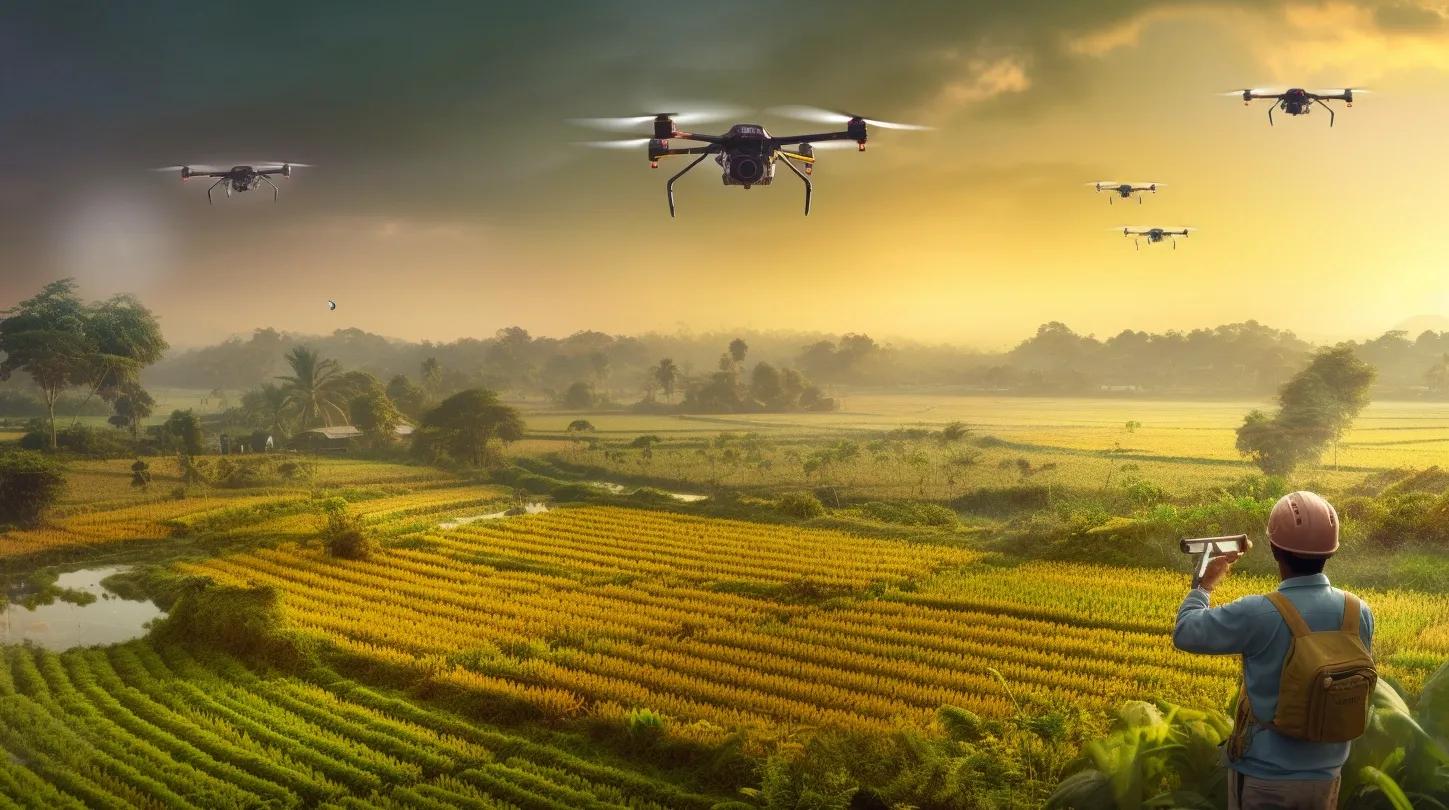
Agriculture is not just the backbone of India's economy; it's the lifeblood that sustains over half of the nation’s population. With 328.7 million hectares under cultivation and employing 54.6% of the workforce, agriculture contributes significantly to the Gross Domestic Product (GDP) — 17.4% to be exact. But agriculture in India is also a sector plagued with challenges, from outdated practices to sustainability issues. The Indian government's "Vocal for Local and Digital" initiative is an ambitious attempt to address these challenges by integrating digital technology into agriculture. It aims to digitize practices, enhance nutrition, bolster food security, ramp up exports, and foster sustainability.
The Power of Geospatial Infrastructure
The integration of geospatial infrastructure is a game-changer for Indian agriculture. Programs focused on Agriculture & Irrigation are tapping into the limitless possibilities that geospatial data brings to the sector. Collaborations with startups, small businesses, and even cottage industries are crucial in unlocking the potential of digital innovation. Geospatial data can provide actionable insights into soil health, crop yield predictions, and efficient water utilization, among other things. The key lies in adopting technologies such as satellite imaging, drones, and IoT sensors, which can provide real-time, actionable data to farmers and policy-makers alike.
Governmental Support Through "Vocal for Local and Digital"
The government's initiative resonates with the broader vision of 'Atma Nirbhar Bharat' or Self-Reliant India. This is a comprehensive approach to make the Indian economy more resilient and self-sufficient. The government has enacted several policies to complement this vision, such as Make in India for promoting local manufacturing and Digital India to increase digital literacy and access to technology. Import tariffs and procurement preferences are structured to favor locally produced items. President Murmu has also lauded these efforts, underscoring the role of local industries and digital literacy in nation-building[^4^][^5^][^6^].
Digital Transformation in Agriculture: A Multi-Faceted Approach
The initiative is set to revolutionize agriculture through multiple channels:
1. Strengthening Agricultural Networks: Digital platforms can enhance networking along the agricultural value chain. This would enable the farming community to absorb shocks and recover from stresses, such as market fluctuations and climatic events[^1^].
2. Sustainable Production: Digital tools can guide farmers on optimized usage of fertilizers and pesticides, reducing environmental impact[^2^].
3. Farming Advisory Services: Interactive platforms can deliver farming advice through text messaging, interactive voice response systems, and smartphone apps, connecting farmers to vital information, farm inputs, and markets[^3^].
4. Use of Drones and Satellites: Advanced technologies like drones and satellite systems can offer invaluable insights into crop cycles, soil health, and water usage[^3^].
5. Enhancing Smallholder Productivity: Digital tech can help small farmers become part of the larger food value chains and adopt climate-smart practices[^4^].
6. Digital Platforms for Farmers: These platforms can help farmers track production, sales, and even land under cultivation[^5^].
7. Global Outreach: A social practice approach to digitization can also be valuable for smallholder farmers in regions like Sub-Saharan Africa, showcasing India's potential as a global agricultural leader[^6^].
In conclusion, the fusion of digital and geospatial technologies promises to make Indian agriculture more efficient, productive, and sustainable. The government's "Vocal for Local and Digital" initiative is not just a policy but a blueprint for the future, a future where Indian agriculture is robust, resilient, and globally competitive. Collaborative efforts from all stakeholders, including tech startups and traditional cottage industries, can harness the untapped potential of digital technologies, setting Indian agriculture on a course towards a brighter, more sustainable future.
Citations
[^1^]: [Barriers and enablers of the use of digital]( https://online.ucpress.edu/elementa/article/9/1/00106/118805/Barriers-and-enablers-of-the-use-of-digital )
[^2^]: [Frontiers in Communication]( https://www.frontiersin.org/articles/10.3389/fcomm.2021.762201 )
[^3^]: [How digital technologies can help Africa’s smallholder farmers]( https://www.fao.org/e-agriculture/blog/how-digital-technologies-can-help-africa%E2%80%99s-smallholder-farmers )
[^4^]: [Digital Agriculture and Development]( https://www.bcg.com/publications/2021/digital-agriculture-and-development )
[^5^]: [How digital innovation is transforming agriculture]( https://www.mckinsey.com/industries/agriculture/our-insights/how-digital-innovation-is-transforming-agriculture-lessons-from-india )
[^6^]: [Frontiers in Sustainable Food Systems]( https://www.frontiersin.org/articles/10.3389/fsufs.2022.866331 )