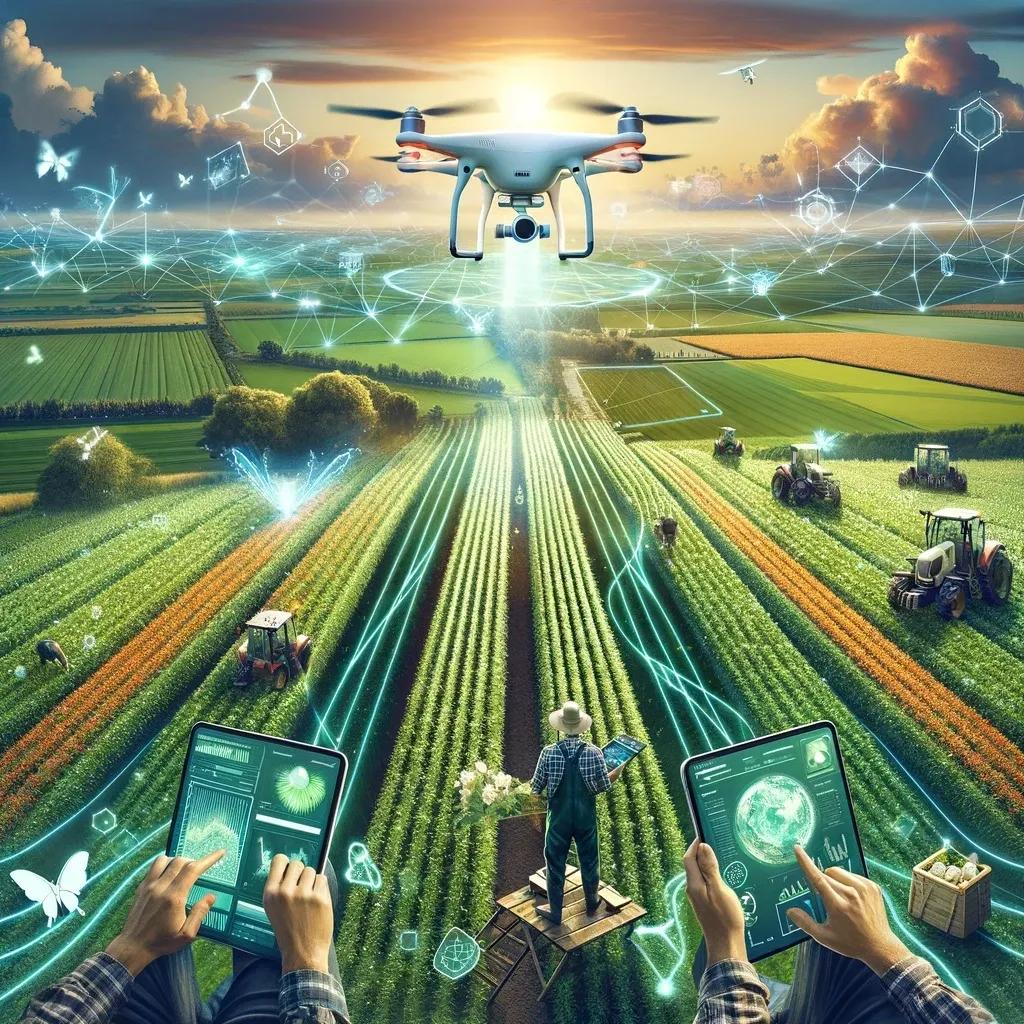
In the realm of modern agriculture, the integration of geospatial technologies and Artificial Intelligence (AI) is revolutionizing the way we understand and manage the farming process. This synergy, a blend of location-based data with intelligent analytics, has paved the way for a more efficient, sustainable, and productive agricultural sector.
1. The Emergence of Precision Agriculture
The concept of precision agriculture arises from the need to optimize resource use and improve crop yields while minimizing environmental impacts. Geospatial technologies, including Geographic Information Systems (GIS), Remote Sensing (RS), and Global Positioning Systems (GPS), have been fundamental in mapping and analyzing agricultural landscapes. The advent of AI has further elevated these technologies, enabling more precise and predictive analytics.
2. Geospatial Technologies: The Backbone of Agricultural Analytics
Geospatial technologies offer a bird's-eye view of farmlands, providing critical insights into various aspects such as soil health, crop vigor, and moisture levels. Satellite imagery and drone-based surveys capture high-resolution data across large areas, facilitating detailed analysis.
2.1 Remote Sensing and Satellite Imagery
Remote sensing, through satellites, captures multispectral images that are instrumental in assessing vegetation health through indices like NDVI (Normalized Difference Vegetation Index). These indices help in identifying areas of stress in crops long before they are visible to the naked eye.
2.2 GIS and Spatial Analysis
GIS plays a crucial role in the management and analysis of spatial data. It aids in soil profiling, land use classification, and identifying suitable areas for different crop types based on various environmental parameters.
2.3 GPS and Precision Farming
GPS technology assists in precise field mapping, enabling farmers to undertake site-specific crop management. This precision leads to efficient use of resources such as water, fertilizers, and pesticides.
3. AI: The Intelligent Layer in Agricultural Analytics
AI brings a layer of predictive intelligence to the vast amounts of data generated by geospatial technologies. Machine learning models, a subset of AI, are particularly adept at finding patterns and making predictions based on historical and real-time data.
3.1 Predictive Analytics for Crop Health
AI algorithms can predict potential disease outbreaks or pest infestations by analyzing historical data and current environmental conditions. This foresight allows for timely interventions, reducing crop losses.
3.2 Yield Prediction and Optimization
AI models are capable of predicting crop yields by analyzing various factors like weather patterns, soil conditions, and crop health data. This information is invaluable for supply chain planning and market forecasting.
3.3 Automated and Smart Farming Solutions
Integrating AI with IoT (Internet of Things) devices leads to the development of smart farming solutions. Automated irrigation systems, AI-driven drones for crop monitoring, and robotic harvesters are some examples of how AI is transforming farming operations.
4. Challenges and Opportunities
Despite the significant advantages, the application of AI and geospatial technologies in agriculture faces challenges. The high cost of technology, the need for robust data infrastructure, and the skills gap in handling advanced analytical tools are some of the hurdles.
However, the potential benefits present immense opportunities. Enhanced resource efficiency, reduced environmental footprint, improved crop yields, and better disaster management in agriculture are just a few of the advantages.
5. Case Studies and Real-World Applications
Globally, several initiatives have successfully implemented these technologies. For instance, in India, geospatial data combined with AI models has been used for predicting optimal sowing dates and advising farmers on the best crop choices. In the United States, precision farming driven by AI and satellite data has led to a significant increase in crop yields with reduced water and fertilizer usage.
6. The Future Outlook
The future of agriculture lies in the further integration and advancement of geospatial and AI technologies. The development of more sophisticated AI models, along with the increasing availability of high-resolution satellite data, promises to enhance agricultural practices further. The aim is to move towards a more data-driven, predictive, and sustainable form of agriculture.
In conclusion, the synergy of geospatial technologies and AI in agriculture is not just a technological advancement; it's a paradigm shift towards smarter, more sustainable farming practices. This integration holds the key to addressing some of the most pressing challenges in agriculture, such as food security, resource conservation, and climate change mitigation. As we continue to innovate and improve these technologies, the agricultural sector stands to benefit immensely, leading to a future where farming is not only more productive but also in harmony with the environment.