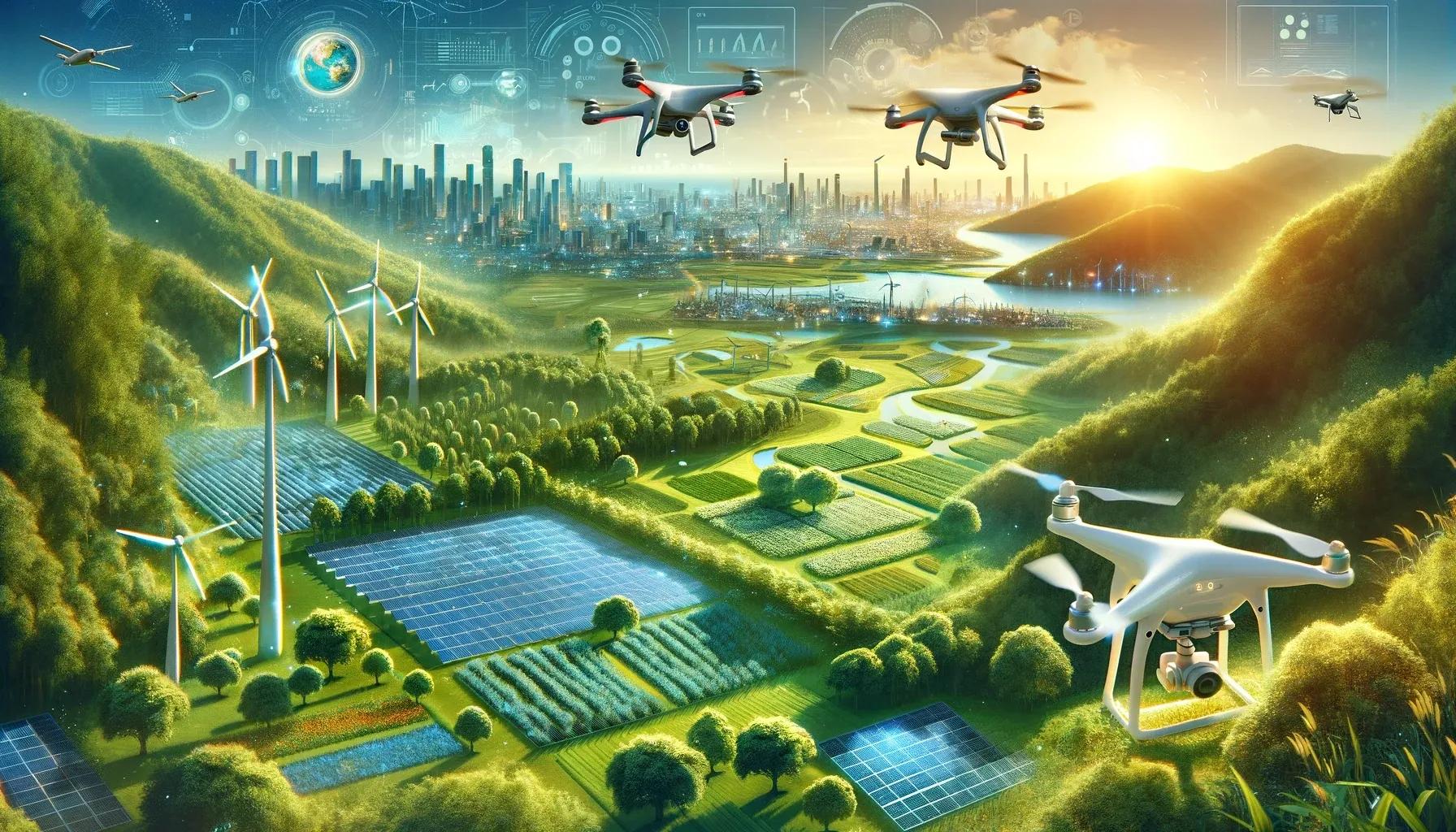
In the realm of technological advancements, Unmanned Aerial Vehicles (UAVs) have emerged as a significant player in driving sustainable development. The integration of UAV technology into various sectors is not just a leap towards innovation but a stride towards achieving the Sustainable Development Goals (SDGs) set by the United Nations. This article delves into the multifaceted role of UAVs in fostering environmental sustainability, with a focus on environmental monitoring, applications in the renewable energy sector, and conservation efforts.
UAVs in Environmental Monitoring
Environmental monitoring is pivotal in assessing the health of our planet. Traditional methods, although effective, often lack the granularity and frequency needed for in-depth analysis. This is where UAVs come in, offering a new perspective—literally and figuratively. Equipped with advanced sensors, UAVs can collect high-resolution data across vast and often inaccessible areas. For instance, in the realm of air quality monitoring, UAVs equipped with gas sensors can provide real-time data on pollutant levels, helping in the quick identification of sources of air pollution.
Moreover, UAVs play a crucial role in monitoring wildlife and their habitats. They offer a non-intrusive method of gathering data, which is a significant advancement over the disruptive nature of traditional wildlife monitoring techniques. UAVs capture high-resolution images that aid in species identification, population estimates, and monitoring of migration patterns, contributing substantially to biodiversity conservation.
UAVs and Renewable Energy
The renewable energy sector has witnessed substantial growth in recent years, and UAVs have been instrumental in this surge. In wind and solar energy operations, UAVs are used for inspection purposes. For wind turbines, UAVs conduct aerial inspections of the blades and towers, identifying structural damages and wear. This not only increases the efficiency of maintenance work but also ensures the longevity and performance of these turbines.
In solar energy, UAVs equipped with thermal imaging cameras identify malfunctioning solar panels by detecting abnormal heat signatures. This enhances the efficiency of solar farms by ensuring that all panels are functioning optimally. Additionally, UAVs assist in the planning and construction phases of renewable energy projects, providing aerial surveys that help in optimal site selection and layout design, thereby maximizing energy production.
Conservation Efforts and UAVs
Conservation efforts have been significantly bolstered by UAV technology. UAVs are extensively used in forest management, providing detailed imagery that aids in assessing forest health, monitoring deforestation, and even reforestation efforts. UAVs can map deforested areas, guide reforestation projects, and monitor the growth and health of new plantations.
In combating wildlife poaching, UAVs provide a tactical advantage. Equipped with night vision and thermal imaging, UAVs can patrol vast areas of wildlife reserves, detecting poachers and their activities, thereby helping to safeguard endangered species. This technological edge has proven to be a game-changer in wildlife protection.
Challenges and Future Directions
While the potential of UAVs to contribute to sustainable development is immense, there are challenges to be addressed. Regulatory frameworks need to evolve to accommodate the growing use of UAVs while ensuring safety and privacy. Additionally, as UAV technology advances, there is a need for skilled personnel capable of operating and maintaining these systems.
The future of UAV technology in sustainable development is promising and full of possibilities. Advancements in battery technology and AI could lead to longer flight times and smarter data processing, respectively. The integration of UAVs with other emerging technologies, like the Internet of Things (IoT), could lead to more comprehensive environmental monitoring systems.
In conclusion, UAVs are not just flying robots; they are tools of change and catalysts in the journey towards a sustainable future. Their ability to provide detailed, accurate, and timely data is revolutionizing environmental monitoring, renewable energy, and conservation efforts. As we move forward, it is crucial to harness the full potential of UAV technology, navigating the challenges and embracing the opportunities it presents. In doing so, UAVs will undoubtedly play a pivotal role in bridging the gap towards achieving the Sustainable Development Goals, heralding a new era of environmental consciousness and responsibility.