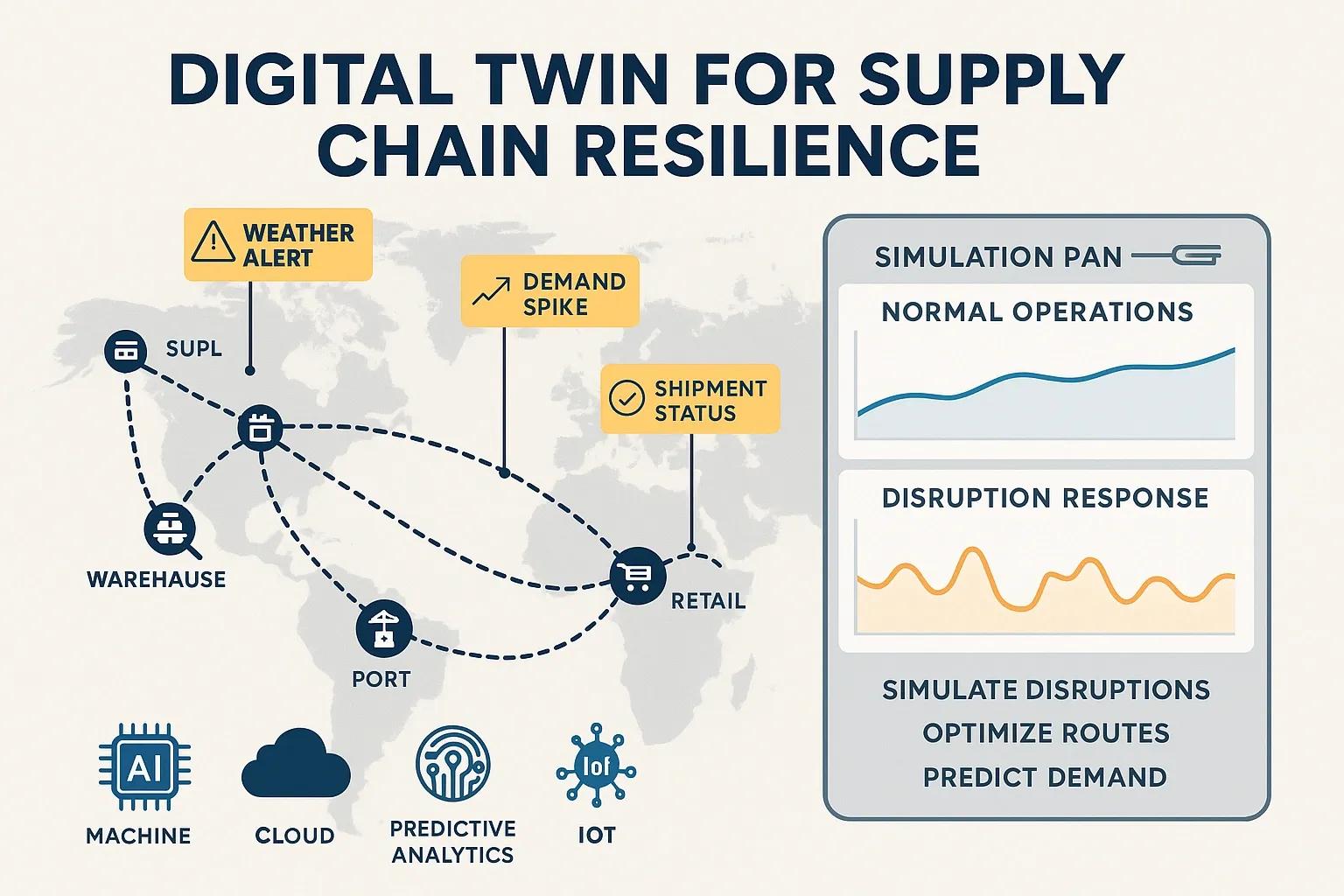
In an era of global uncertainties, supply chains face unprecedented volatility. From pandemic-induced lockdowns to geopolitical tensions and climate disruptions, organizations are under pressure to build operations that are not just efficient, but resilient . This is where supply chain digital twins step in, providing a data-driven, dynamic replica of the physical supply chain that enables real-time simulation, prediction, and optimization.
What is a Supply Chain Digital Twin?
The digital twin of a supply chain is a virtual model that mirrors every element of a physical supply chain network, including suppliers, logistics, warehouses, production units, and demand centers. Unlike static dashboards or planning tools, digital twins are dynamic , continuously fed by data from IoT sensors, enterprise resource planning (ERP) systems, transportation management systems (TMS), and other sources. They integrate historical, real-time, and predictive data to simulate different scenarios and support faster, informed decisions.
The goal is not just visibility, but proactive decision-making: rerouting shipments, adjusting procurement plans, optimizing inventory, or reallocating resources based on real-world constraints and predictive insights.
Why Now? The Case for Resilient Supply Chains
Recent years have exposed the fragility of traditional supply chain models that prioritize just-in-time efficiency over adaptability. According to McKinsey, supply chain disruptions lasting a month or longer now occur every 3.7 years on average, with the potential to erode 45% of a year’s profits over a decade for some industries.
Digital twins address this challenge by enabling businesses to anticipate disruptions before they happen and test mitigation strategies virtually before deploying them in the real world.
Core Components of a Supply Chain Digital Twin
Real-Time Data Integration Digital twins ingest data from multiple sources, GPS trackers, warehouse automation systems, weather feeds, port congestion indexes, and more. APIs and IoT devices make it possible to create a real-time operational view.
Simulation Models These are algorithmic representations of logistics flows, inventory behavior, supplier performance, and customer demand patterns. Machine learning models may be integrated to refine predictions.
Scenario Planning Engine This allows businesses to model “what-if” scenarios: What if a supplier in East Asia halts operations? What if a container is stuck in the Suez Canal? What happens if demand spikes by 20% in a region?
Prescriptive Analytics Beyond forecasting, supply chain twins can suggest the best course of action , whether it’s switching vendors, using alternative transportation modes, or delaying non-critical deliveries.
Dashboards and Decision Support Interactive visualization layers allow supply chain managers to explore KPIs, risk indicators, and alternative strategies, all updated in real-time.
Use Cases Across the Supply Chain Lifecycle
1. Demand Forecasting and Inventory Optimization Digital twins simulate demand variability by integrating POS data, social media sentiment, seasonality, and macroeconomic signals. This enables businesses to adjust inventory buffers dynamically, preventing both stockouts and overstocking.
2. Supplier Risk Management Companies can model supplier lead times, geopolitical exposure, ESG compliance, and financial health. If a disruption is detected, such as labor unrest at a key supplier site, the twin can recommend alternate sourcing strategies.
3. Transportation and Logistics Resilience Route optimization models within a digital twin account for road closures, fuel costs, carbon emissions, and warehouse capacity. During the COVID-19 crisis, several logistics companies used digital twins to rapidly redesign delivery networks.
4. Manufacturing Continuity Digital twins connect plant-floor data (via SCADA or MES systems) with upstream and downstream partners. If a machine failure or raw material shortage occurs, the system can simulate ripple effects and suggest mitigation steps such as load shifting or alternate production lines.
5. Sustainability and Circularity In alignment with ESG goals, digital twins can be extended to model carbon emissions, water usage, and waste. This supports strategies like closed-loop recycling, reverse logistics, and ethical sourcing.
Enabling Technologies
The success of a supply chain digital twin hinges on a robust technology stack, including:
IoT Devices for real-time sensing of shipments, temperatures, machine conditions, etc.
Cloud Platforms (AWS, Azure, GCP) to host scalable twin environments and support data lakes.
AI/ML Algorithms to detect anomalies, predict risks, and recommend actions.
Geospatial Intelligence to model regional risks and optimize spatial networks.
Extended Reality (XR) for immersive visualization and training.
Blockchain for traceability and trust in supplier transactions.
These technologies align with broader Industry 4.0 and AI transformation trends, creating a digital-first foundation for operational excellence.
Challenges in Implementation
While the promise is strong, deploying a digital twin in supply chains is not without hurdles:
Data Silos and Incompatibility : Legacy systems often lack integration or common data standards.
Change Management : Operational teams may resist new digital workflows.
High Initial Investment : Developing high-fidelity twins requires both time and capital.
Security Concerns : Real-time supply chain data is sensitive and needs robust cybersecurity measures.
Real-World Examples
Unilever developed a digital twin of its manufacturing and logistics operations to reduce emissions and optimize production. It allowed them to simulate alternative packaging materials and routes for sustainability.
DHL uses digital twins to monitor warehouse operations, simulate inbound volumes, and reduce delivery lead times, achieving a 25% increase in throughput efficiency.
Pfizer implemented supply chain twins to ensure uninterrupted vaccine distribution globally during the COVID-19 pandemic, modeling production constraints, storage needs, and logistics risks.
The Road Ahead
As supply chains become more interconnected, globalized, and exposed to risk, digital twins will move from being innovation pilots to core infrastructure. The next frontier will see:
Federated Digital Twins : Connected across suppliers, customers, and third-party logistics to simulate the entire ecosystem .
Self-Healing Systems : Where AI automates response actions without human intervention.
Decarbonization Modeling : Using twins to find carbon-optimal supply configurations in line with Net Zero goals.
For businesses, adopting digital twins in supply chain operations is no longer just about efficiency, it’s about survival and growth in a volatile world.
Conclusion
Supply chain digital twins offer a powerful way to simulate, adapt, and thrive amid disruption. By bridging physical operations with intelligent digital models, they provide the foresight and flexibility modern enterprises need. As AI, IoT, and cloud infrastructure evolve, digital twins will become an essential capability for future-ready supply chains.