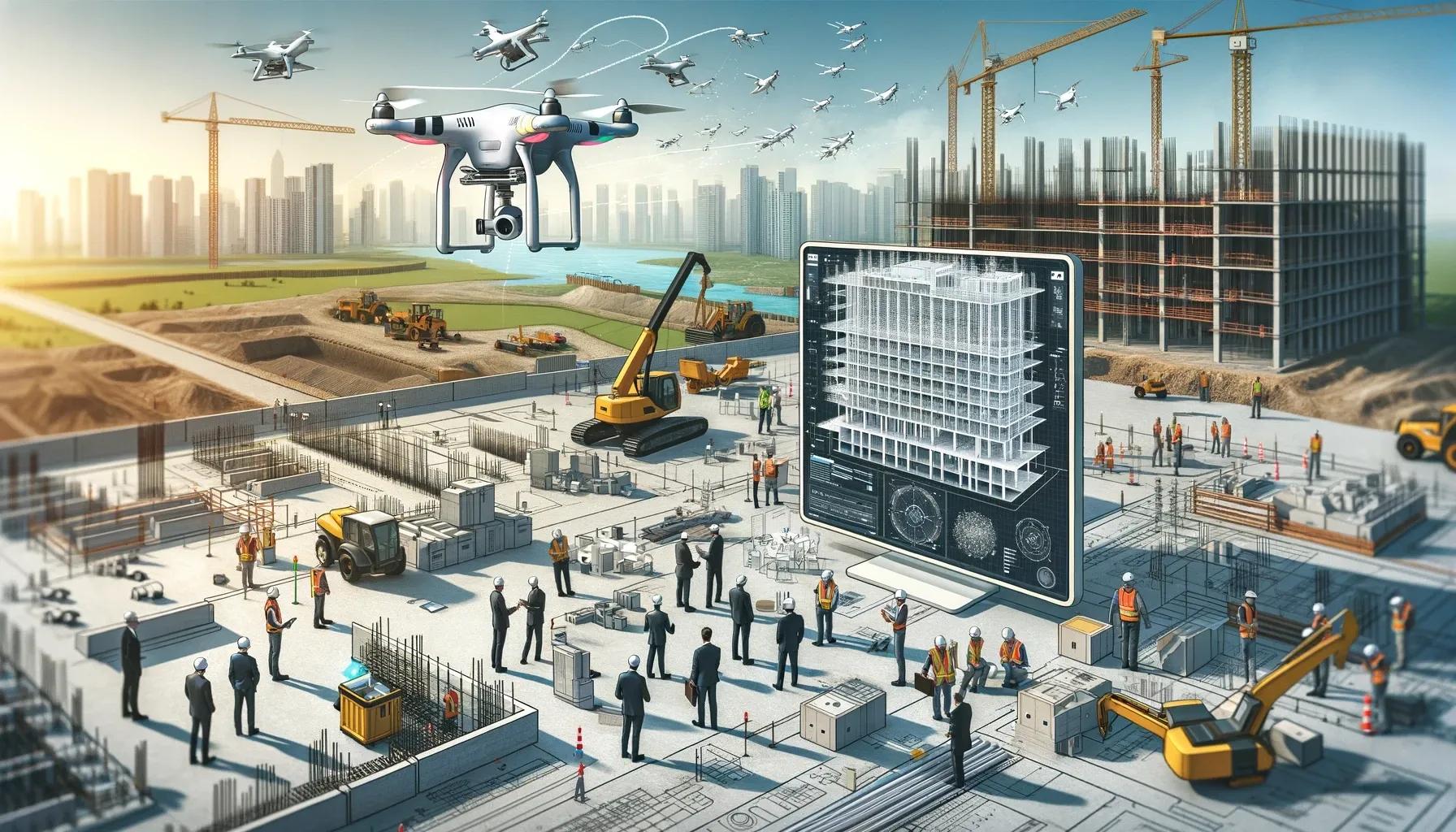
The construction industry, characterized by its complex processes and considerable costs, constantly seeks innovative ways to enhance efficiency and reduce expenses. Two of the most transformative technologies in this domain are drones and Building Information Modeling (BIM). This article delves into how integrating drones and BIM can lead to significant cost reductions at various stages of construction projects.
Integrating Drones in Construction
Drones, or Unmanned Aerial Vehicles (UAVs), have emerged as a powerful tool in the construction industry. Their ability to capture aerial data quickly and accurately offers multiple benefits:
Site Analysis and Planning : Drones provide a comprehensive overview of the construction site, enabling better planning. By capturing detailed aerial imagery, they assist in evaluating the terrain, identifying potential obstacles, and planning logistics more effectively. This level of insight ensures more accurate estimations and can prevent costly reworks.
Progress Monitoring : Drones facilitate real-time monitoring of construction progress. Regular drone flights can capture the current state of the project, allowing stakeholders to compare it against planned timelines and milestones. This frequent monitoring helps in identifying and rectifying deviations early, avoiding expensive delays.
Safety Inspections : Using drones for regular safety inspections reduces the need for manual inspections, which can be time-consuming and hazardous. Drones can easily access hard-to-reach areas, ensuring comprehensive safety checks without compromising worker safety.
Asset Management : Drones assist in inventory management by tracking materials and equipment on-site. This oversight helps in optimizing resource allocation and reducing unnecessary procurement costs.
Building Information Modeling (BIM) in Construction
BIM is a digital representation of the physical and functional characteristics of a facility. It goes beyond mere drafting or modeling; BIM is a process that offers a collaborative environment for all stakeholders. Its cost-saving potentials are manifold:
Enhanced Collaboration : BIM facilitates better collaboration among architects, engineers, contractors, and clients. This shared knowledge resource leads to better decision-making, reducing the likelihood of errors and the associated costs of rectifying them.
Accurate Cost Estimation : BIM software can provide detailed material takeoffs and cost estimations. By having a more accurate understanding of material requirements and costs, project managers can budget more effectively and avoid overruns.
Improved Design Quality : BIM’s ability to create detailed, 3D models of a structure before its construction helps in identifying potential design issues early. Addressing these issues in the virtual environment is far less expensive than making changes during construction.
Facility Management and Maintenance : Post-construction, BIM models can be used for facility management. Information about the building’s components makes maintenance more efficient and cost-effective.
Synergy of Drones and BIM
The combination of drones and BIM brings a new level of efficiency and cost savings:
Data Integration : Data captured by drones can be integrated into BIM models. This integration provides a real-time, accurate representation of the construction site, enhancing the precision of the BIM model.
Enhanced Visualization : Drones offer the ability to capture the project's progress, which can be overlaid on the BIM model. This visualization aids in tracking deviations from the plan, enabling timely corrections.
Streamlined Communication : The combination of drone imagery and BIM models ensures that all stakeholders have access to the latest project information. This streamlined communication minimizes misunderstandings and delays, leading to cost savings.
Case Studies and Success Stories
Numerous construction projects worldwide have successfully implemented drones and BIM, resulting in substantial cost savings. For instance, major construction projects across India use drones for site surveying and monitoring, integrating the data with their BIM models. This approach reduced the time spent on surveying by 60% and significantly lowered the costs associated with manual inspections and reworks.
In conclusion, the integration of drones and BIM in construction projects represents a significant leap towards efficiency and cost-effectiveness. By embracing these technologies, construction companies can achieve more accurate planning, improved safety, enhanced collaboration, and, most importantly, substantial cost reductions. As the industry continues to evolve, the adoption of drones and BIM will become a standard practice, marking a new era of innovation and financial prudence in construction.