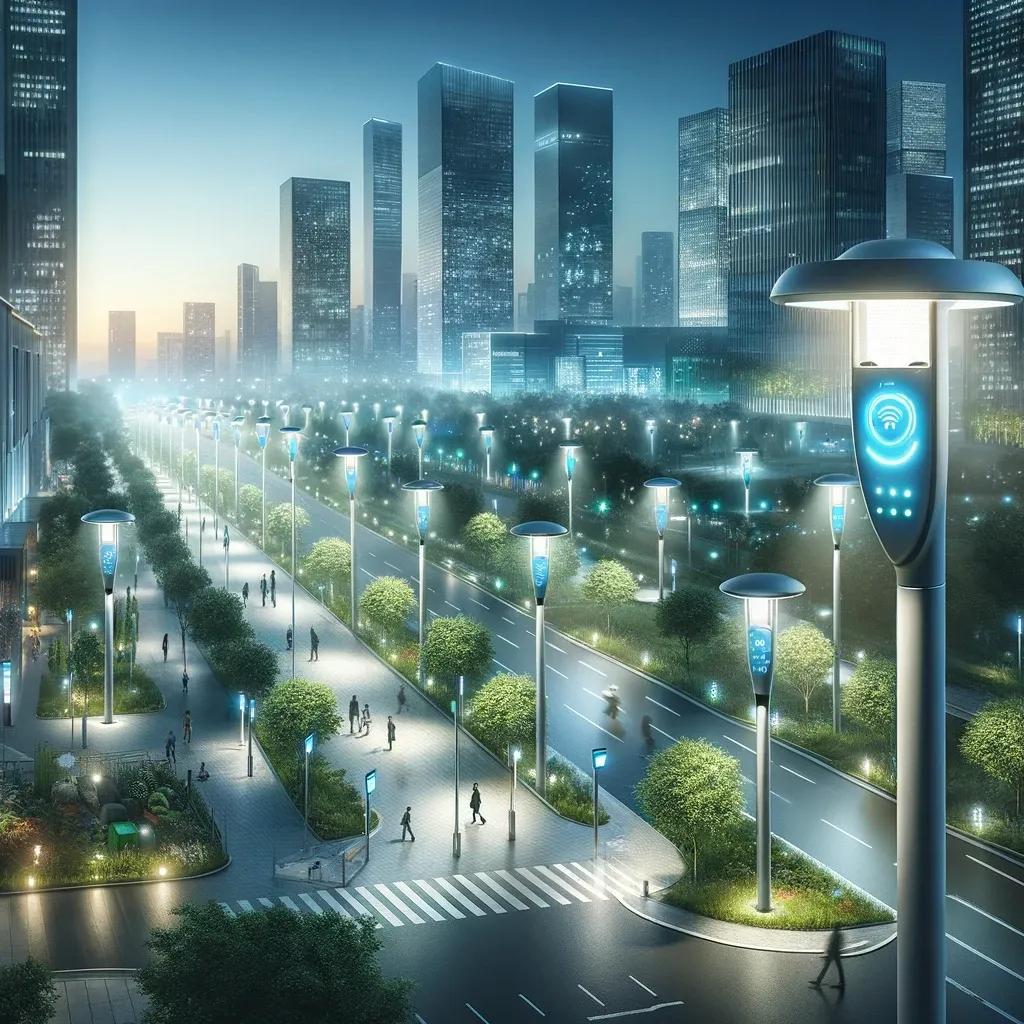
In the realm of urban development and sustainability, smart lighting solutions stand at the forefront of innovation, particularly within the context of the Internet of Things (IoT). This article delves into the significance, technology, and benefits of smart lighting solutions, emphasizing their role in energy efficiency and the transformative impact of IoT-connected street lights.
Introduction to Smart Lighting
Smart lighting refers to a system that utilizes technology to optimize the control of light based on various parameters such as occupancy, daylight availability, and user preferences. By integrating advanced sensors, controls, and software, smart lighting systems can adjust lighting levels dynamically, thereby conserving energy while enhancing comfort and safety.
The Role of IoT in Smart Lighting
The integration of IoT technology has been a game-changer for smart lighting solutions. IoT-connected devices enable lighting systems to communicate and operate intelligently, both autonomously and via user input. This interconnectedness allows for real-time data collection and analysis, facilitating more responsive and adaptable lighting solutions.
IoT-Connected Street Lights: A Case Study in Innovation
IoT-connected street lights epitomize the potential of smart lighting in public spaces. These street lights are equipped with sensors and connected to a network, allowing them to collect and transmit data on their environment and performance. This capability not only aids in energy conservation but also in the maintenance and management of urban lighting infrastructure.
Key Components of Smart Lighting Solutions
Sensors : Integral to smart lighting, sensors detect presence, motion, ambient light, and other factors, adjusting lighting accordingly to ensure optimal illumination and energy use.
Controllers : These devices manage the operation of lighting fixtures based on the data received from sensors and user settings, enabling precise control over lighting conditions.
Communication Networks : Essential for IoT connectivity, these networks facilitate the exchange of data between lighting fixtures and control systems, enabling coordinated and efficient lighting management.
Software Applications : User interfaces and management software allow for monitoring, control, and optimization of lighting systems, providing insights into usage patterns and energy consumption.
Benefits of Smart Lighting Solutions
Energy Efficiency
The primary advantage of smart lighting is its potential for significant energy savings. By adjusting lighting based on actual needs, smart systems can dramatically reduce wasted energy, contributing to environmental sustainability and cost savings. Research indicates that smart lighting can achieve energy savings of up to 60–70% compared to traditional systems.
Enhanced Public Safety
In urban and public spaces, smart lighting enhances safety by providing adequate illumination where and when it's needed. Adaptive lighting can deter criminal activity and improve visibility for pedestrians and vehicles, thereby reducing accidents and enhancing the overall sense of security.
Operational Efficiency
With IoT-connected street lights, municipalities can streamline maintenance and operations. Real-time monitoring allows for immediate identification of issues, such as outages or performance degradation, enabling prompt responses and minimizing downtime.
Environmental Sustainability
Smart lighting contributes to environmental sustainability by reducing energy consumption and associated greenhouse gas emissions. This aligns with global efforts to combat climate change and promotes the development of green, sustainable urban spaces.
Challenges and Considerations
While the benefits are substantial, deploying smart lighting solutions comes with challenges. These include the initial investment costs, the need for technological infrastructure, privacy concerns related to data collection, and the requirement for interoperability among devices from different manufacturers. Addressing these challenges requires comprehensive planning, stakeholder engagement, and adherence to privacy and security standards.
The Future of Smart Lighting
The future of smart lighting is intrinsically linked to the advancement of IoT technology. Emerging trends include the integration of artificial intelligence (AI) for predictive analytics, the development of more energy-efficient lighting technologies, and the expansion of smart lighting applications beyond street lighting to include buildings, homes, and industrial settings.
Advancements in Technology
Innovations in LED technology, sensor accuracy, and wireless communication are expected to enhance the efficiency and functionality of smart lighting systems. Furthermore, the integration of AI and machine learning algorithms can optimize lighting control strategies, further reducing energy consumption and adapting to user behavior patterns in real-time.
Expanding Applications
Smart lighting's potential extends into various sectors, including commercial, residential, and industrial applications. In commercial buildings, for instance, smart lighting can improve workplace productivity and comfort while reducing operational costs. In homes, it can enhance convenience and energy efficiency, contributing to the smart home ecosystem.
In conclusion, smart lighting solutions represent a pivotal shift in how we approach lighting and energy management. By harnessing the power of IoT and advanced technologies, these systems offer unparalleled opportunities for energy savings, enhanced safety, and operational efficiency. As the technology evolves and its adoption widens, smart lighting is set to play a crucial role in shaping sustainable, efficient, and intelligent urban environments. The journey towards a brighter, smarter future is illuminated by the promising prospects of smart lighting solutions.