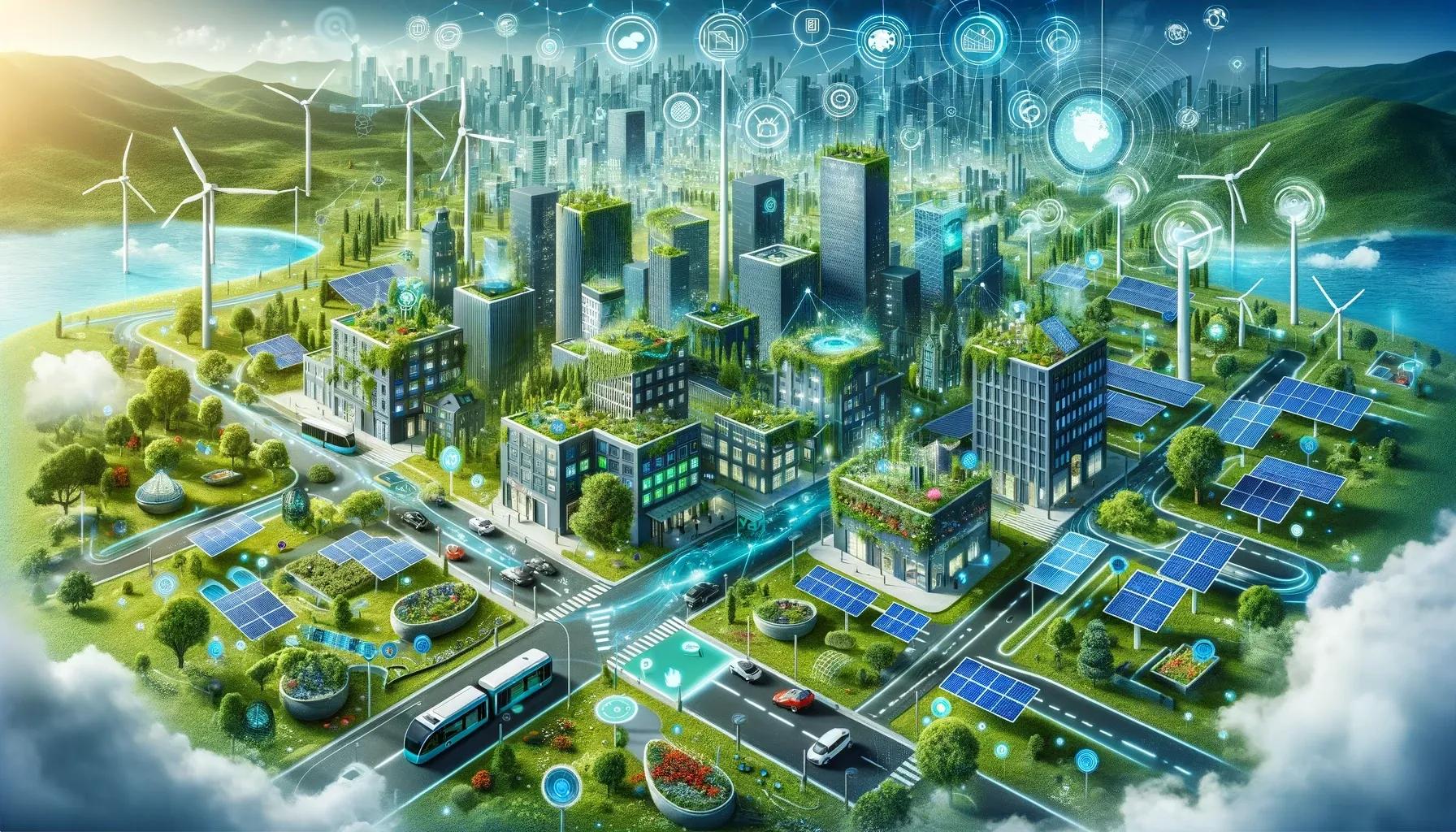
In the era of rapid urbanization, the concept of smart cities has emerged as a beacon of hope for a sustainable future. Smart cities, with their cutting-edge technology, promise to revolutionize the way we live, work, and interact with our environment. However, as we navigate this new urban landscape, it is crucial to ensure that these technological advancements are in harmony with our sustainability goals. This article delves into how smart city initiatives can be aligned with environmental sustainability, highlighting examples of green technology integrations.
The Essence of Smart Cities
At its core, a smart city utilizes information and communication technologies (ICT) to enhance the quality and performance of urban services such as energy, transportation, and utilities. This, in turn, reduces resource consumption, waste, and overall costs. The ultimate goal of a smart city is to improve the quality of life for its residents by harnessing technology, thereby creating a more efficient and sustainable urban environment.
Aligning Smart Cities with Sustainability
Energy Efficiency and Renewable Energy Sources : One of the primary focuses of smart cities is the optimization of energy use. Smart grids, for instance, are revolutionizing how cities manage their energy resources. By incorporating renewable energy sources like solar and wind power into the grid, smart cities can reduce their carbon footprint. For example, Copenhagen, aiming to become carbon-neutral by 2025, has integrated wind turbines into its grid, contributing significantly to its energy mix.
Sustainable Transportation : Reducing vehicular emissions is another critical aspect of aligning smart cities with green living. Electric vehicles (EVs), car-sharing platforms, and smart public transportation systems are some ways cities are tackling this issue. In Amsterdam, for instance, there is a substantial investment in EV charging infrastructure, making it one of the most EV-friendly cities in the world.
Waste Management and Water Conservation : Advanced waste management systems in smart cities use sensors and IoT (Internet of Things) devices to optimize collection routes and frequencies, significantly reducing fuel consumption and emissions. Similarly, smart water management systems help in monitoring and controlling water usage more efficiently, thus conserving this precious resource. Singapore’s smart water meter program is an excellent example of this, leading to substantial water savings.
Building Sustainable Communities : Smart cities also focus on creating sustainable buildings that use less energy, reduce waste, and have a lower environmental impact. The use of smart meters and energy-efficient appliances in buildings is a step towards this. Moreover, the concept of green buildings, which incorporate natural light, green roofs, and energy-efficient materials, is gaining popularity in cities like Vancouver.
Data-Driven Environmental Monitoring : The use of big data and analytics in monitoring environmental parameters like air quality, temperature, and pollution levels is vital. These systems enable real-time decision-making and predictive analysis, helping in the efficient management of environmental challenges. Barcelona’s use of smart sensors to monitor air quality and noise pollution levels is a testament to the effectiveness of data-driven environmental management.
Challenges and the Way Forward
While the integration of technology in urban development is promising, it is not without challenges. One significant challenge is ensuring the inclusivity and accessibility of these technologies to all sections of society. Additionally, the initial cost of implementing smart technologies can be high, posing a challenge for resource-limited settings.
To overcome these challenges, a collaborative approach involving the government, private sector, and civil society is essential. Policies and frameworks that support innovation while ensuring environmental protection are critical. Furthermore, public awareness and participation in smart city initiatives play a crucial role in their success and sustainability.
In conclusion, the intersection of smart cities and green living is not just a possibility but a necessity in our quest for sustainable urban development. By leveraging technology in a way that respects and preserves the environment, we can create urban spaces that are not only efficient and technologically advanced but also sustainable and livable. The journey towards smart, sustainable cities requires a concerted effort from all stakeholders, and with the right approach, this vision can indeed become a reality.