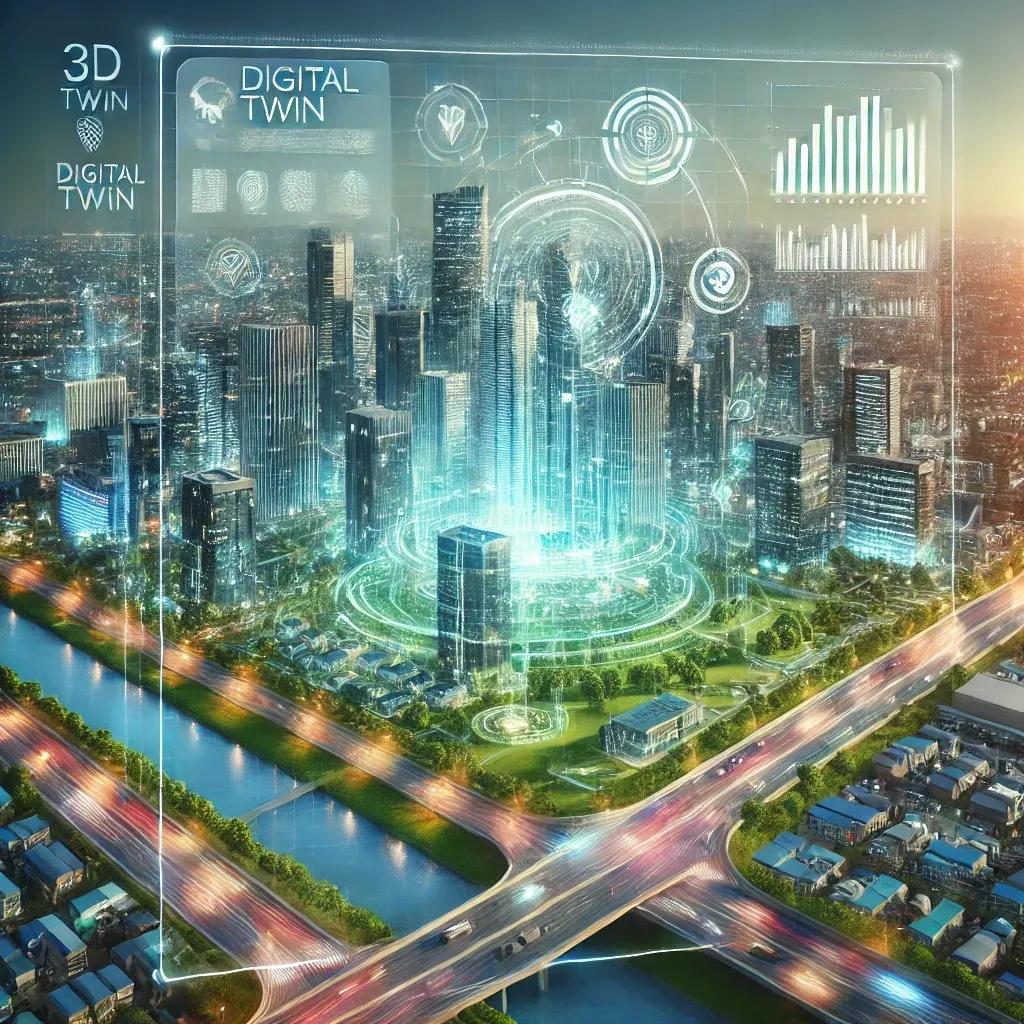
As urban areas expand and the challenges of modern living grow, the concept of "smart cities" has emerged as a solution to create more efficient, livable, and sustainable urban environments. Central to the smart city paradigm is the integration of advanced technologies, such as Digital Twins, which play a pivotal role in sustainable urban development. This article delves into the intersection of smart cities and digital twins, emphasizing how our digital twin solutions contribute to sustainable urbanization.
Understanding Smart Cities
A smart city leverages technology to enhance the quality of life for its citizens, optimize urban operations and services, and promote sustainability. The foundational elements of a smart city include the use of sensors, Internet of Things (IoT) devices, and data analytics to collect, analyze, and apply data for decision-making and process improvements. The ultimate goal is to improve the efficiency of city operations, reduce environmental impact, and enhance the well-being of residents.
Smart cities address challenges such as traffic congestion, energy management, waste disposal, and emergency response. However, the effectiveness of a smart city hinges on how well these systems are integrated and managed. This is where digital twins come into play.
What Are Digital Twins?
A digital twin is a virtual replica of a physical entity, such as a building, transportation network, or an entire city. This virtual model is continuously updated with real-time data, allowing for real-time monitoring, simulation, and optimization of the physical counterpart. By creating a digital twin, cities can model and simulate various scenarios, predict outcomes, and make data-driven decisions to improve efficiency and sustainability.
In the context of urban development, digital twins enable city planners and managers to visualize the impact of different strategies on the environment, infrastructure, and citizens. This predictive capability is critical for addressing the complex and interconnected challenges of modern cities.
The Role of Digital Twins in Sustainable Urban Development
Sustainability is a core objective of smart cities, aiming to balance economic growth, environmental stewardship, and social equity. Digital twins contribute to sustainability in several key areas:
Energy Management: Digital twins enable the monitoring and optimization of energy consumption in real-time. For example, by integrating data from various sources such as Building Management Systems (BMS), sensors, and utility grids, digital twins can optimize energy usage across the city, reduce waste, and enhance the efficiency of renewable energy sources.
Infrastructure Maintenance and Optimization: Urban infrastructure, such as roads, bridges, and buildings, requires constant maintenance to ensure safety and functionality. Digital twins provide a platform for predictive maintenance by simulating wear and tear, enabling proactive repairs before issues become critical. This not only extends the life of infrastructure but also reduces costs and resource consumption.
Environmental Monitoring: Environmental sustainability is crucial for the health and well-being of urban populations. Digital twins can integrate data from environmental sensors, such as those monitoring air quality and water resources, to create a comprehensive view of the city's environmental health. By simulating different environmental scenarios, city managers can develop strategies to mitigate pollution, manage resources more efficiently, and plan for climate resilience.
Urban Planning and Development: Urban planners can use digital twins to simulate the impact of new developments on existing infrastructure and the environment. This includes assessing the effects of new buildings on traffic flow, air quality, and energy consumption. By visualizing these impacts before construction begins, planners can make informed decisions that promote sustainable growth.
Disaster Response and Management: In the face of natural disasters, digital twins offer a critical tool for emergency management. By simulating different disaster scenarios, such as floods or earthquakes, cities can develop more effective response strategies, optimize resource allocation, and minimize the impact on human lives and infrastructure.
Our Digital Twin Solutions for Smart Cities
We have been at the forefront of providing digital twin solutions that support the sustainable development of smart cities. These solutions are designed to integrate seamlessly with existing city systems, providing real-time data and actionable insights that drive efficiency and sustainability.
Comprehensive Urban Simulations: Our digital twin solutions create immersive 3D simulations of entire cities, allowing for detailed analysis of various subsystems. These simulations enable city planners to experiment with different urban planning scenarios, optimizing resource allocation and minimizing environmental impact.
Scalable and Accessible Solutions: One of the significant advantages of our digital twin technology is its scalability. Our solutions are designed to run on thin-computing devices, making them accessible to a wide range of users without the need for expensive hardware. This democratizes the use of digital twins, enabling even smaller cities or departments within a city to leverage this technology for sustainable development.
Integration with Existing Systems: Our digital twin platform is highly integrative, capable of connecting with various city systems such as traffic management, energy grids, and environmental sensors. This integration allows for a holistic view of the city’s operations and provides city managers with the tools they need to make data-driven decisions that enhance sustainability.
Real-Time Monitoring and Predictive Analytics: By leveraging real-time data, our digital twin platform provides continuous monitoring of urban systems. This enables predictive analytics, allowing cities to anticipate and address issues before they escalate, thereby reducing downtime, conserving resources, and improving the overall quality of life for citizens.
In conclusion, the integration of digital twins in smart cities is a game-changer for sustainable urban development. As cities continue to grow and face increasingly complex challenges, the ability to simulate, monitor, and optimize urban systems in real-time becomes essential. Our digital twin solutions offer a powerful toolset for cities striving to achieve sustainability, providing the insights and capabilities needed to manage urban environments more efficiently and effectively.
Through the use of digital twins, smart cities can move towards a future where sustainability is not just an aspiration but a reality, ensuring that urban development meets the needs of present and future generations.