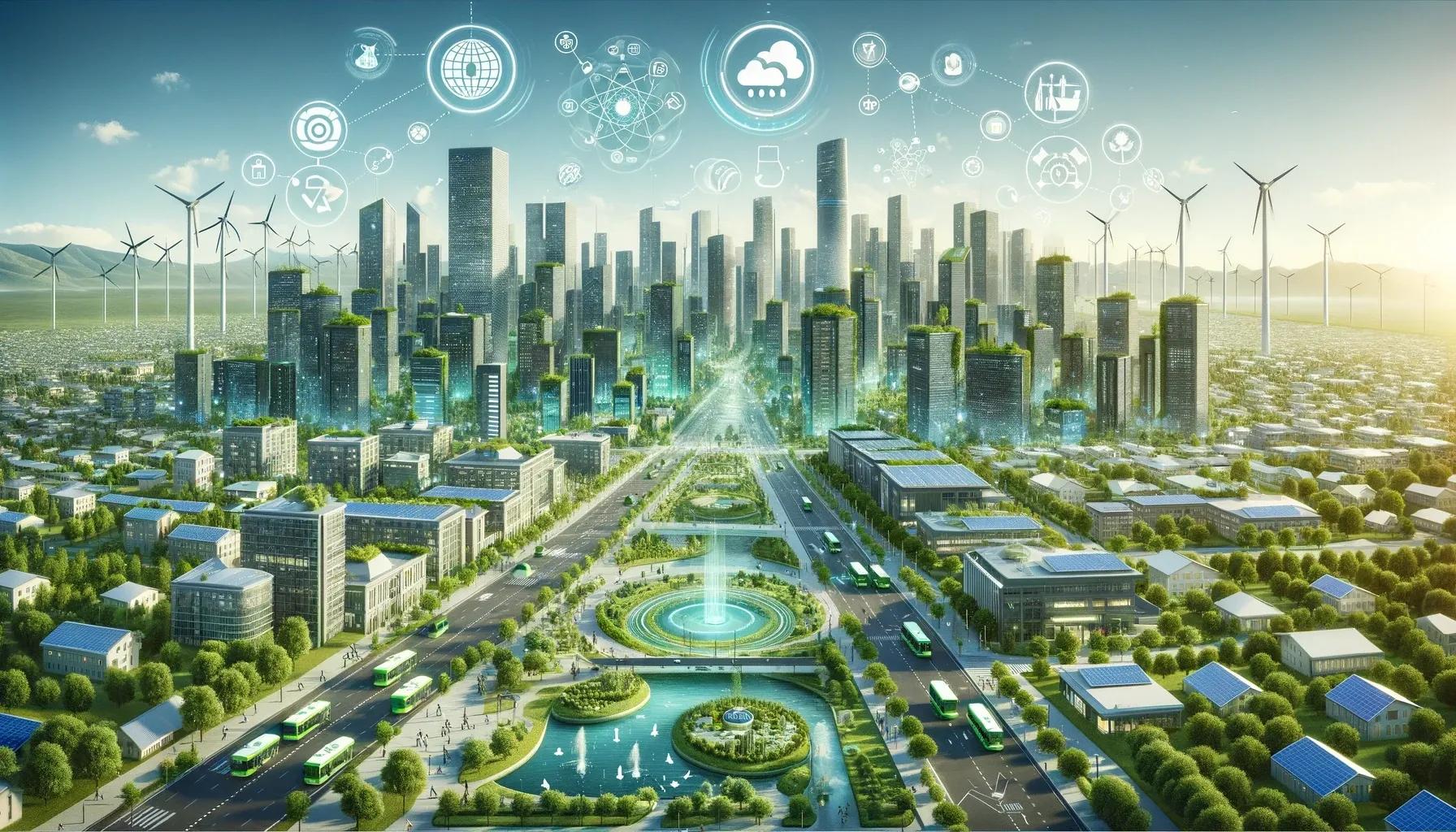
In the contemporary era, the concept of smart cities has transcended merely integrating digital technologies into urban infrastructure. It encompasses a broader vision of sustainability, resilience, and inclusivity, aiming to enhance the quality of urban living while minimizing environmental impact. At the heart of this vision lies the circular economy—a regenerative approach designed to retain the value of resources for as long as possible, minimize waste, and reduce environmental impacts. This article delves into how smart cities are pioneering the integration of circular economy principles to create sustainable, resilient urban environments through innovative recycling and reuse strategies.
The Circular Economy: A Foundation for Sustainable Urban Development
The circular economy stands in contrast to the traditional linear economy, which follows a 'take-make-dispose' model of production and consumption. It seeks to redefine growth, focusing on positive society-wide benefits. It decouples economic activity from the consumption of finite resources and designs waste out of the system. Underpinned by a transition to renewable energy sources, the circular economy's framework builds economic, natural, and social capital by managing resources wisely.
Integrating Circular Economy Principles into Smart Cities
Smart cities leverage digital technology, IoT (Internet of Things) devices, and data analytics to optimize urban operations, including energy consumption, waste management, and transportation systems. By embedding principles of the circular economy into this framework, cities can achieve greater sustainability and resilience. This integration manifests in various innovative practices:
Smart Waste Management : Utilizing sensors and IoT technology, smart waste management systems optimize waste collection routes, reducing fuel consumption and emissions. These systems identify the types of waste that can be recycled or repurposed, supporting the circular economy's goal of minimizing resource extraction and waste generation.
Energy and Water Efficiency : Smart cities employ smart grids and smart meters to enhance energy efficiency, using data to match energy production with consumption. Similarly, smart water management systems detect leaks and optimize water use, reducing waste and conserving resources. These practices embody the circular economy's emphasis on maximizing resource efficiency and promoting renewable energy sources.
Sustainable Mobility Solutions : By promoting shared mobility services, electric vehicles (EVs), and public transport, smart cities reduce reliance on fossil fuels and lower carbon emissions. These mobility solutions are aligned with the circular economy's principles of designing out waste and minimizing environmental impacts.
Circular Urban Planning : Smart urban planning incorporates green spaces, renewable energy sources, and buildings designed for adaptability and longevity. This approach not only enhances urban resilience and quality of life but also aligns with the circular economy by prioritizing sustainable, adaptable infrastructure.
Digital Platforms for Sharing and Reuse : Smart cities facilitate platforms for sharing and reuse, from car-sharing services to online platforms for exchanging goods. These initiatives reduce the demand for new products, support the utilization of idle assets, and foster community engagement, embodying the circular economy's aim to keep products and materials in use.
Challenges and Opportunities
While the integration of circular economy principles into smart cities presents a promising path towards sustainability, it also poses significant challenges. Key among these is the need for substantial investment in new technologies and infrastructure, as well as the development of regulatory frameworks that support circular practices. Additionally, achieving widespread behavioral change among businesses and consumers is crucial for the success of circular initiatives.
Despite these challenges, the opportunities for innovation and economic growth are immense. The transition to a circular economy within the context of smart cities can drive new business models, create jobs, and enhance competitiveness. Moreover, it offers a pathway to achieve not only environmental sustainability but also social inclusivity by ensuring that the benefits of technological advancements and resource efficiency are shared widely across urban populations.
In conclusion, the fusion of smart cities with the circular economy represents a forward-thinking approach to urban development, one that aligns technological innovation with the imperative of sustainability. By reimagining how cities manage resources, energy, and waste, this approach offers a blueprint for urban environments that are not only more efficient and resilient but also more equitable and livable. The journey towards such future-proof cities demands collaboration across sectors, innovative policy-making, and the engagement of all stakeholders. As we advance, the lessons learned from pioneering smart cities will undoubtedly illuminate the path for others, showcasing that a sustainable urban future is not only possible but within our reach.