Originally published by the World Economic Forum
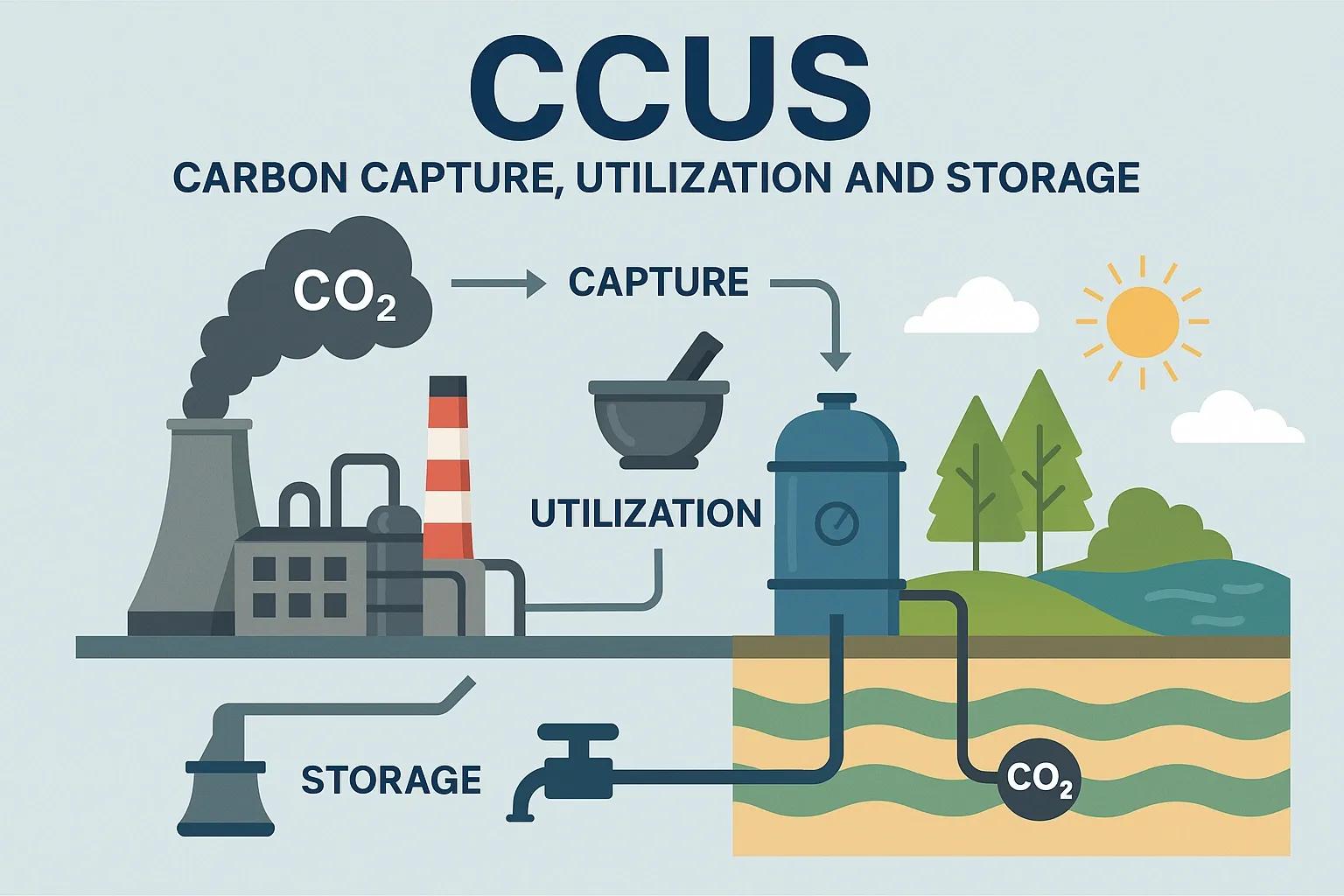
The global push toward net-zero emissions demands not only a transition to renewable energy but also solutions to decarbonize sectors where emissions are difficult to eliminate. Carbon capture, utilization, and storage (CCUS) has emerged as a critical technology for addressing emissions from industries such as cement, steel, and energy production. However, to meet the International Energy Agency's net-zero roadmap, global CCUS capacity must scale by more than 100 times by 2050.
As of 2024, the CCUS project pipeline includes 628 projects worldwide, a significant increase compared to previous years. Despite this growth, broader deployment faces multiple barriers. The World Economic Forum recently outlined three essential strategies needed to accelerate the uptake of CCUS: collaboration through hub models, unlocking capital and advancing technologies, and supportive policy frameworks.
1. Collaboration Through Hub Models
One of the most effective ways to make CCUS commercially viable is through the development of hub models. In these hubs, multiple industrial facilities share infrastructure for CO₂ capture, transportation, and storage, significantly reducing costs and risks for individual participants.
For instance, aramco ’s Jubail CCUS Hub in Saudi Arabia aims to become the largest carbon capture and storage facility in the region. Similarly, the Northern Lights project in Norway demonstrates the feasibility of a shared CO₂ transport and storage network accessible to multiple emitters. The United Kingdom’s Carbon Capture and Storage Infrastructure Fund also supports this model by financing shared infrastructure.
The "CCS-as-a-service" business model is gaining traction as well. In this approach, third-party providers manage CO₂ capture, transport, and storage on behalf of industrial clients. This service-based model lowers the entry barriers for companies without the expertise or resources to develop and manage CCUS systems independently.
At BSMA Enterprises , we support hub development initiatives through our expertise in Geospatial Mapping, Digital Twins, and IoT Integration, providing real-time monitoring and efficient management of CO₂ transport and storage networks. Our technology solutions enable predictive maintenance, enhance system resilience, and optimize operations across entire CCUS ecosystems.
2. Unlocking Capital and Advancing Technologies
Significant investment is necessary to advance CCUS deployment. While traditional CCUS projects have focused on capturing CO₂ at point sources, emerging technologies offer alternative methods that can be more scalable and cost-effective.
For example, mineralization technologies permanently lock captured carbon in solid forms. Companies like 44.01 are advancing techniques that inject CO₂ into peridotite rock formations, where it naturally mineralizes. Similarly, Climeworks is expanding its direct air capture facilities to remove CO₂ directly from the atmosphere.
Other innovations include carbon utilization approaches. MCi Carbon is pioneering methods to transform captured CO₂ into useful building materials. LanzaTech utilizes biological processes to convert carbon emissions into valuable chemicals and fuels.
Moreover, Aramco's carbon-curing concrete technology illustrates the dual benefits of CCUS innovation: it not only sequesters carbon dioxide but also enhances the strength and durability of concrete products. Such innovations are essential for reducing the cost of CCUS and integrating it into industrial value chains.
BSMA Enterprises is contributing to this innovation landscape by offering AI-driven Analytics, Extended Reality (XR) Visualization, and Integrated Data Management platforms. These technologies empower industries to identify optimal capture points, simulate storage scenarios, and visualize infrastructure impacts in immersive environments, ultimately leading to better decision-making and faster deployment of CCUS projects.
Unlocking private capital is equally critical. Scaling new CCUS technologies to commercial levels requires investment across the technology development lifecycle, from early-stage research to large-scale deployment. Public-private partnerships, venture capital funding, and corporate investments all have roles to play.
3. Supportive Policy Frameworks
Even with technological advancements and investment, CCUS adoption will stall without supportive policy measures. Government intervention can bridge the gap between the high cost of early-stage CCUS projects and their long-term economic benefits.
Carbon pricing mechanisms are among the most effective policy tools. The European Union’s Emissions Trading System (EU ETS) incentivizes companies to reduce emissions by assigning a cost to carbon. Similarly, Norway’s increasing carbon tax provides financial motivation for industries to invest in emission reduction technologies like CCUS.
Subsidies, tax credits, and grants can also stimulate early CCUS deployment. Research cited by the World Economic Forum indicates that even modest increases in subsidies can lead to substantial emission reductions. For instance, the U.S. 45Q tax credit, which offers a fixed payment for every ton of CO₂ captured and stored, has spurred numerous new CCUS project announcements.
Establishing clear regulatory frameworks for CO₂ storage and transport is another essential enabler. Permitting processes must be streamlined, and liability issues associated with long-term CO₂ storage must be addressed to provide certainty to investors and developers.
Conclusion
The scale-up of carbon capture and storage technologies is indispensable to achieving global net-zero targets. As outlined by the World Economic Forum, three pillars are crucial for unlocking CCUS’s full potential: collaboration through shared infrastructure models, advancement and investment in breakthrough technologies, and implementation of strong, supportive policy frameworks.
Technologies offered by BSMA Enterprises, including Geospatial Mapping, Digital Twins, IoT Integration, AI-driven Analytics, and XR Visualization, enhance the efficiency, transparency, and scalability of CCUS projects. Together, these technologies not only accelerate deployment but also reduce operational risks, drive down costs, and maximize environmental benefits.
Without coordinated efforts across industry, technology developers, investors, and policymakers, CCUS will fall short of its necessary role in global decarbonization. However, with focused action on these fronts and the integration of cutting-edge technologies, CCUS can become a cornerstone of the sustainable, low-carbon economy the world urgently needs.