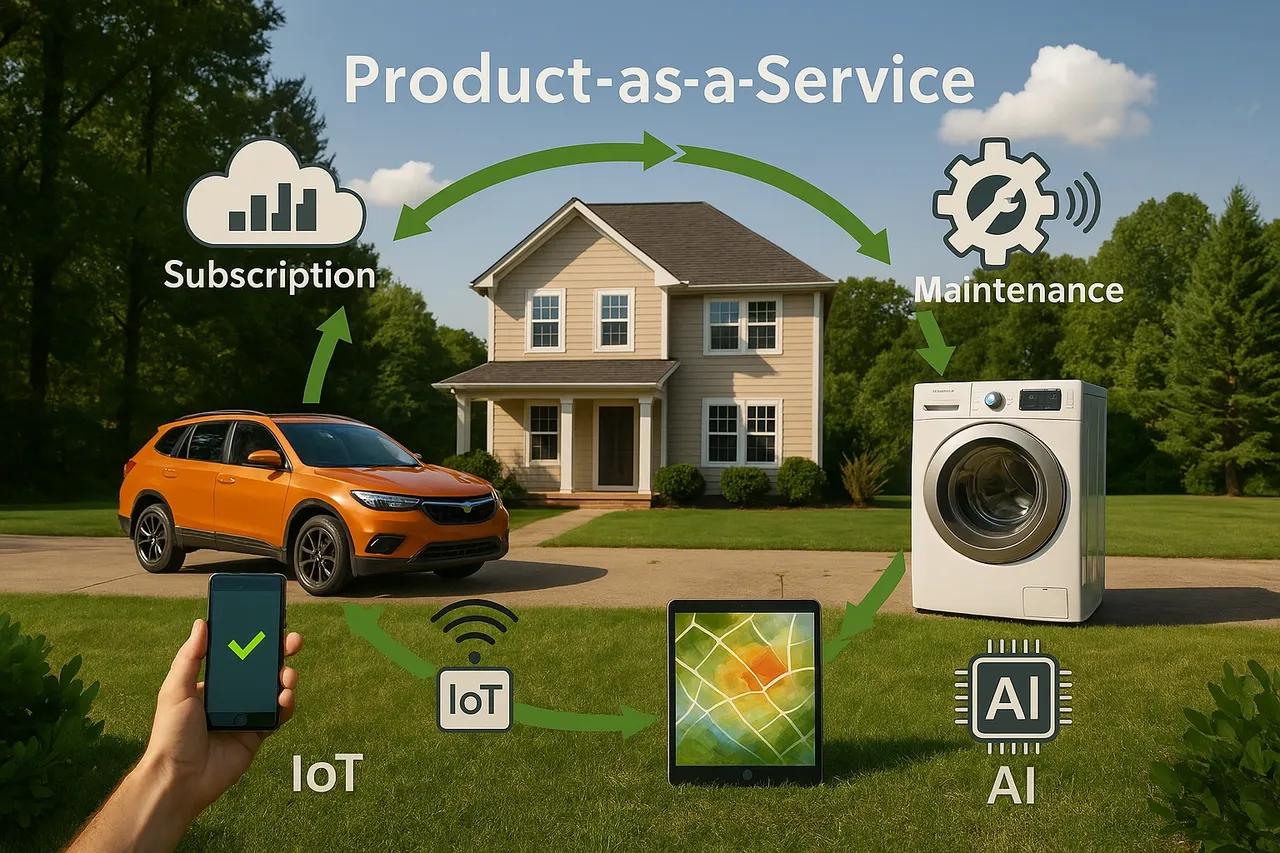
Smart consumer services powered by IoT, AI, and subscriptions
The global shift toward sustainable consumption is transforming how businesses offer, and customers use products. One of the most significant innovations in this direction is the Product-as-a-Service (PaaS) model, a business strategy where consumers access a product through a subscription or usage-based model rather than owning it outright. This approach aligns directly with circular economy principles and is reshaping consumer services across industries such as electronics, mobility, home appliances, and even fashion.
As environmental regulations tighten and digital technologies advance, PaaS is emerging not just as an alternative business model but as a key enabler of resource efficiency, customer retention, and lifecycle optimization. Technologies like IoT, AI, BIM, and geospatial intelligence are playing a pivotal role in powering these service-based systems.
This article explores the technical foundations and strategic benefits of PaaS models and how they are revolutionizing consumer services while enabling a more circular and resilient economy.
What is Product-as-a-Service (PaaS)?
In the PaaS model, businesses retain ownership of the product and offer its functionality to consumers through access-based pricing. Instead of purchasing an item outright, customers subscribe to or pay for:
Usage (e.g., per hour, per cycle, per delivery)
Performance (e.g., guaranteed output or uptime)
Access (e.g., daily or monthly rental)
This model transforms a product into a service offering, shifting the manufacturer’s focus from volume sales to product performance, longevity, and customer experience.
Examples of PaaS in Consumer Sectors:
Electronics : Smartphone leasing with upgrade options
Mobility : Bike-sharing, ride-hailing, car-as-a-service platforms
Home Appliances : Washing machines or dishwashers offered on pay-per-use
Apparel : Clothing rentals for short-term or seasonal use
Furniture : Monthly furniture subscriptions for flexible living
The Circular Economy Link
PaaS is inherently circular. Since the manufacturer or provider retains ownership, they are incentivized to:
Design durable, repairable products
Track and maintain products over time
Refurbish and reuse returned units
Recover components or materials at end-of-life
This ensures that fewer new products need to be made, waste is minimized, and value is retained within the system.
Technology Enablers of PaaS
1. Internet of Things (IoT)
IoT is fundamental to enabling PaaS. Embedded sensors in products track:
Usage patterns
Operational status and performance
Faults or degradation indicators
Environmental conditions (e.g., temperature, humidity, pressure)
This real-time data allows providers to:
Offer predictive maintenance
Monitor usage for billing
Ensure product availability and uptime
Prevent misuse or failures
Example: A pay-per-wash laundry machine in an apartment complex can report cycle counts, detergent levels, and maintenance needs directly to the provider.
2. Artificial Intelligence (AI)
AI enhances service intelligence and lifecycle optimization through:
Usage analytics : Identifying customer preferences or inefficiencies
Predictive servicing : Replacing components before they fail
Dynamic pricing : Adjusting rates based on demand, use, or location
Personalization : Recommending service adjustments or product variants
AI ensures that PaaS models remain economically viable and customer-centric.
3. Building Information Modeling (BIM)
While commonly used in the construction sector, BIM can also play a role in consumer-facing infrastructure tied to PaaS:
Smart buildings using BIM integrate PaaS solutions like HVAC systems, lighting-as-a-service, or energy-as-a-service
BIM models store product specifications, service intervals, and spatial data, ensuring efficient coordination among service providers and facilities managers
Integration with IoT feeds supports real-time facility service planning
4. Geospatial Intelligence
GIS and location data are essential for optimizing:
Asset tracking across wide areas (e.g., bikes, scooters, shared electronics)
Route planning for delivery, servicing, or pickup
Demand mapping to identify service hot spots
Urban planning to align shared services with infrastructure
Example: A scooter-sharing company uses GIS to monitor fleet distribution, analyze high-use zones, and relocate idle vehicles for better availability.
Advantages of PaaS for Consumers and Providers
Stakeholder: Benefit
Consumers: Lower upfront costs, access to the latest products, flexible use
Providers: Predictable revenue, long-term customer relationships, data-driven insights
Environment: Reduced material usage, extended product life, minimized waste
Governments: Easier policy enforcement on EPR, waste tracking, and compliance
PaaS in Action: Use Case
Home Appliance-as-a-Service Model
A leading manufacturer offers washing machines and dryers through a subscription model to urban residents. The business model includes:
Monthly rental with unlimited use
Embedded IoT to monitor usage and alert for servicing
AI-based recommendation system to reduce water and power use
Free repairs and replacement as part of the package
Old machines are refurbished and redeployed or recycled
The result is a higher-quality product lifecycle, increased customer retention, and reduced environmental impact compared to one-time sales.
Challenges in Scaling PaaS
Despite its advantages, scaling PaaS models across sectors comes with barriers:
Infrastructure demands : Logistics for maintenance, returns, and redeployment
Data privacy and cybersecurity : Secure management of user and product data
Initial investment : High upfront costs to manufacture longer-lasting products and set up service platforms
Consumer mindset : Shifting preference from ownership to access
Asset tracking : Ensuring products are traceable and not lost or abandoned
However, with the right technological framework and operational planning, these challenges are being successfully addressed in many industries.
The Future of PaaS: Platform Integration and Smart Ecosystems
The next phase of PaaS involves integration into smart ecosystems where:
Multiple PaaS providers share infrastructure (e.g., logistics, service hubs)
Consumers access multiple services through unified platforms
Real-time analytics from all devices support continuous optimization
Smart cities embed PaaS into transportation, housing, and utilities planning
For service providers, this requires developing APIs, standardizing data formats, and collaborating across sectors, especially in high-density urban areas.
Conclusion
Product-as-a-Service models are revolutionizing the way products are consumed, and services are delivered. Driven by sustainability goals and enabled by IoT, AI, BIM, and geospatial technologies, PaaS offers a smarter, more circular alternative to traditional ownership.
As industries explore new ways to minimize waste, optimize product use, and deepen customer relationships, PaaS stands out as both a business opportunity and a sustainability strategy. Companies that embrace this model early, backed by the right digital infrastructure, will be best positioned to lead in a service-driven, circular future.