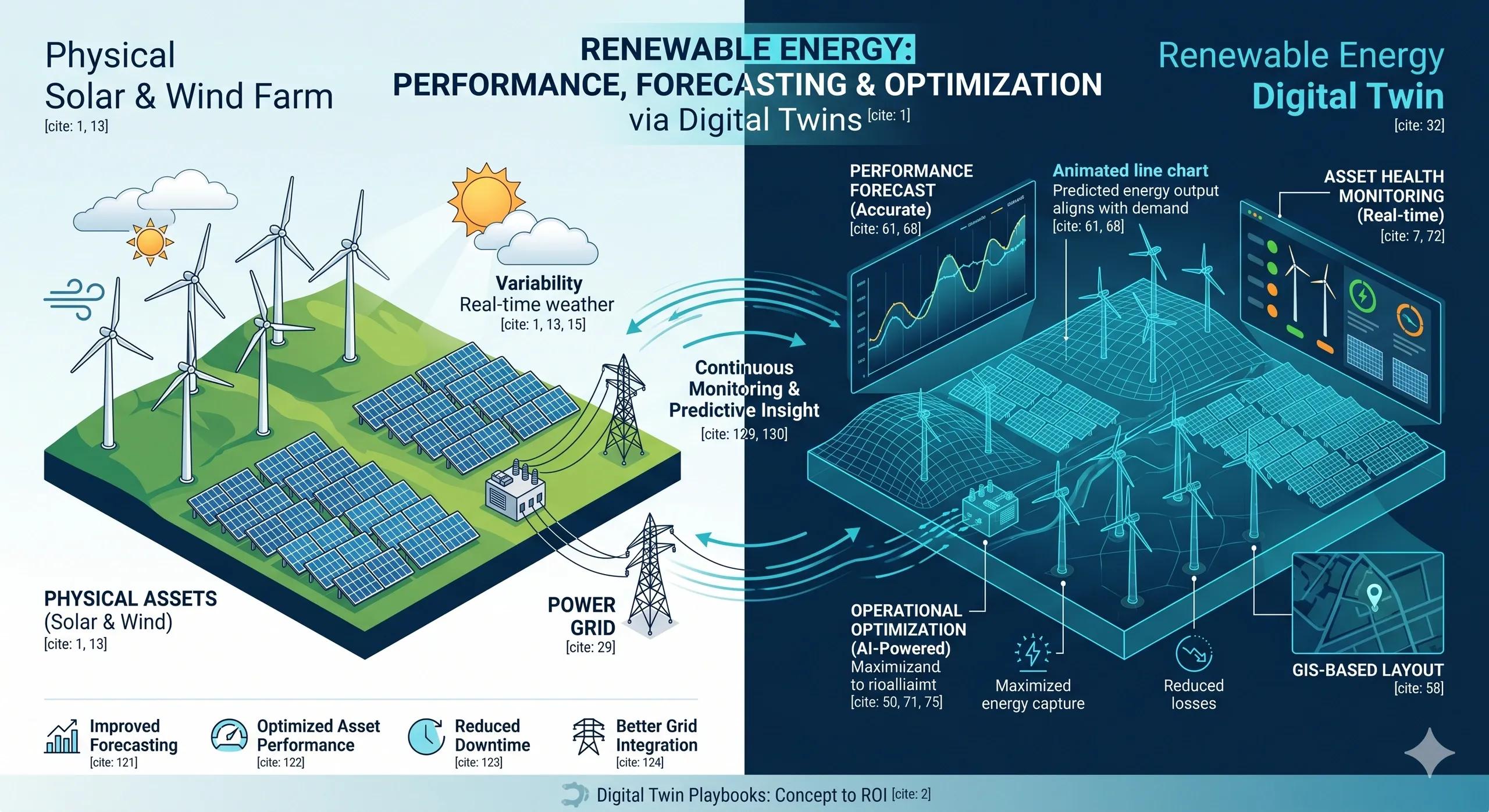
Renewable energy doesn’t fail because of infrastructure.
It underperforms when variability is not understood and managed.
Introduction
In the previous articles, we explored how Digital Twins enable:
infrastructure monitoring
operational optimization across industries
environmental intelligence
facility and campus performance
Now we move to a sector where:
👉 nature directly drives system performance
👉 Renewable Energy: Solar & Wind Farms
These systems depend on:
sunlight variability
wind patterns
environmental conditions
In Phase 3, the focus remains:
👉 how Digital Twins enable performance optimization, forecasting, and real-time decision-making
The Core Problem: Variability Without Control
Renewable energy systems today:
monitor energy output
track equipment performance
rely on weather forecasts
But:
👉 variability remains difficult to manage
This leads to:
fluctuating energy generation
inefficiencies in grid integration
underutilized capacity
Where Digital Twins Change the Approach
A Renewable Energy Digital Twin enables:
👉 continuous monitoring and predictive optimization
Instead of:
reacting to variability
It creates:
a system that anticipates and adapts
Key Components of a Renewable Energy Digital Twin
1. Data Layer
solar irradiance data
wind speed and direction
weather forecasts
equipment performance data
2. Integration Layer
combines: environmental data asset data grid data
👉 creates a unified system view
3. AI/ML Layer
predicts energy generation
identifies performance deviations
optimizes operations
4. Simulation Layer
models generation scenarios
evaluates system performance under different conditions
5. Visualization Layer
GIS-based farm layouts
performance dashboards
predictive output graphs
Use Case 1: Energy Forecasting
Traditional Approach
rely on weather forecasts
estimate output
👉 limited accuracy
Digital Twin Approach
integrate real-time data
predict generation more accurately
👉 Outcome:
improved grid planning
Use Case 2: Asset Performance Optimization
monitor panel/turbine performance
detect inefficiencies
👉 Outcome:
improved output
reduced losses
Use Case 3: Maintenance Planning
predict equipment degradation
schedule maintenance proactively
👉 Outcome:
reduced downtime
Use Case 4: Grid Integration
align generation with demand
manage variability
👉 Outcome:
stable energy supply
Practical Example
Scenario: Wind Speed Fluctuation
sensors detect changing wind patterns
AI predicts: 👉 drop in energy generation
System triggers:
grid adjustment
load balancing
👉 Outcome:
minimized disruption
Where Most Implementations Fail
1. Monitoring Without Prediction
systems track output 👉 but don’t forecast effectively
2. Data Silos
environmental and operational data not integrated
3. Delayed Decision-Making
actions taken after performance drops
4. Lack of Grid Coordination
generation not aligned with demand
Ask Yourself
Is your system:
👉 reacting to variability
Or
👉 managing it proactively?
Indian Context
India is rapidly expanding renewable energy capacity.
Challenges include:
variability in generation
grid integration
optimizing asset performance
Digital Twins can help:
👉 improve forecasting
👉 optimize operations
👉 enhance grid stability
Benefits & ROI
improved energy forecasting
optimized asset performance
reduced downtime
better grid integration
increased efficiency
Conclusion
Renewable energy systems are dynamic by nature.
Managing them requires:
👉 continuous monitoring
👉 predictive insight
👉 coordinated action
Digital Twins enable this shift.
From:
👉 reactive generation
To
👉 intelligent, adaptive energy systems