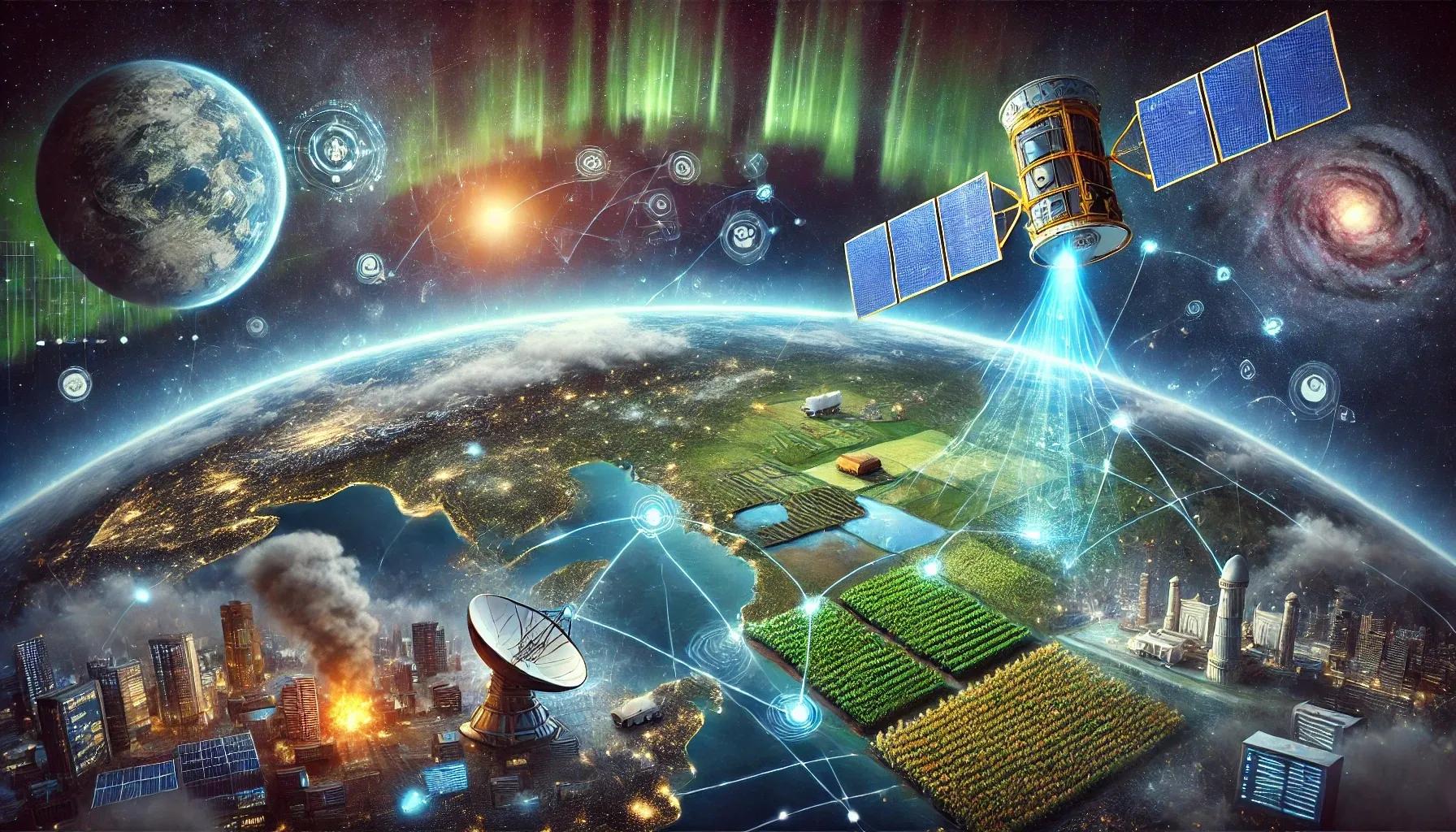
Space technology, often perceived as distant and futuristic, have become indispensable tools in addressing some of humanity's most pressing challenges. The advancements in this domain are not confined to distant exploration but resonate deeply with everyday needs such as food security, disaster management, communication, and environmental conservation. This article explores the purpose of space technologies and their tangible impact on solving basic human needs, bridging the gap between the cosmos and our daily lives.
Defining Space Technologies
Space technologies encompass a range of tools, systems, and methodologies developed for space exploration, observation, and utilization. This includes satellites, launch vehicles, space stations, and ground control systems. Over the decades, the focus has expanded from exploring celestial bodies to leveraging these technologies for Earth-centric applications, aimed at enhancing life on our planet.
The Core Purpose of Space Technologies
The primary objective of space technologies can be distilled into the following goals:
Exploration of the Universe : To study celestial bodies, phenomena, and the origins of the universe.
Earth Observation : To monitor and manage Earth's resources, climate, and environment.
Communication : To connect remote regions through satellite networks.
Innovation Catalyst : To drive technological and industrial innovation through challenging engineering feats.
While space exploration captures public imagination, the immediate utility of these technologies lies in solving terrestrial challenges.
Addressing Basic Human Needs with Space Technologies
1. Food Security and Agriculture
Space technologies play a pivotal role in modern agriculture, contributing to food security for a growing global population. Earth observation satellites such as Sentinel and Landsat provide critical data for:
Crop Monitoring : Satellite imagery allows for precise monitoring of crop health, growth stages, and yield prediction. This helps farmers optimize input use and increase productivity.
Soil Analysis : Remote sensing data aids in assessing soil health, identifying arable land, and determining optimal planting times.
Drought and Flood Prediction : Space technologies help predict and mitigate the effects of natural disasters on agriculture, ensuring timely interventions.
Case Study: India's use of ISRO’s satellites for agricultural monitoring has significantly boosted food grain production, particularly in drought-prone regions.
2. Disaster Management and Climate Resilience
Natural disasters pose significant threats to human life and infrastructure. Space technologies are instrumental in disaster prediction, preparedness, and response:
Early Warning Systems : Satellites monitor weather patterns, providing early warnings for hurricanes, tsunamis, and cyclones.
Real-Time Monitoring : Imaging and geospatial data support real-time tracking of disasters, aiding evacuation and relief efforts.
Climate Monitoring : Satellites provide comprehensive data on global climate patterns, sea level rise, and greenhouse gas emissions.
Example: During the 2015 Nepal earthquake, satellite imagery was crucial for mapping affected areas, guiding rescue operations, and assessing damage.
3. Universal Communication
Communication satellites have revolutionized connectivity, bridging the digital divide between urban and rural areas. Key contributions include:
Broadband Access : Satellites deliver high-speed internet to remote regions where terrestrial infrastructure is unavailable.
Emergency Communication : In disaster-hit areas, satellite phones and communication networks provide a lifeline when traditional systems fail.
Global Navigation : Space-based navigation systems like GPS underpin transportation, logistics, and personal navigation.
The advent of Low Earth Orbit (LEO) satellite constellations, such as SpaceX's Starlink, promises to make high-speed internet globally accessible.
4. Environmental Conservation
The preservation of Earth's ecosystems is a pressing concern, and space technologies provide invaluable tools for environmental conservation:
Deforestation Monitoring : Satellites track deforestation trends, enabling governments to implement targeted policies.
Wildlife Protection : Remote sensing helps monitor habitats and migration patterns of endangered species.
Pollution Tracking : Space-based sensors measure air and water quality, identifying pollution hotspots and trends.
NASA's Terra and Aqua satellites have been instrumental in monitoring deforestation and wildfires across the Amazon rainforest, one of the world's most vital ecosystems.
5. Urban Planning and Infrastructure Development
As urban populations surge, efficient planning becomes critical. Space technologies aid in designing sustainable cities through:
Land Use Mapping : Satellite data helps planners optimize land use and prevent urban sprawl.
Infrastructure Monitoring : Geospatial data tracks the health of infrastructure, including bridges, roads, and pipelines.
Smart Cities : Space technologies integrate with IoT systems to create smart urban solutions, improving resource management and quality of life.
Example: Singapore has integrated satellite data into its smart city initiatives, enhancing urban planning and transportation management.
6. Health and Medicine
Space technologies are now making strides in healthcare, contributing to disease prevention and treatment:
Telemedicine : Communication satellites facilitate telemedicine in remote areas, bringing expert consultations to underserved populations.
Epidemic Tracking : Satellite data helps track the spread of diseases, identifying regions at risk and enabling early interventions.
Medical Research : Microgravity experiments on the International Space Station (ISS) contribute to breakthroughs in medicine, such as protein crystallization for drug development.
During the COVID-19 pandemic, satellite-based systems were pivotal in tracking mobility patterns and managing vaccine distribution.
7. Energy Access and Management
Ensuring access to clean energy is vital for human development. Space technologies contribute by:
Renewable Energy Planning : Satellites assess potential sites for solar, wind, and hydroelectric power plants.
Energy Distribution : Geospatial data supports efficient grid management and energy distribution.
Space-Based Solar Power : Though still in its infancy, this concept envisions collecting solar energy in space and transmitting it to Earth.
Space-based observations have helped identify optimal locations for wind farms, reducing environmental impact and maximizing efficiency.
Challenges in Harnessing Space Technologies
While the benefits are immense, several challenges need addressing to maximize the potential of space technologies:
High Costs : The development, launch, and maintenance of space systems require significant investment.
Data Accessibility : Making satellite data accessible and affordable to developing countries is a persistent challenge.
Regulatory Issues : Global collaboration is hindered by fragmented regulations and geopolitical concerns.
Sustainability in Space : The growing problem of space debris threatens the sustainability of orbital operations.
The Future of Space Technologies in Solving Human Needs
As space technologies evolve, their applications are becoming more diverse and accessible. Emerging trends include:
Miniaturization of Satellites : CubeSats and nanosatellites are lowering costs, enabling more entities to access space.
AI and Machine Learning : Integrating AI with space data enhances analysis, prediction, and decision-making capabilities.
Space as a Service : Companies now offer data-as-a-service models, democratizing access to satellite insights.
Sustainable Space Exploration : Efforts to minimize space debris and develop reusable rockets are ensuring long-term viability.
In conclusion, space technologies have transcended their origins in exploration to become critical tools for solving fundamental human needs. From food security to disaster management, communication, and environmental conservation, these technologies impact lives globally. However, realizing their full potential requires collaborative efforts to overcome challenges like cost, accessibility, and regulatory barriers.
As humanity continues to push the boundaries of space, the dividends of these endeavors are increasingly felt on Earth. Space technologies underscore the interconnectedness of the cosmos and our planet, proving that advancements beyond our world can profoundly benefit life within it.