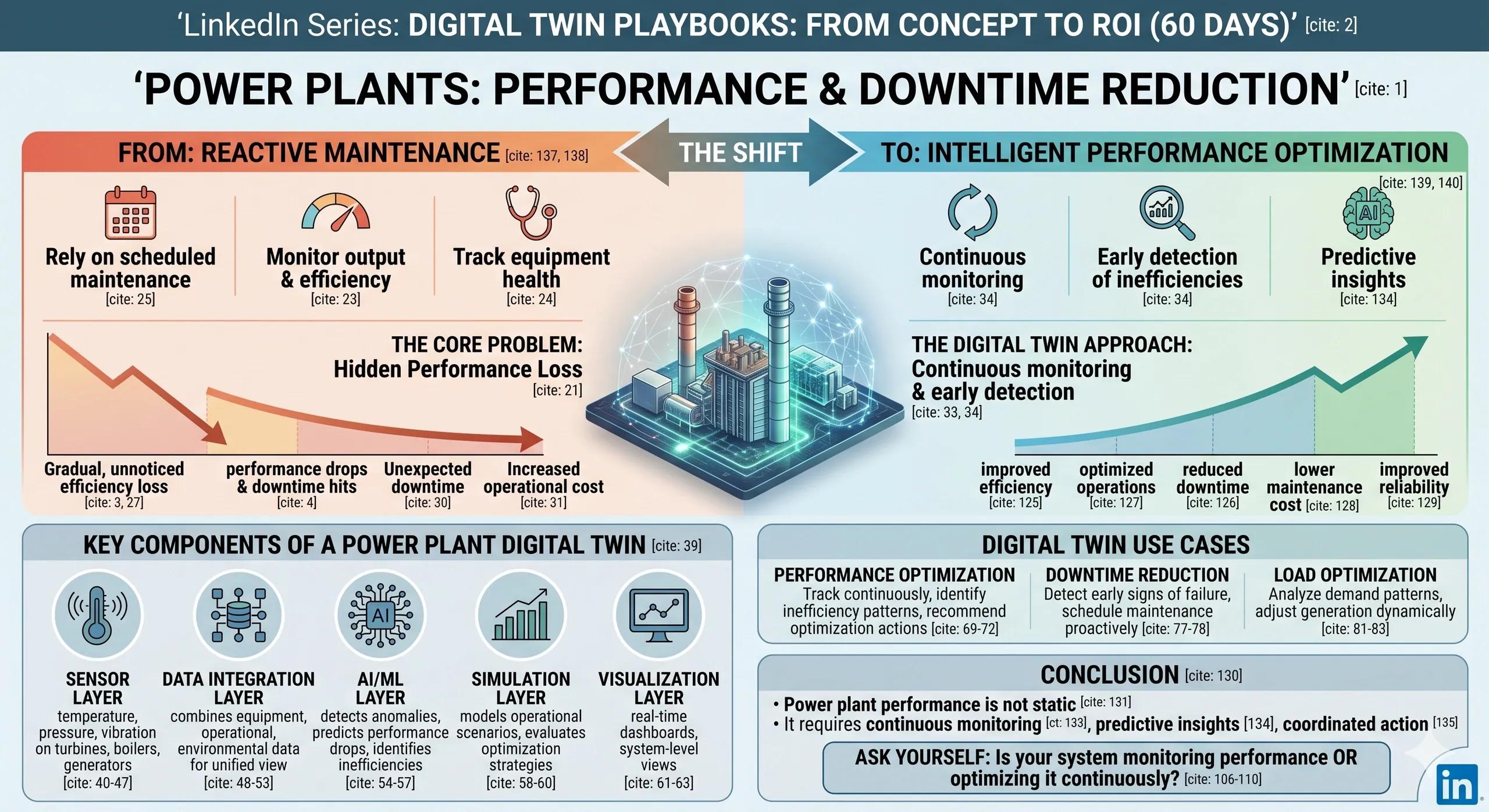
Power plants don’t lose efficiency overnight.
They lose it gradually, until performance drops and downtime hits.
Introduction
In the previous articles, we explored how Digital Twins enable:
predictive maintenance in infrastructure
real-time coordination in airports
safety-driven intelligence in railways
production optimization in manufacturing
supply chain visibility in logistics
risk monitoring in oil & gas
Now we move to another critical energy system:
👉 Power Plants
Power generation systems operate under:
continuous load
high operational complexity
strict performance requirements
In Phase 3, the focus remains:
👉 how Digital Twins enable performance optimization and downtime reduction
The Core Problem: Hidden Performance Loss
Most power plants today:
monitor output and efficiency
track equipment health
rely on scheduled maintenance
But:
👉 performance degradation often goes unnoticed
This leads to:
reduced efficiency
unexpected downtime
increased operational cost
Where Digital Twins Change the Approach
A Digital Twin enables:
👉 continuous monitoring of performance and early detection of inefficiencies
Instead of:
reactive maintenance
It moves to:
predictive performance management
Key Components of a Power Plant Digital Twin
1. Sensor Layer
temperature and pressure sensors
vibration monitoring
energy output tracking
Across:
turbines
boilers
generators
2. Data Integration Layer
combines: equipment data operational data environmental factors
👉 creates a unified performance view
3. AI/ML Layer
detects anomalies
predicts performance drops
identifies inefficiencies
4. Simulation Layer
models operational scenarios
evaluates optimization strategies
5. Visualization Layer
real-time dashboards
system-level performance views
Use Case 1: Performance Optimization
Traditional Approach
monitor output
adjust manually
👉 limited visibility into root causes
Digital Twin Approach
track performance continuously
identify inefficiency patterns
recommend optimization actions
👉 Outcome:
improved efficiency
optimized energy output
Use Case 2: Downtime Reduction
detect early signs of failure
schedule maintenance proactively
👉 Outcome:
reduced unplanned outages
Use Case 3: Load Optimization
analyze demand patterns
adjust generation dynamically
👉 Outcome:
improved resource utilization
Practical Example
Scenario: Turbine Efficiency Drop
sensors detect gradual decline in efficiency
AI identifies:
👉 deviation from optimal performance
System triggers:
maintenance alert
operational adjustment
👉 Outcome:
performance restored
downtime avoided
Where Most Implementations Fail
1. Monitoring Without Insight
data collected 👉 no actionable intelligence
2. Delayed Response
issues detected late
3. Lack of Integration
systems operate in silos
4. No Predictive Capability
focus remains on reactive actions
Ask Yourself
Is your system:
👉 monitoring performance
Or
👉 optimizing it continuously?
Indian Context
India’s power sector includes:
thermal power plants
renewable energy systems
growing energy demand
Challenges:
efficiency optimization
reducing downtime
managing load variations
Digital Twins can help:
👉 improve plant performance
👉 reduce outages
👉 enhance energy efficiency
Benefits & ROI
increased efficiency
reduced downtime
optimized operations
lower maintenance cost
improved reliability
Conclusion
Power plant performance is not static.
It requires:
👉 continuous monitoring
👉 predictive insights
👉 coordinated action
Digital Twins enable this shift.
From:
👉 reactive maintenance
To
👉 intelligent performance optimization