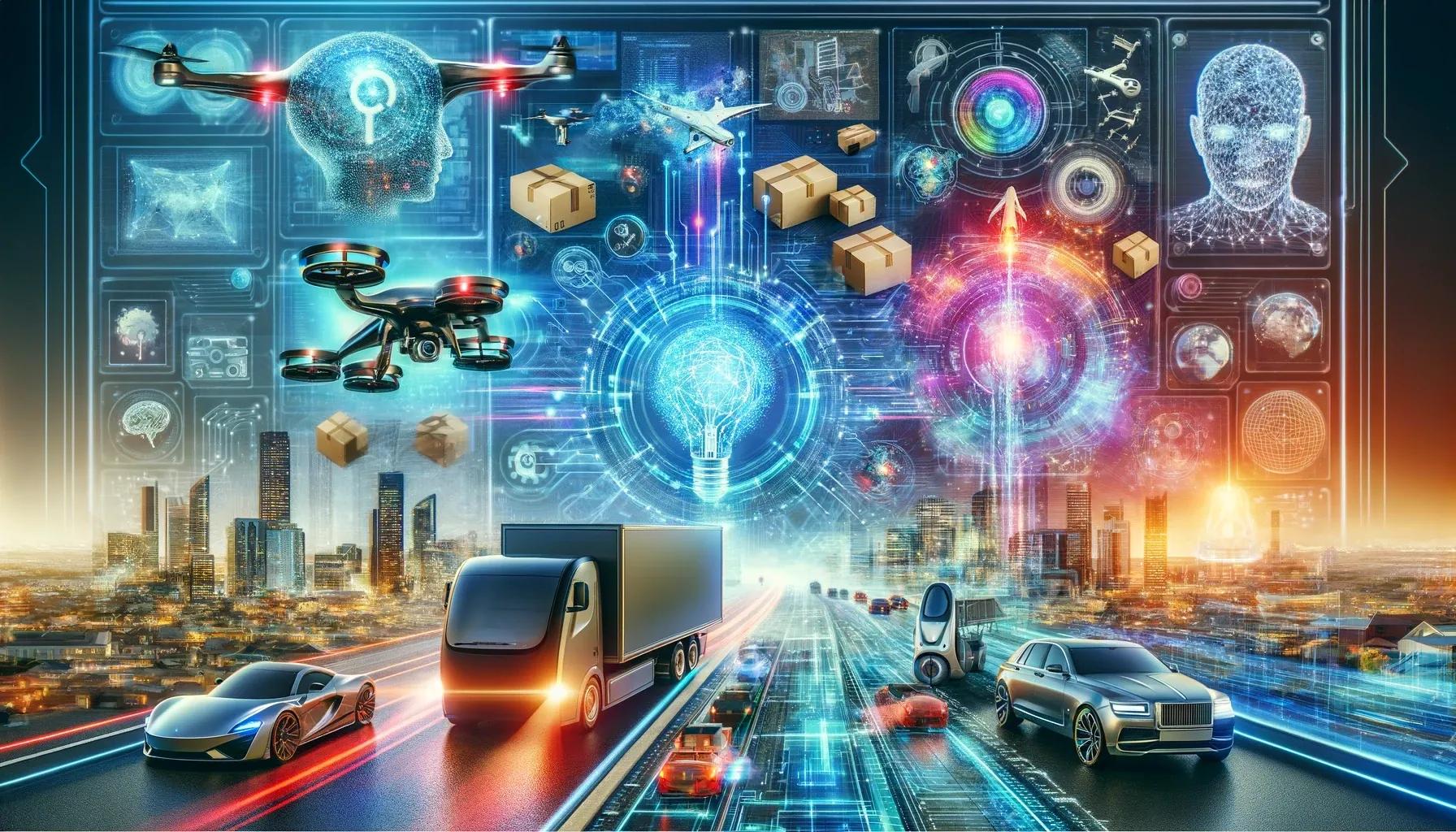
In the ever-evolving world of technology, the fusion of Artificial Intelligence (AI) and geospatial data has emerged as a transformative force in the transportation and logistics sector. This article delves into the ways AI, combined with geospatial analytics, is revolutionizing the industry, offering unprecedented efficiencies, predictive insights, and enhanced operational capabilities.
Introduction to AI and Geospatial Data in Transportation
Transportation and logistics, as backbone industries, involve the movement of goods and people over geographical spaces, making them inherently spatial in nature. Geospatial data, which includes information about geographic locations and features on Earth, has long been vital in these sectors. However, the integration of AI has propelled its utility to new heights. AI's ability to process and analyze vast amounts of data can unlock insights that were previously inaccessible, enabling smarter decision-making and more efficient operations.
Real-time Route Optimization
One of the most significant applications of AI in conjunction with geospatial data is in real-time route optimization. AI algorithms can analyze traffic patterns, weather conditions, and road work data to suggest the most efficient routes for delivery vehicles. This not only reduces fuel consumption and emissions but also ensures timely deliveries, which is crucial in sectors like e-commerce, where customer satisfaction heavily depends on prompt service.
Predictive Maintenance and Fleet Management
AI-driven predictive maintenance is another area where this synergy is making a mark. By leveraging geospatial data, AI can predict when a vehicle might require maintenance, considering factors like travel routes, terrain, and historical performance. This foresight minimizes downtime and extends the life of the fleet. Additionally, fleet management becomes more streamlined as AI can track vehicles in real-time, ensuring optimal utilization and reducing operational costs.
Enhanced Customer Experience
The integration of AI and geospatial data also plays a pivotal role in enhancing customer experience. For instance, AI can predict delivery times more accurately by considering various geospatial factors, thus keeping customers better informed. Moreover, in the case of service disruptions, AI can quickly reroute deliveries or provide customers with timely updates, maintaining transparency and trust.
Inventory Management
In logistics, inventory management is a critical component. AI, empowered with geospatial data, can predict demand patterns based on historical data, socio-economic factors, and even weather patterns in different regions. This enables companies to optimize their inventory levels, reducing holding costs and minimizing the risk of stockouts or overstock situations.
Disaster Response and Risk Management
In disaster-prone areas, AI and geospatial data can be lifesavers. They aid in risk assessment, route planning for evacuations, and ensuring supply chain resilience. AI algorithms can analyze historical data and predict potential disruptions, allowing logistics companies to prepare or reroute resources proactively.
Challenges and Ethical Considerations
While the benefits are significant, there are challenges and ethical considerations in harnessing AI and geospatial data. Data privacy and security are paramount, as geospatial data can be sensitive. There is also the need for ensuring data accuracy and mitigating biases in AI algorithms, which can lead to unequal service levels in different regions.
The Future Landscape
Looking forward, the integration of AI and geospatial data in transportation and logistics is set to deepen. Emerging technologies like 5G and the Internet of Things (IoT) will enhance the collection and real-time processing of geospatial data. Autonomous vehicles, powered by AI and geospatial analytics, are on the horizon, promising to revolutionize the logistics industry further.
In conclusion, the convergence of AI and geospatial data is not just an innovation; it's a paradigm shift in how transportation and logistics operate. By making operations more efficient, reducing costs, and enhancing customer experiences, this synergy is setting new standards in the industry. As technology evolves, its potential applications in transportation and logistics are boundless, heralding a future where logistics operations are more agile, resilient, and customer-centric.