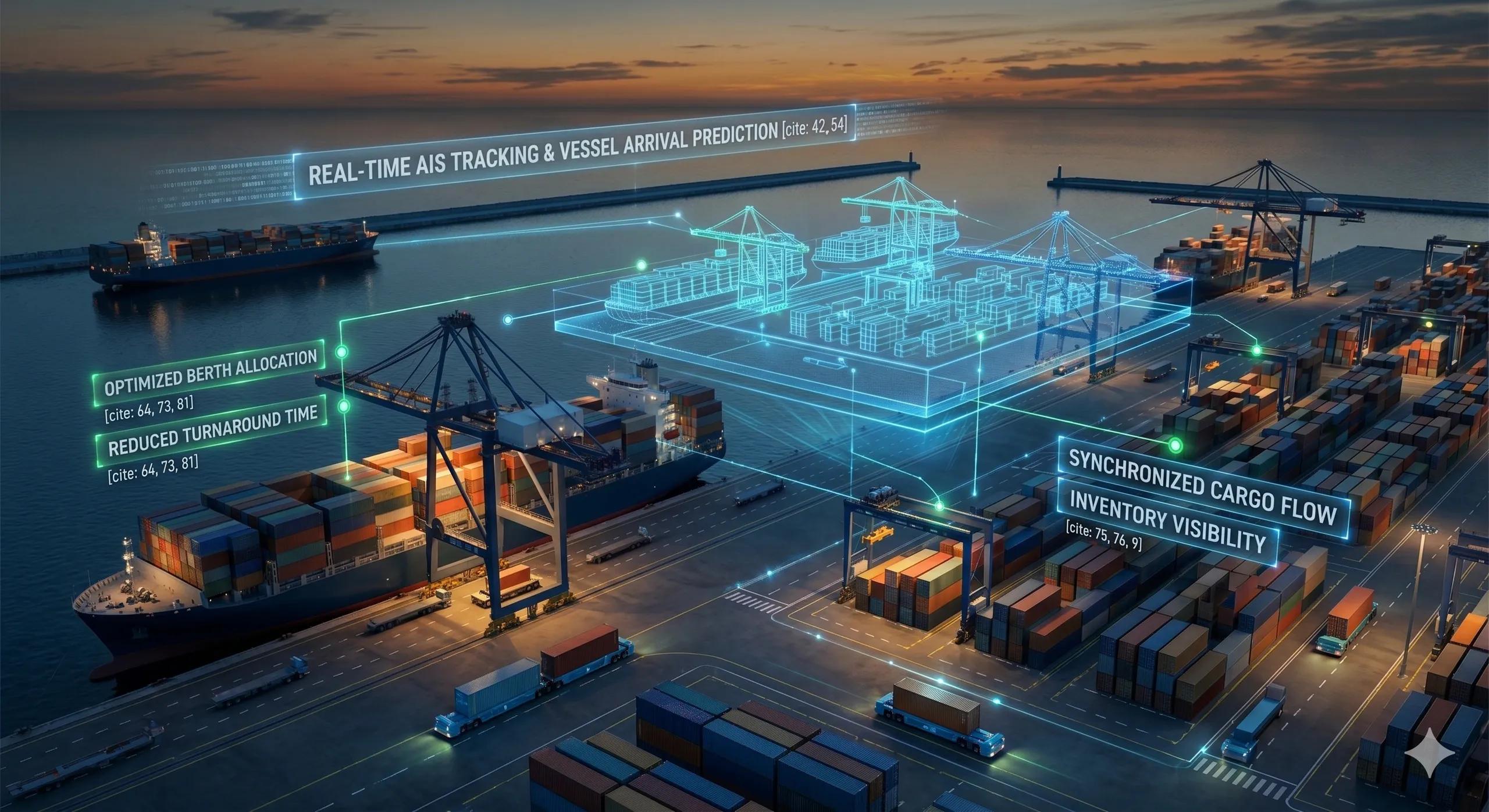
Ports don’t slow down because of lack of capacity.
They slow down when coordination across the system breaks.
Introduction
In the previous articles, we explored how Digital Twins enable:
infrastructure monitoring
operational optimization across industries
supply chain visibility
facility and campus management
renewable energy performance
Now we move to a sector that connects all global trade:
👉 Ports & Maritime Operations
Ports involve:
ships and cargo
terminals and equipment
logistics and customs
hinterland connectivity
In Phase 3, the focus remains:
👉 how Digital Twins enable real-time coordination, throughput optimization, and system-level visibility
The Core Problem: Fragmented Port Operations
Most port systems today:
track vessels and cargo
manage terminal operations
rely on multiple independent stakeholders
But:
👉 operations are fragmented
This leads to:
vessel delays
berth congestion
inefficient cargo handling
extended turnaround times
Where Digital Twins Change the Approach
A Port Digital Twin enables:
👉 real-time, system-wide coordination
Instead of:
isolated operations
It creates:
a synchronized view of port activity
Key Components of a Port Digital Twin
1. Data Layer
vessel tracking (AIS data)
cargo and container data
terminal equipment status
weather and sea conditions
2. Integration Layer
connects: port authorities shipping lines terminal operators logistics providers
👉 creates a unified operational view
3. AI/ML Layer
predicts vessel arrival and delays
optimizes berth allocation
forecasts cargo movement
4. Simulation Layer
models port operations
evaluates throughput scenarios
5. Visualization Layer
real-time dashboards
GIS-based port maps
3D terminal models
Use Case 1: Berth Allocation Optimization
Traditional Approach
fixed scheduling
manual coordination
👉 inefficiencies and delays
Digital Twin Approach
predict vessel arrivals
dynamically allocate berths
👉 Outcome:
reduced waiting time
improved throughput
Use Case 2: Cargo Flow Optimization
monitor container movement
optimize yard operations
👉 Outcome:
faster cargo handling
reduced congestion
Use Case 3: Vessel Turnaround Time Reduction
coordinate: unloading customs clearance logistics
👉 Outcome:
improved efficiency
Use Case 4: Weather Impact Management
analyze sea and weather conditions
adjust operations proactively
👉 Outcome:
minimized disruption
Practical Example
Scenario: Vessel Arrival Delay
AIS data indicates delayed vessel arrival
AI predicts:
👉 impact on berth schedule
System triggers:
berth reallocation
cargo handling adjustments
👉 Outcome:
minimized disruption
optimized throughput
Where Most Implementations Fail
1. Siloed Stakeholders
limited coordination between entities
2. Visibility Without Action
data available 👉 decisions delayed
3. Static Scheduling
inability to adapt in real time
4. Lack of Integration with Hinterland Systems
disconnect with road and rail logistics
Ask Yourself
Is your port:
👉 managing operations
Or
👉 orchestrating them in real time?
Indian Context
India’s ports are expanding with increasing trade volumes.
Challenges include:
congestion
coordination across stakeholders
infrastructure utilization
Digital Twins can help:
👉 improve throughput
👉 reduce delays
👉 enhance coordination
Benefits & ROI
reduced vessel turnaround time
improved throughput
better coordination
optimized resource utilization
increased efficiency
Conclusion
Ports are complex, interconnected systems.
Managing them requires:
👉 real-time visibility
👉 predictive insight
👉 coordinated action
Digital Twins enable this shift.
From:
👉 fragmented operations
To
👉 synchronized, intelligent port systems