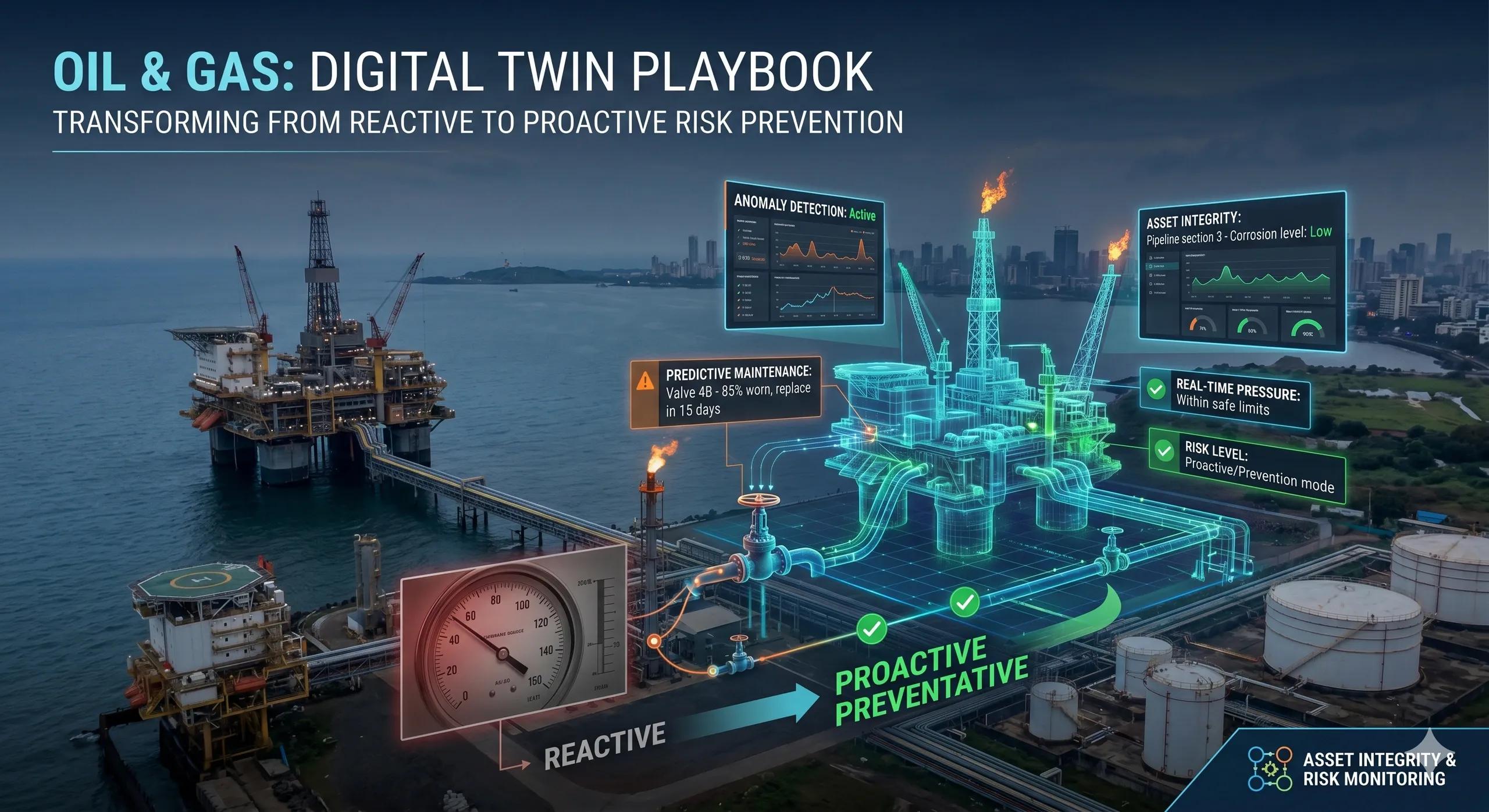
In oil & gas, failure is not just costly.
It is catastrophic.
Introduction
In the previous articles, we explored how Digital Twins enable:
predictive maintenance in infrastructure
real-time coordination in airports
safety-driven intelligence in railways
production optimization in manufacturing
supply chain visibility in logistics
Now we move to one of the most critical and high-risk industries:
👉 Oil & Gas
This sector operates under:
extreme environments
high-value assets
strict safety requirements
In Phase 3, the focus remains:
👉 how Digital Twins enable risk monitoring, asset integrity, and operational safety
The Core Problem: Delayed Risk Detection
Traditional oil & gas operations rely on:
periodic inspections
manual reporting
isolated monitoring systems
This leads to:
late identification of asset degradation
higher failure risk
safety incidents
costly downtime
👉 Problems are often detected after they escalate
Where Digital Twins Change the Approach
A Digital Twin enables:
👉 continuous monitoring of asset health and operational risk
Instead of:
periodic checks
It moves to:
real-time and predictive risk management
Key Components of an Oil & Gas Digital Twin
1. Sensor Layer
pressure sensors
temperature monitoring
corrosion detection
vibration analysis
Across:
pipelines
refineries
offshore platforms
2. Data Integration Layer
combines: operational data environmental data equipment health
👉 creates a unified asset view
3. AI/ML Layer
detects anomalies
predicts failure
assesses risk levels
4. Visualization Layer
real-time dashboards
GIS mapping of pipelines
3D asset models
Use Case 1: Pipeline Integrity Monitoring
Traditional Approach
scheduled inspections
manual checks
👉 limited visibility between inspections
Digital Twin Approach
continuous monitoring of: pressure changes temperature variation corrosion patterns
👉 Outcome:
early detection of leaks or failures
Use Case 2: Risk Monitoring in Operations
monitor: equipment health environmental conditions
identify risk scenarios
👉 Outcome:
proactive risk mitigation
Use Case 3: Predictive Maintenance
analyze asset degradation trends
predict maintenance needs
👉 Outcome:
reduced downtime
improved safety
Practical Example
Scenario: Pipeline Pressure Drop
sensors detect abnormal pressure variation
AI identifies:
👉 potential leak pattern
System triggers:
inspection alert
shutdown protocol
safety notification
👉 Outcome:
incident prevented before escalation
Where Most Implementations Fail
1. Siloed Monitoring Systems
asset data not integrated
2. Reactive Safety Approach
systems respond after incidents
3. Lack of Predictive Capability
monitoring without forecasting
4. No Decision Integration
alerts exist
actions are delayed
Ask Yourself
Is your system:
👉 detecting risks
Or
👉 preventing them?
Indian Context
India’s oil & gas sector includes:
extensive pipeline networks
refineries and offshore assets
Challenges:
aging infrastructure
environmental risks
safety requirements
Digital Twins can help:
👉 improve asset integrity
👉 enhance safety
👉 reduce operational risk
Benefits & ROI
reduced failure risk
improved safety compliance
optimized maintenance
lower operational cost
better decision-making
Conclusion
Oil & gas operations demand:
👉 continuous monitoring
👉 predictive intelligence
👉 rapid response
Digital Twins enable:
early detection
risk prediction
coordinated action
This transforms systems from:
👉 reactive safety management
To
👉 proactive risk prevention