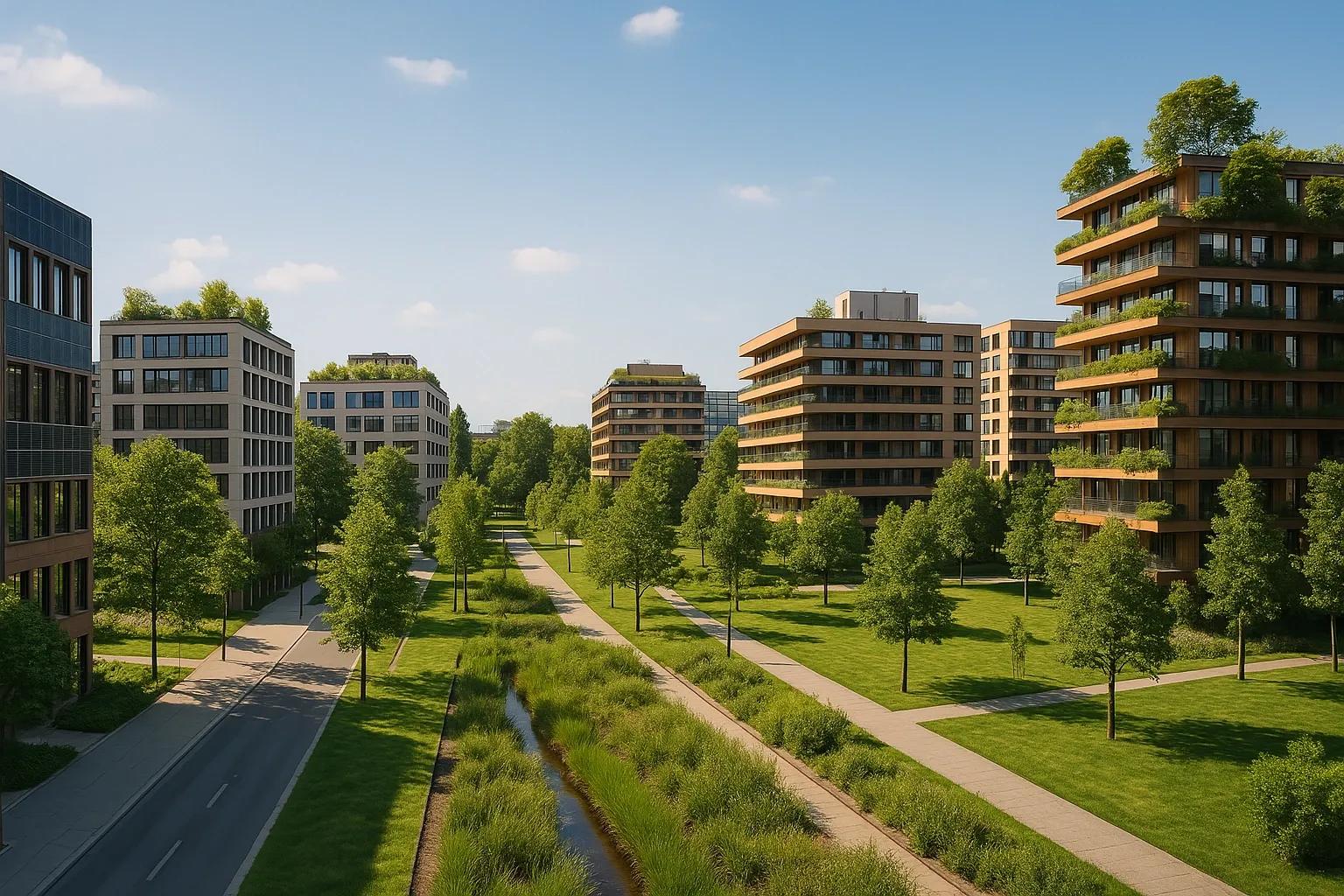
Securing finance for nature-positive projects has historically been challenging.
Traditional funding models often struggle to quantify the benefits of natural ecosystems compared to concrete infrastructure.
However, new financial models are emerging that help cities capture the true value of nature, unlock blended investments, and make nature-positive development scalable.
Understanding and applying these new models is critical for cities aiming to transform sustainability plans into funded, actionable projects.
Why It Matters
Without robust financing mechanisms:
Nature-positive ideas remain aspirational rather than operational.
Investors hesitate due to uncertain returns and lack of measurable outcomes.
Critical ecosystem services, flood mitigation, clean air, climate regulation, continue to erode.
By embracing innovative finance structures, cities can align environmental goals with financial incentives, build investor confidence, and accelerate their transition to sustainable, resilient urban environments.
How It Can Be Addressed
Cities can learn from the following new models of nature-positive finance:
1. Green Bonds for Nature-Based Solutions
Municipalities issue bonds specifically funding projects like wetland restoration, urban forest development, and green infrastructure retrofits.
Geospatial monitoring systems and UAV surveys provide verifiable reporting to bondholders on project outcomes.
2. Blended Finance Structures
Public funds and philanthropic capital are used to de-risk private sector investment.
Digital Twins model environmental and financial outcomes, providing transparency that attracts private investors.
3. Payment for Ecosystem Services (PES)
Cities compensate private landowners or businesses for maintaining natural ecosystems that provide public benefits, such as watershed protection or urban cooling.
IoT sensor networks can monitor service delivery, ensuring accountability.
4. Biodiversity Credits and Carbon Markets
Emerging markets allow developers to offset unavoidable impacts by investing in biodiversity enhancement or carbon sequestration projects.
AI-based habitat assessment tools help quantify and certify credits.
5. Resilience Financing Instruments
Some cities are exploring insurance-linked securities and resilience bonds that pay out when nature-based defenses prevent climate disasters.
Predictive geospatial models help calculate risks and potential payouts.
Role of Digital Technologies
Technology makes these finance models credible, measurable, and scalable:
Geospatial Platforms : Mapping risk areas, ecosystem services, and project baselines.
UAV and Drone Surveys : Capturing project progress and compliance imagery.
BIM and Digital Twins : Simulating long-term impacts and financial returns from nature-positive investments.
IoT Networks : Providing real-time environmental performance data.
AI Analytics : Quantifying biodiversity, carbon storage, and ecosystem health.
These tools enable cities to not only design nature-positive projects but also track their success and report to investors and stakeholders with confidence.
Conclusion
Nature-positive finance is no longer experimental, it is increasingly becoming mainstream. Cities that move quickly to adopt innovative financial models will attract more investment, de-risk their infrastructure portfolios, and strengthen their environmental and social resilience.
Finance, technology, and governance must come together, because the future of cities depends not just on how they grow, but how they grow with nature.