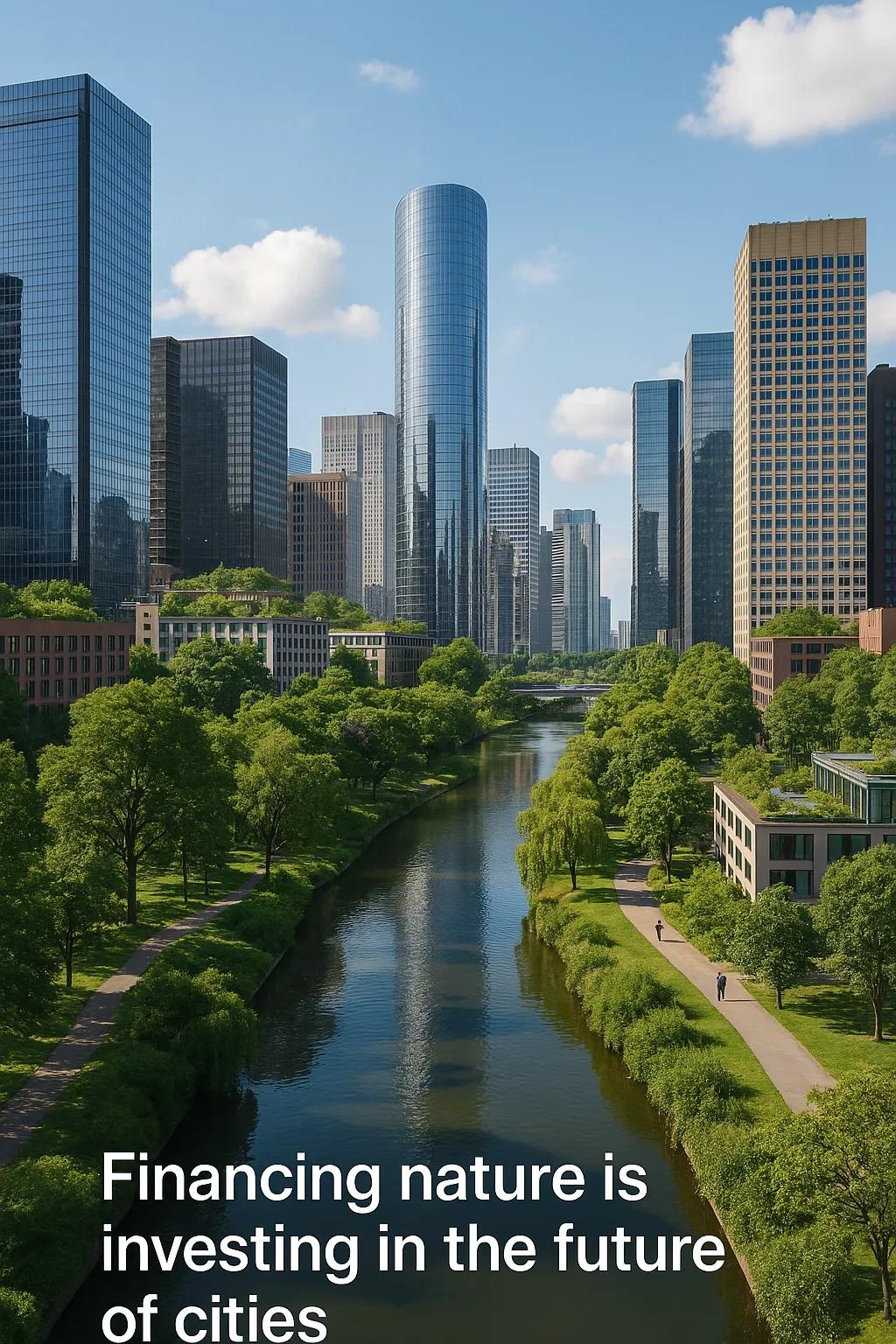
Sustainable cities cannot be built on concrete alone.
Nature-positive urban development needs financing mechanisms that value ecosystems as critical infrastructure.
Yet, nature finance is still in its infancy in most urban areas, accounting for less than 0.3% of global infrastructure investments.
For cities to thrive in a changing climate, they must mainstream nature into all financial decisions and build new models for investing in biodiversity protection and restoration.
Why It Matters
Cities are highly dependent on healthy ecosystems for flood control, air quality, temperature regulation, food supply, and public health.
However, natural assets are rarely accounted for in financial planning, asset management, or project valuation.
Without mainstreaming nature finance:
Ecosystems continue to degrade.
Infrastructure becomes more vulnerable and expensive.
Economic risks escalate.
By embedding nature into financial systems and investment frameworks, cities can attract more sustainable capital, lower long-term risks, and deliver measurable environmental and social benefits.
How It Can Be Addressed
Nature finance in cities operates across two main dimensions:
1. Nature Mainstreaming
This approach integrates a "nature lens" into all urban decision-making, not just environmental projects.
Public budgets, real estate investments, insurance models, and private sector projects are screened for nature impacts and dependencies.
Geospatial technologies and UAV-based mapping can reveal environmental risks at the planning stage.
BIM models integrated with ecological data ensure that even non-environmental infrastructure (like bridges, airports, housing) contributes to urban biodiversity goals.
2. Nature-Positive Investment
Here, cities and investors directly fund projects that protect, restore, or sustainably manage ecosystems.
Green bonds, biodiversity credits, and blended finance models are examples.
Digital twins allow cities to model expected outcomes, such as reduced flood risk, improved air quality, or restored wetlands, providing transparency and assurance for investors.
IoT monitoring and AI analytics create continuous, verifiable reporting on nature-based project outcomes.
Role of Digital Technologies
Technology plays a crucial role in scaling and securing nature finance:
Geospatial Mapping : Identifying high-value ecosystems and risk zones needing protection.
UAV Environmental Surveys : Rapid, accurate assessments for baseline and ongoing monitoring.
BIM Integration : Embedding nature considerations into physical infrastructure designs.
Digital Twins : Modeling financial and environmental impacts of urban nature interventions.
AI & IoT Networks : Providing real-time verification for nature-related key performance indicators (KPIs) in financing agreements.
These tools help cities quantify, visualize, and communicate the value of investing in nature, making it easier to secure financing and prove outcomes.
Conclusion
Nature finance is not just about funding conservation projects, it’s about transforming how cities plan, budget, and invest across all sectors.
Mainstreaming a nature-positive mindset into urban financial systems can unlock new capital flows, improve infrastructure resilience, and build healthier, greener cities.
Cities that embrace nature finance today will not only lead in climate adaptation but will also be more attractive to businesses, investors, and residents in the decades to come.