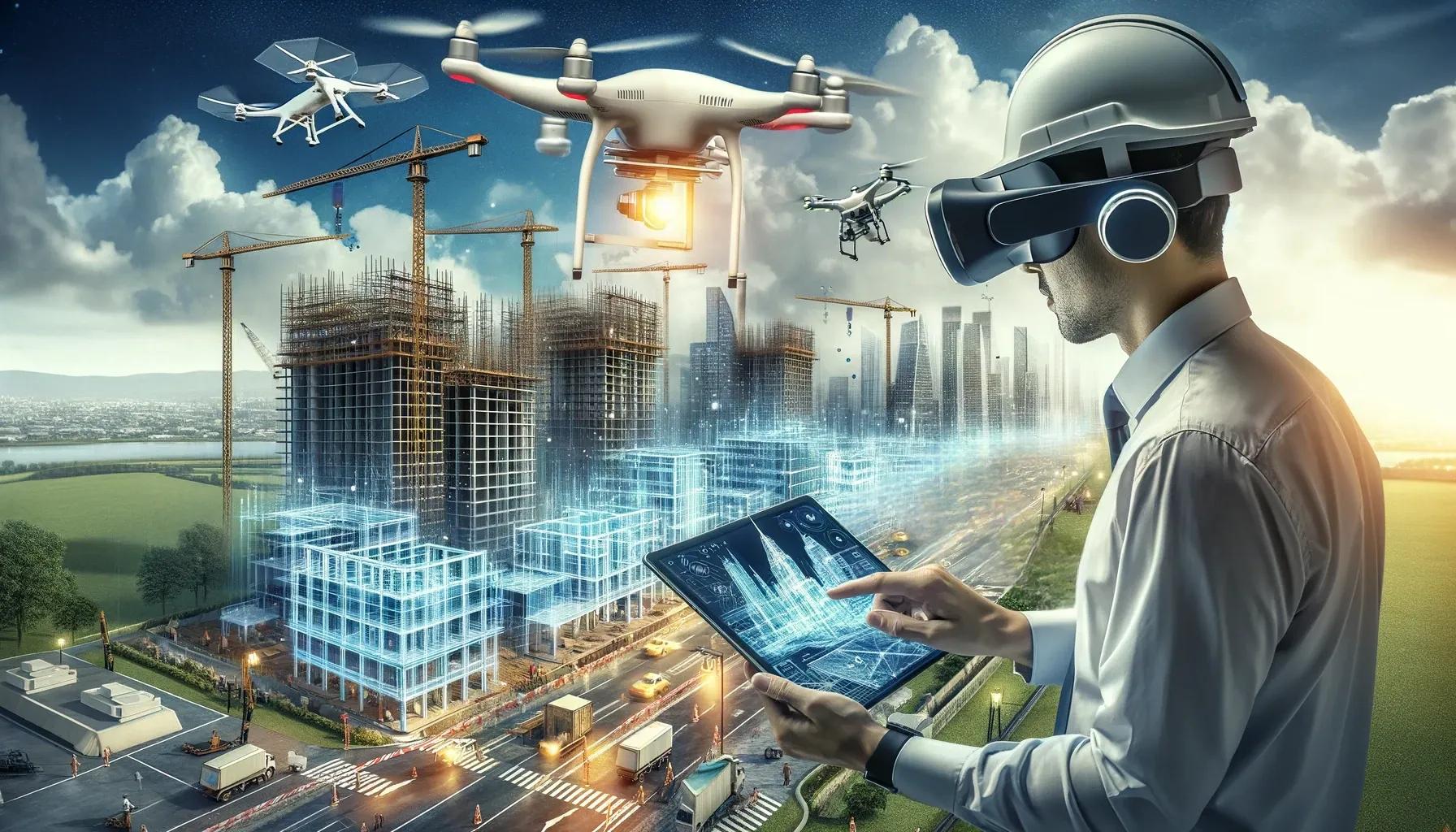
In the realm of construction and architectural design, the integration of Augmented Reality (AR) with Building Information Modeling (BIM) and drone technology marks a revolutionary stride. This synergy not only enhances visualization and planning but also redefines the boundaries of design and construction management. As the founder of BSMA Enterprises , a firm specializing in Geospatial and BIM solutions, the potential of this integration is not just a technological advancement but a paradigm shift in how we approach construction projects.
The Fusion of AR, Drones, and BIM
Augmented Reality in Construction
Augmented Reality, at its core, is an interactive experience of a real-world environment where the objects that reside in the real world are enhanced by computer-generated perceptual information. In construction, AR can overlay digital content onto the physical construction site, allowing for a more comprehensive and detailed view of the project.
The Role of Drones
Drones bring a unique perspective to construction projects. They can capture real-time, high-resolution images and videos of a construction site from various angles and elevations. This data is invaluable for site inspections, progress tracking, and identifying potential issues before they become problematic.
Building Information Modeling (BIM)
BIM is a digital representation of physical and functional characteristics of a facility. It goes beyond mere drawing and acts as a shared knowledge resource for information about a facility, forming a reliable basis for decisions during its life cycle. In the context of AR and drone technology, BIM data becomes even more potent, providing a detailed, multi-dimensional view of a project.
Merging Technologies for Immersive Experiences
Enhancing Visualization and Planning
When AR is combined with drone-captured imagery and BIM data, it results in an immersive experience that enhances visualization and planning. This integration allows stakeholders to see the finished product before construction begins, understand how the different elements of a building will come together, and identify potential design conflicts early in the process.
Real-time Data and Decision Making
The real-time data captured by drones can be integrated into the AR environment, providing up-to-date information about the construction site. This immediacy aids in swift decision-making, ensuring that any issues can be addressed promptly, thereby reducing delays and cost overruns.
Training and Safety
AR also plays a crucial role in training and safety. By simulating construction environments and scenarios, workers can be trained in a safe, controlled setting. This not only improves their skills but also their understanding of the project, which can lead to fewer accidents and errors on the construction site.
Collaboration and Communication
This technology fosters better collaboration and communication among various stakeholders. Architects, engineers, contractors, and clients can visualize and discuss the project in a shared AR environment, leading to a more cohesive understanding and alignment of the project goals.
Case Studies and Applications
Incorporating AR with drones and BIM is not just theoretical. Numerous construction projects globally have utilized this technology to achieve remarkable results. For instance, using AR for visualizing complex infrastructure in urban settings has helped in avoiding costly design errors. Similarly, drones have been employed to monitor large construction sites, providing essential data for project management and client reporting.
Future Perspectives
Looking ahead, the integration of AR with drones and BIM holds great promise for the construction industry. As these technologies continue to evolve, we can anticipate even more sophisticated applications, such as the use of AI to analyze drone and BIM data for predictive analytics in construction projects.
In conclusion, the amalgamation of Augmented Reality, drones, and Building Information Modeling is not just a technological advancement; it's a transformative approach that redefines how we perceive, plan, and execute construction projects. At BSMA Enterprises, we recognize the immense potential of this integration and are committed to exploring and harnessing its capabilities to make the construction industry more efficient, safe, and sustainable. As we venture into this exciting future, it's clear that these technologies will play a pivotal role in shaping the landscape of construction and architectural design.